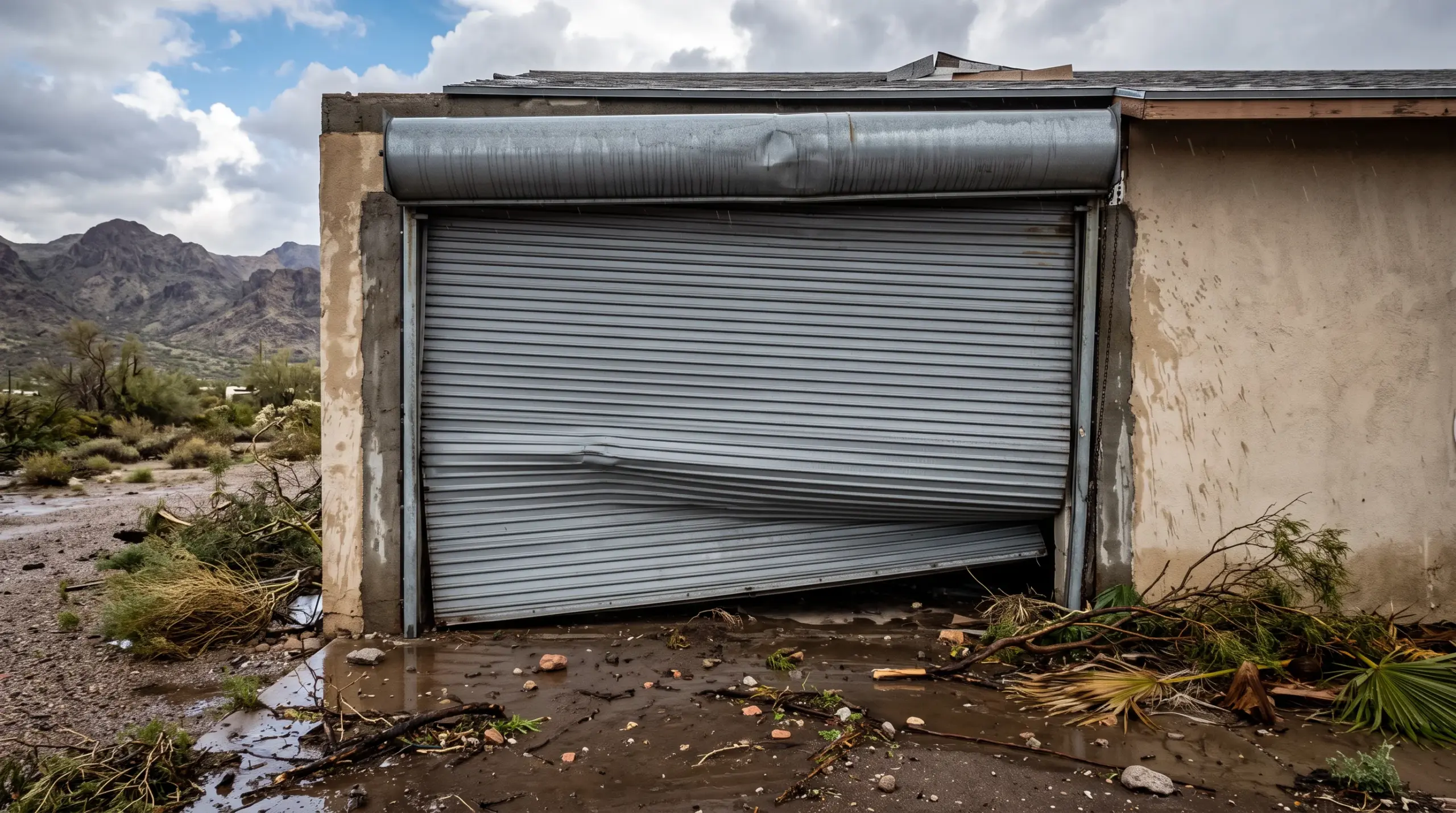
Arizona storms can turn a normally dependable commercial roll-up door into a serious safety and security concern. During the August 19, 2026 dust advisory, the National Weather Service reported strong winds above 40 mph and reduced visibility across Maricopa and Pinal counties, including Mesa, Phoenix, Scottsdale, Avondale, and surrounding communities. After conditions clear, a commercial rollup door inspection Arizona business owners can trust should be part of every storm response plan. Wind-blown debris, hail, dust, and sudden power interruptions can affect doors even when damage is not immediately obvious. This checklist explains what to inspect, which warning signs require professional help, and when to schedule post-storm rollup door repair.
Why a Commercial Steel Door Inspection Arizona Businesses Need Matters
Arizona monsoon storms produce more than heavy rain. Downburst winds can arrive suddenly, push debris into door tracks, and strain panels, springs, brackets, and operators. The National Weather Service notes that Arizona thunderstorm wind gusts frequently exceed 40 mph, while stronger straight-line gusts can exceed 100 mph. Its Phoenix monsoon safety guidance also warns that dust storms can reduce visibility to one-quarter mile or less.
That combination creates several risks for warehouses, auto shops, loading areas, retail buildings, and industrial facilities. A door may still open while operating with bent tracks or weakened hardware. Continuing to use it can increase damage and create hazards for employees, delivery drivers, and customers.
Before anyone operates a storm-affected door, look for:
- Visible dents, bends, cracks, or separated door sections.
- Loose or missing bolts, brackets, anchors, and fasteners.
- Tracks that appear tilted, spread, blocked, or pulled away from the wall.
- Frayed cables, broken springs, or uneven tension.
- Water, dust, or debris inside the motor and control components.
- New grinding, scraping, jerking, or unusually slow movement.
If the door hangs unevenly, falls, binds, or makes a sharp mechanical noise, stop using it. Keep the opening secured and arrange a professional evaluation.
Post-Storm Commercial Door Safety Check for Mesa and Phoenix
1. Inspect the door curtain, panels, and perimeter
Start with the visible steel curtain or sectional panels. Check for dents that interfere with the guides, punctures, bent edges, and displaced sections. Even minor storm debris can damage the bottom bar or weather seal. Look around the perimeter for gaps that could allow dust, rain, pests, or unauthorized access into the building.
Next, inspect the wall-mounted guides and surrounding masonry. Strong wind can loosen anchors or shift the mounting structure. Do not push a damaged panel back into place by hand. A professional technician can determine whether the panel needs adjustment, repair, or replacement.
2. Check tracks, rollers, springs, and cables
Dust and debris can settle inside tracks and create resistance. However, cleaning alone will not correct a track that has shifted out of alignment. Watch for rubbing, uneven travel, or a door that stops before reaching the floor.
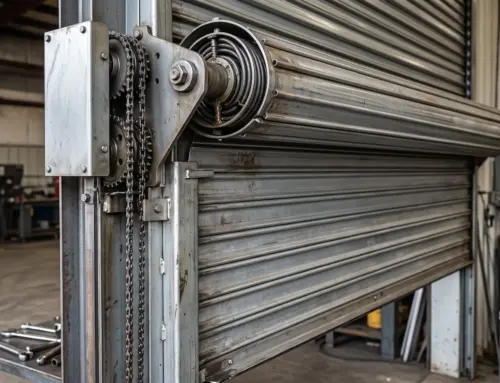
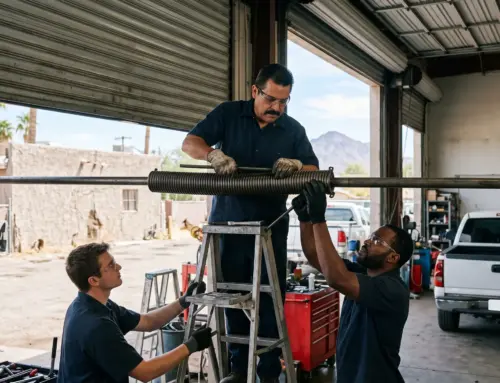
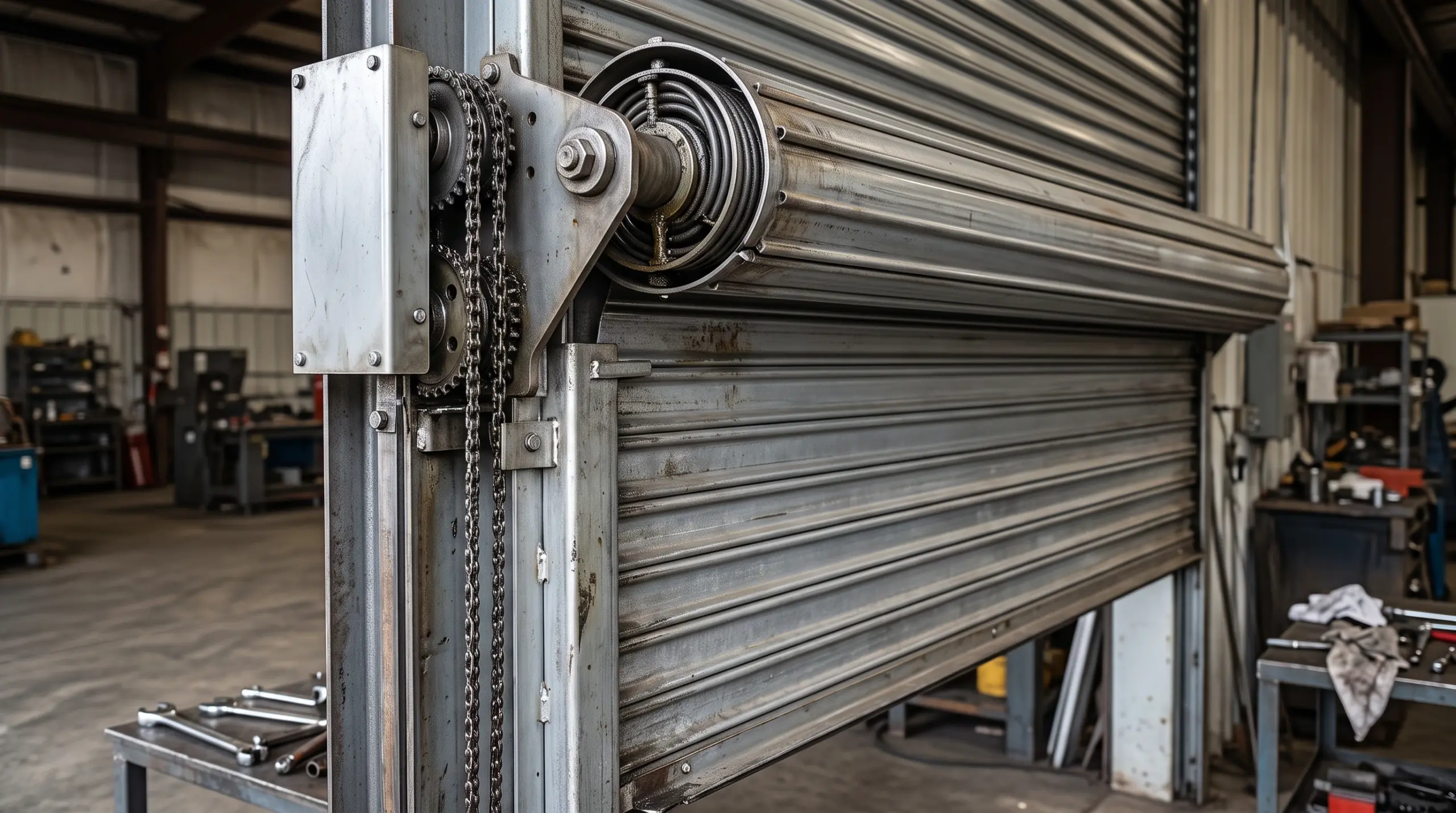
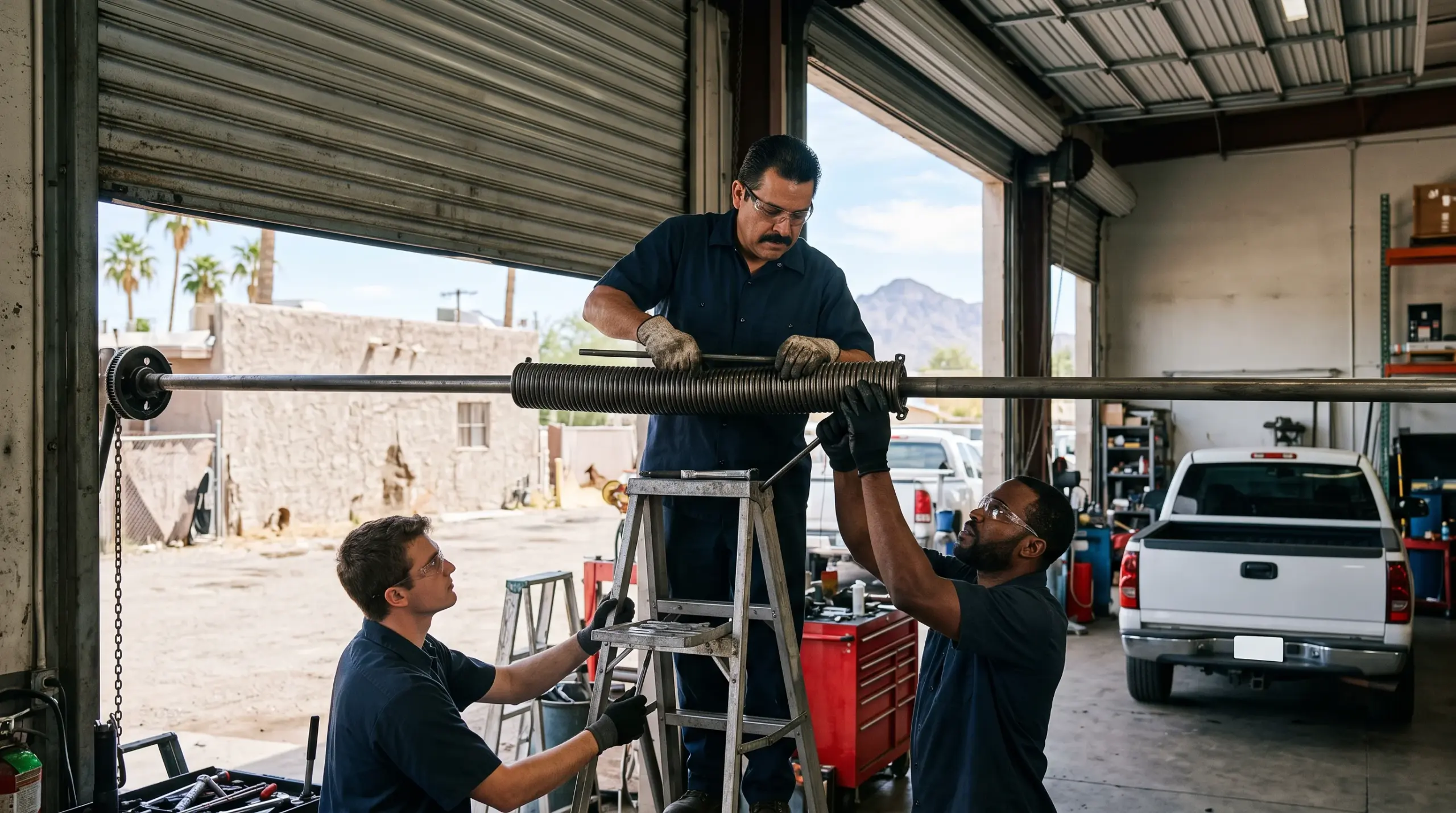
Examine springs and cables from a safe distance. Never attempt to adjust spring tension or replace a broken cable without proper training. These components store significant energy and can cause serious injuries if handled incorrectly. A qualified technician should test balance, alignment, mounting points, and travel limits.
3. Test the operator and safety equipment
Storms can affect electrical service, control boards, wiring, photo-eye sensors, and emergency-release systems. If the motor hums but the door does not move, stop testing it. Repeated attempts may damage the operator.
A professional commercial door safety check should confirm that the door reverses correctly, the photo-eye sensors respond, the emergency release works, and the limit settings remain accurate. OSHA’s workplace safety resources emphasize maintaining clean, orderly work areas, which also helps keep door openings clear of trip hazards and obstructions. Keep pallets, tools, and storm debris away from the operating path.
When Roll Up Door Damage Mesa Businesses See Requires Repair
Some storm damage appears cosmetic. Other problems develop over several days. Schedule post-storm roll up door repair promptly if employees notice any of the following:
- The door opens more slowly than before the storm.
- The curtain rolls unevenly or bunches inside the barrel.
- The bottom bar does not meet the floor evenly.
- The operator trips a breaker or loses power repeatedly.
- The door reverses unexpectedly or fails to respond to controls.
- Water or dust enters around damaged seals and panels.
- The door requires manual force to move.
Sluggish operation may indicate contamination, worn rollers, spring problems, or motor strain. Track misalignment can cause additional panel and guide damage each time the door cycles. Similarly, a broken cable or weakened spring can leave the door unsupported and unsafe.
Businesses should also document damage before repairs begin. Take photographs from several angles, record the date of the storm, and note when unusual operation started. This information can help with insurance documentation and gives the technician a clearer starting point.
The National Weather Service’s report on the August 25, 2025 Phoenix-area storm recorded wind reports near 50 to 65 mph, visibility below one-quarter mile, and severe wind gusts above 58 mph. Those conditions show why a storm damage roll-up doors Phoenix inspection should cover both structural components and operating systems.
Protect Your Commercial Roll-Up Doors Before the Next Storm
Storm response works best when businesses prepare before the weather changes. Keep door openings clear, secure loose materials near loading bays, and identify the manual release for each operator. Save your door service provider’s contact information where managers and maintenance staff can find it quickly.
Preventative maintenance also reduces emergency problems. Regular service should include lubrication, hardware tightening, spring and cable checks, track cleaning, safety sensor testing, and operator adjustments. These steps help identify worn components before high winds place additional stress on them.
Arizona Roll Up Door Service has more than 20 years of experience installing, repairing, and maintaining commercial steel roll-up doors throughout the Phoenix metro area. Our technicians serve Mesa, Phoenix, Avondale, Buckeye, Goodyear, Scottsdale, North Phoenix, and surrounding communities. We diagnose sluggish doors, damaged panels, broken springs and cables, motor failures, sensor issues, and track alignment problems.
If your commercial door shows signs of roll up door damage Mesa businesses commonly experience after dust storms, hail, or high winds, do not wait for the problem to worsen. Contact Arizona Roll Up Door Service for a professional inspection, reliable repairs, and practical maintenance recommendations. Fast attention can help protect your facility, reduce downtime, and keep your employees moving safely.