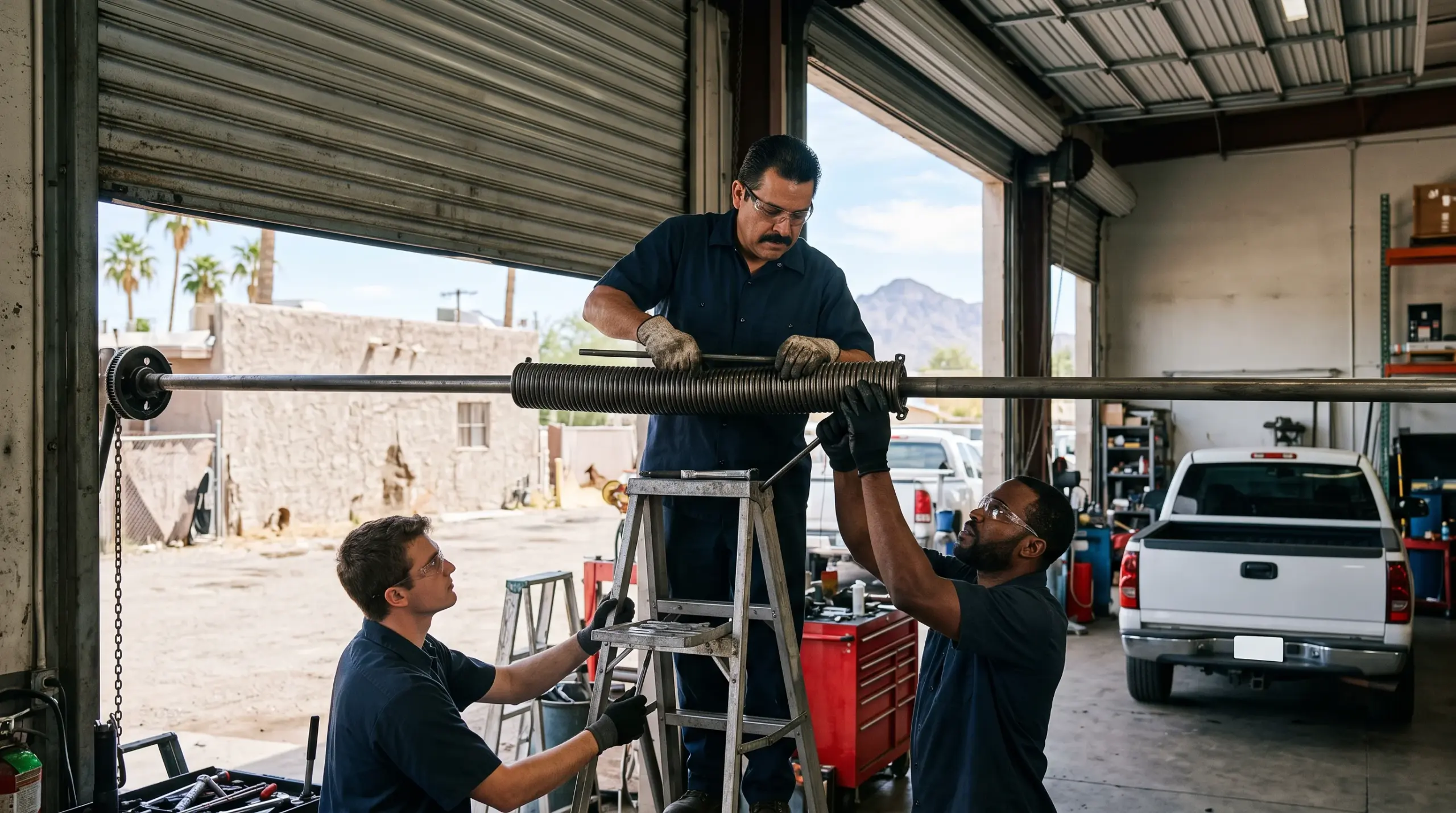
A broken spring can bring a steel roll up door to a sudden stop, leaving a loading bay, warehouse, garage, or storefront unsecured and disrupting daily operations. Understanding steel roll up door spring replacement can help you recognize the problem, estimate potential costs, and decide when professional service is necessary. Springs carry significant tension, so attempting to remove or adjust one without the right tools and training can cause severe injury or additional door damage. In this guide, you’ll learn the warning signs of a failing spring, typical roll up door spring cost factors, what the repair process involves, and when to call a qualified technician. Arizona Roll Up Door Service has more than 20 years of experience helping commercial and residential customers throughout Phoenix, including Avondale, Buckeye, Goodyear, Scottsdale, and North Phoenix.
Steel Roll Up Door Spring Replacement: Recognizing the Warning Signs
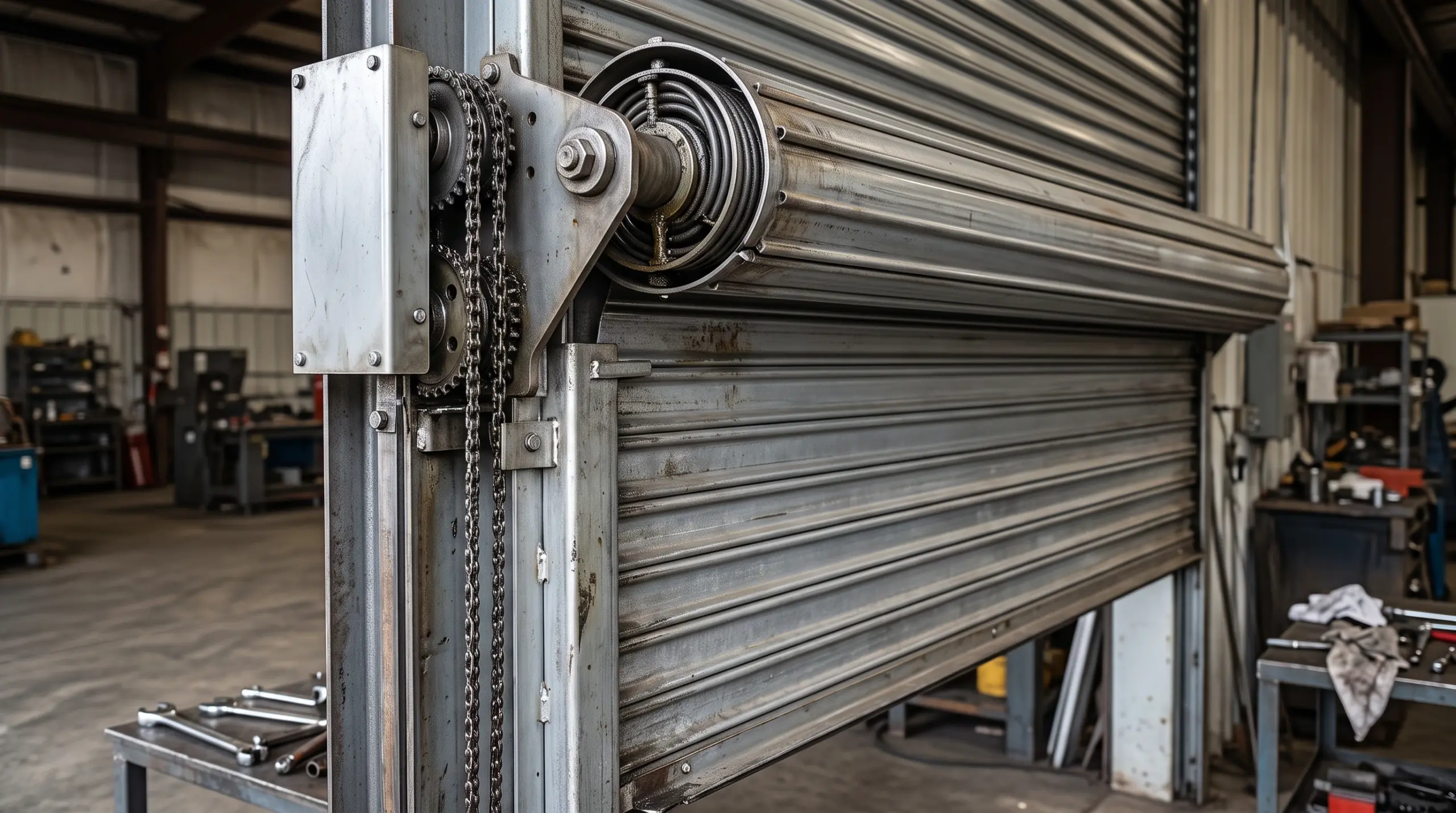
Roll up door springs counterbalance the weight of the curtain, slats, or panels. When they are working properly, the door should move smoothly and remain reasonably balanced during opening and closing. As a spring weakens or breaks, the door may become difficult to operate and place extra strain on the motor, opener, tracks, and cables.
Common symptoms of a failing or broken spring
- The door will not open: A broken spring may leave the curtain too heavy for the opener or manual lift system.
- Sudden stopping or uneven movement: The door may rise partway, bind, or move more slowly than usual.
- Visible separation or a gap: A broken torsion spring can show a noticeable break, gap, or displaced coil.
- Loud snapping or popping: A spring failure may produce a sharp sound, although the damage is not always immediately visible.
- Loose cables or shifted hardware: Spring problems can affect cable tension and other connected components.
- Excessive noise: Squealing, grinding, or unusual rattling may indicate spring wear, poor lubrication, or related mechanical trouble.
- The door feels unusually heavy: If a manually operated door suddenly requires much more force, stop using it and arrange an inspection.
Not every slow or noisy door has a broken spring. Track misalignment, damaged slats, worn rollers, motor issues, obstructions, and inadequate lubrication can create similar symptoms. A professional diagnosis helps identify the actual cause instead of replacing a part that is still serviceable.
Why ignoring the problem can increase damage
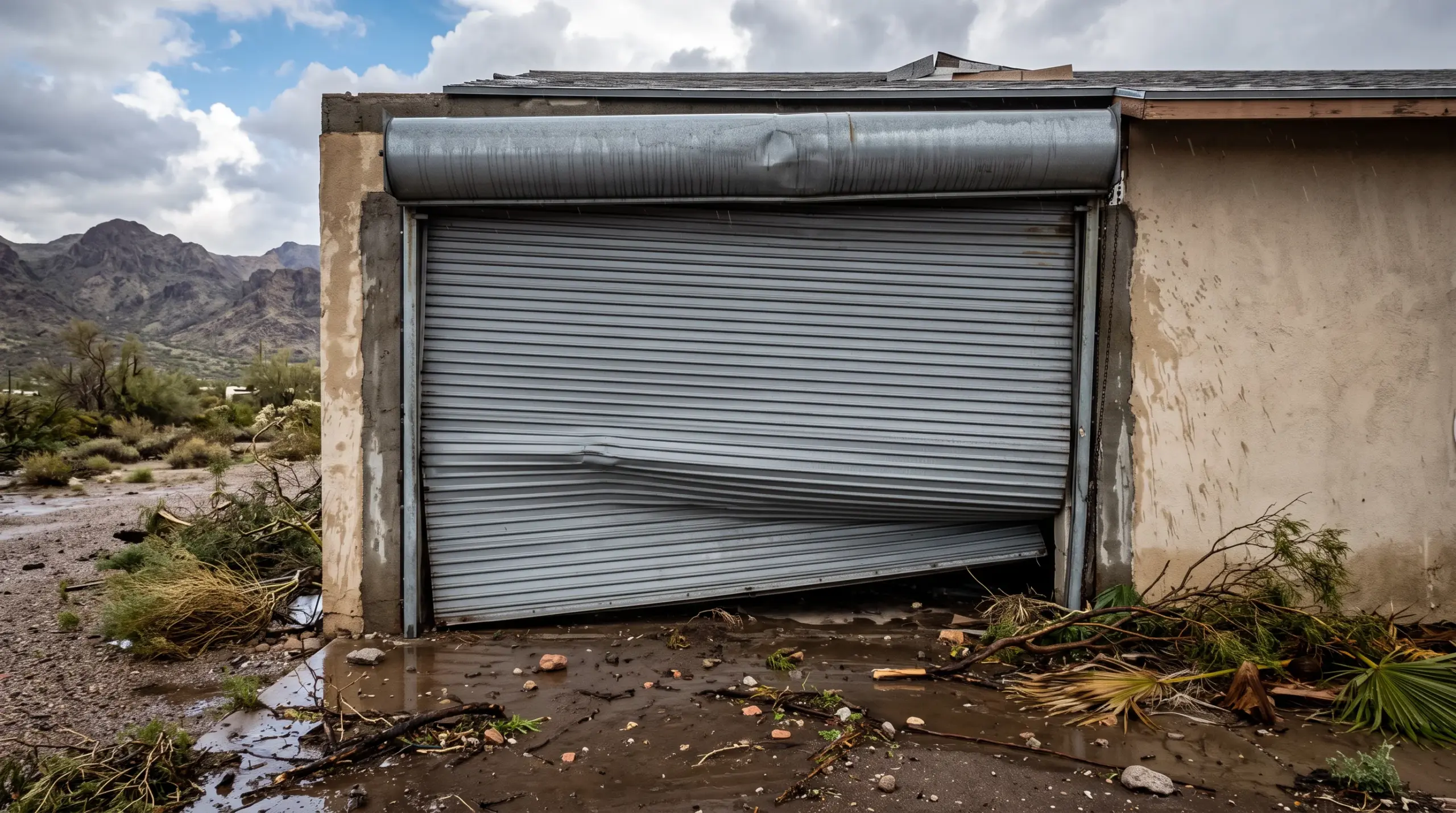
Continuing to operate a door with a damaged spring may overload the opener and cause cables to unwind or jump from their drums. The curtain can also become crooked in the guides, increasing the possibility of bent tracks or damaged panels. For a commercial property, a malfunctioning door may create a security risk, slow deliveries, and expose inventory or equipment to Arizona weather.
If the door is stuck open, avoid leaving it unattended. If it is stuck closed, do not force it upward with a forklift, vehicle, or improvised equipment. Call a qualified steel door spring repair Phoenix provider for safe troubleshooting.
How Much Does Roll Up Door Spring Replacement Cost?
The cost of roll up door spring replacement varies because steel roll up doors differ substantially in size, weight, design, usage, and spring configuration. A small residential service door usually costs less to repair than a large commercial warehouse door with multiple springs, heavy slats, or specialized hardware.
Typical price considerations
For planning purposes, many customers see a total repair price ranging from approximately $250 to $900 or more for a spring replacement. Larger commercial doors, custom components, difficult access, or related cable and hardware damage can push the final price higher. These figures are general estimates rather than a guaranteed quote. An on-site inspection is the best way to determine the correct cost.
Several factors influence the final roll up door spring cost:
- Door size and weight: Larger doors need heavier-duty springs and may require additional technicians.
- Spring type and quantity: Some systems use one spring, while others use multiple springs or a specialized counterbalance assembly.
- Commercial usage: High-cycle doors may require upgraded components designed for frequent operation.
- Access and installation difficulty: High ceilings, tight work areas, or equipment obstacles can increase labor time.
- Related damage: Frayed cables, worn drums, bent tracks, damaged bearings, and broken brackets may need attention.
- Emergency timing: After-hours, weekend, or urgent service may have different rates than scheduled maintenance.
- Parts availability: Custom or older systems may require specially ordered springs or hardware.
Why the lowest estimate may not be the best value
A low price may reflect an incorrect spring size, inferior components, or a repair that addresses only the visible failure. The spring must be matched to the door’s weight, dimensions, lift configuration, and expected cycle count. If the replacement is too weak, the opener may work harder and the door may remain difficult to lift. If it is too strong, the door can become unsafe or difficult to control.
Ask whether the estimate includes labor, installation, safety testing, cable inspection, lubrication, and removal of the failed parts. A reputable company should explain what needs to be replaced and identify any optional recommendations separately from essential repairs.
What Happens During Commercial Door Spring Replacement?
Professional commercial door spring replacement is more than taking out an old coil and installing a new one. The technician must evaluate the entire counterbalance system and confirm that the door is safe to operate afterward. At Arizona Roll Up Door Service, the process begins with a practical diagnosis and clear explanation of the recommended repair.
Inspection and diagnosis
The technician typically checks the spring or spring assembly, cables, drums, bearings, brackets, tracks, rollers, slats, curtain alignment, and opener. They also look for signs of excessive wear caused by high cycle counts, moisture, dust, impact, or poor previous adjustments. If the door has a motor or opener, its force and performance may be evaluated as well.
This inspection matters because a broken spring may be the result of normal fatigue, but it can also be a symptom of an unbalanced door or another mechanical problem. Replacing the spring without correcting the underlying issue can lead to another failure.
Safe replacement and testing
Once the correct component is identified, the technician secures the door and uses appropriate tools to control spring tension. The damaged spring is removed, new commercial-grade parts are installed, and cables or related hardware are replaced if they are unsafe or worn. The door is then balanced and tested through multiple open-and-close cycles.
Testing may include:
- Checking smooth travel through the guides and tracks
- Confirming that the curtain remains aligned
- Verifying proper cable tension and drum operation
- Testing manual release and balance where applicable
- Checking motor, opener, limits, and safety devices
- Lubricating approved moving components and tightening accessible hardware
For businesses, efficient service can minimize downtime. Arizona Roll Up Door Service maintains a stocked inventory of common replacement parts whenever possible, helping customers avoid unnecessary delays and supporting same-day repairs when scheduling and part compatibility allow.
Can You Replace a Roll Up Door Spring Yourself?
Spring replacement is not an appropriate do-it-yourself project for most property owners. The spring stores substantial mechanical energy. If a winding bar slips, a component breaks under tension, or the door moves unexpectedly, the result can include serious hand, face, or body injuries. Incorrect installation can also cause the door to fall, damage the opener, or make the system unsafe for employees and customers.
Online instructions may appear straightforward, but commercial roll up doors are not all built the same. Differences in spring location, shaft design, cable routing, drum size, door weight, and opener configuration affect the repair. The correct spring must be selected and tensioned for the specific door rather than based only on appearance.
When to stop operating the door
Stop using the door and call a professional if you notice a broken spring, loose cable, tilted curtain, bent track, exposed tension hardware, or a door that is unusually heavy. Also avoid repeatedly cycling a door that reverses, stalls, or makes harsh grinding noises. Continued operation can turn a relatively limited roll up door spring replacement into a larger repair involving the motor, slats, guides, or structure.
When emergency service is appropriate
Urgent service may be appropriate when a warehouse cannot secure its loading area, a retail entrance is stuck open, or a damaged door creates an immediate safety hazard. If there is no immediate danger, scheduling a daytime inspection may offer more flexibility. Either way, describe the symptoms accurately and provide the door’s approximate size, location, operating style, and whether it is commercial or residential.
Preventing Future Roll Up Door Spring Failures
Springs are wear components and will eventually need replacement, but regular maintenance can improve performance and reveal problems before they become emergencies. A preventive program is particularly valuable for commercial doors that open dozens or hundreds of times each day.
Recommended maintenance may include:
- Inspecting spring and cable condition for wear, rust, looseness, or deformation
- Checking door balance and smooth manual movement where the system permits it
- Cleaning tracks and removing dirt, debris, or objects from the operating area
- Checking track alignment, rollers, guides, drums, and brackets
- Lubricating approved moving parts according to the manufacturer’s requirements
- Testing safety sensors, reversing functions, emergency release features, and limits
- Tightening loose hardware and identifying damaged slats or panels
- Reviewing cycle frequency and planning replacement before a high-use component fails
Arizona’s heat, dust, temperature swings, and intense sunlight can affect door components over time. A maintenance schedule tailored to the door’s usage helps protect security, reduce unexpected downtime, and extend the useful life of the system. Preventive service is also a practical way to control long-term costs by addressing minor alignment or lubrication issues before they strain the spring and opener.
Call Arizona Roll Up Door Service for Spring Repair in Phoenix
A broken spring should not leave your business exposed or your property inaccessible. Arizona Roll Up Door Service provides expert installation, repair, and maintenance for commercial and residential steel roll up doors throughout the Phoenix metro area. With more than 20 years of experience, our team serves Avondale, Buckeye, Goodyear, Scottsdale, North Phoenix, Central Phoenix, and surrounding communities.
We diagnose spring, cable, motor, track, panel, and safety issues, explain the available options, and use quality replacement components suited to the door. When possible, our stocked inventory supports fast or same-day service. Contact Arizona Roll Up Door Service to arrange an inspection and receive a clear recommendation for safe, dependable operation.