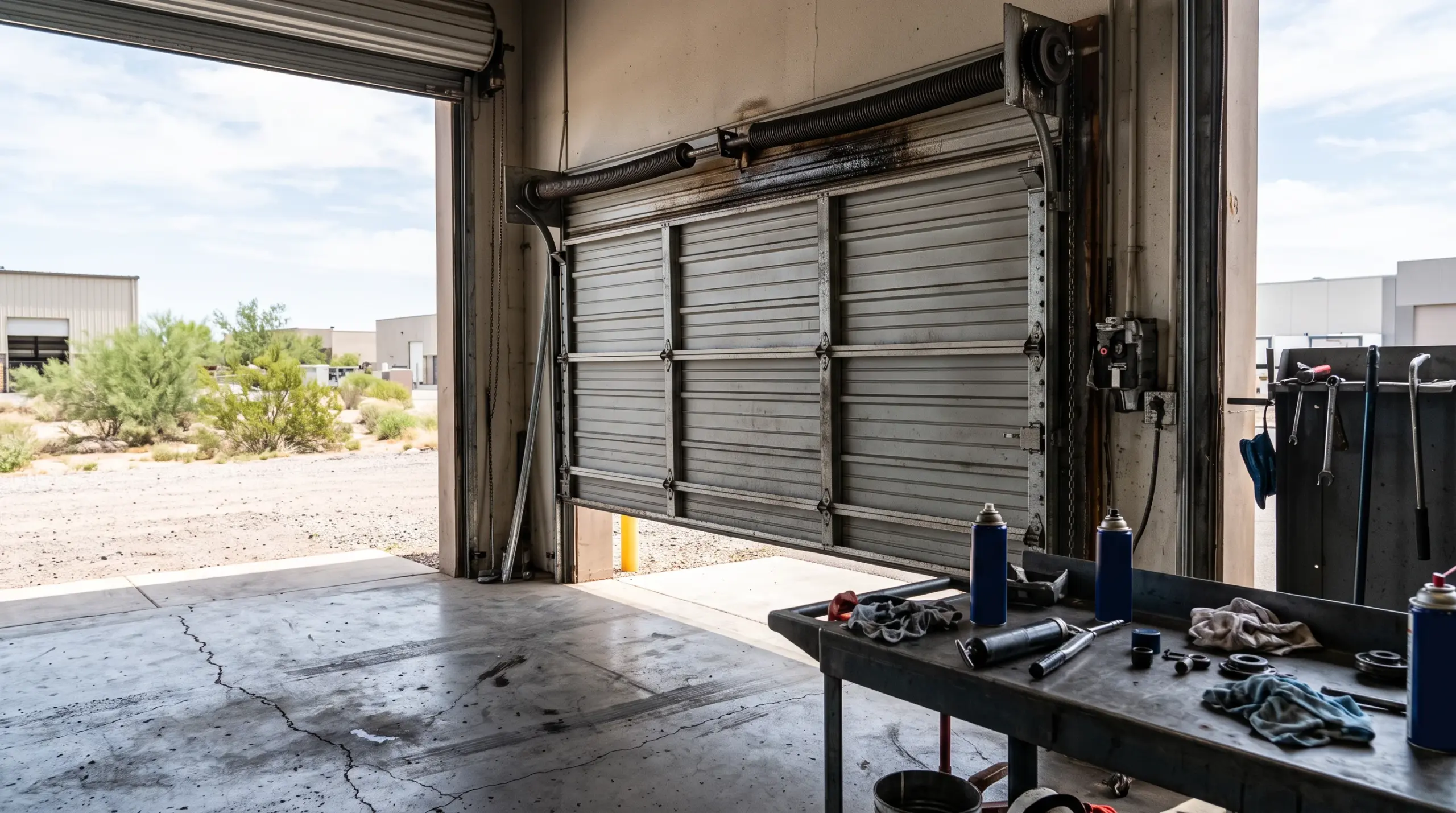
When a roll-up door becomes noisy, sluggish, or difficult to operate, lubrication is often one of the first maintenance steps to consider. In Gilbert, AZ, intense heat, fine dust, and seasonal monsoon weather can place additional stress on hinges, rollers, tracks, bearings, and springs. A consistent care routine helps reduce friction, protect moving components, and keep your business entrance working reliably.
This guide explains how roll-up door lubrication works, which components need attention, what products and techniques are appropriate, and when professional service is the safer choice. Whether you manage a warehouse, retail property, loading area, or service facility, the right roll-up door service schedule can help prevent avoidable downtime. Arizona Roll Up Door Service has more than 20 years of experience helping businesses throughout Gilbert and the Phoenix metro area with expert installation, repair, and preventative maintenance.
Roll-Up Door Lubrication in Gilbert, AZ: Why It Matters
Regular roll-up door lubrication reduces friction between moving components. As a result, the door can open and close more smoothly, the operator may work less aggressively, and wear on hardware can be easier to detect before it becomes a costly failure. Lubrication is not a cure for every operating problem, but it is an important part of dependable commercial door maintenance Phoenix businesses can rely on.
How Arizona Conditions Affect Moving Parts
Gilbert, AZ, experiences long periods of high heat and dry conditions. Dust can settle inside tracks and around rollers, while temperature changes may affect lubricants and exposed hardware. During monsoon season, moisture and windblown debris can also introduce contamination. Together, these conditions may cause a door to squeak, bind, hesitate, or require more force from its motor and opener.
Lubricant helps create a protective film on suitable metal contact points. However, applying it over dirt simply creates a sticky mixture that can attract more debris. For that reason, cleaning and inspection should come before lubrication.
Signs Your Door Needs Attention
Watch for changes in normal operation rather than waiting for a complete breakdown. Warning signs include:
- Squealing, grinding, popping, or scraping sounds
- Uneven travel or hesitation during opening and closing
- A door that operates more slowly than usual
- Visible rust, dry bearings, or contaminated tracks
- Excessive vibration from the curtain, motor, or opener
- A door that stops, reverses, or requires repeated attempts to operate
Lubrication may resolve minor friction-related symptoms. Nevertheless, a slow door can also indicate worn rollers, track misalignment, damaged panels, spring problems, or an opener issue. An inspection is essential when lubrication does not restore smooth operation.
How to Lubricate a Commercial Roll-Up Door Safely
For businesses in Gilbert, AZ, lubrication should be part of a broader preventative door care Arizona program rather than an occasional response to noise. The process begins with safety. Keep employees and customers clear of the opening, follow the manufacturer’s instructions, and never work beneath an unsupported door or attempt to adjust high-tension components.
Step 1: Inspect and Clean
Close the door if the manufacturer’s instructions permit safe access, then examine the tracks, guides, rollers, hinges, bearings, and visible fasteners. Remove dust, leaves, and loose debris with a soft brush or clean cloth. Do not force debris deeper into the track, and do not use water where it could reach electrical components.
Look for bent guides, loose hardware, damaged rollers, frayed cables, cracked panels, or gaps that appear uneven from one side to the other. These conditions require professional attention before lubrication continues.
Step 2: Use the Correct Product
Select a lubricant recommended for commercial roll-up door components. A light, non-gumming product is typically preferable because heavy grease can collect dust and interfere with movement. Avoid using household cooking oils, overly thick products, or any substance not approved for the door’s hardware. The manufacturer’s guidance should always take priority.
Apply a small amount to appropriate pivot points, bearings, hinges, and roller contact areas. Do not coat the entire track indiscriminately. Many track systems are designed for rollers to travel inside a clean guide, and excess lubricant can attract abrasive dust. Wipe away drips and overspray immediately.
Step 3: Test the Operation
After lubrication, operate the door through several complete cycles while observing its movement. Listen for remaining noise and check whether it travels evenly. Confirm that the safety features continue to function as intended. If the door still binds, moves at different speeds, or makes harsh mechanical sounds, stop using it until a technician can diagnose the cause.
Important: Door spring lubrication is not the same as spring adjustment or spring replacement. Springs and cable assemblies can store significant energy. Never loosen, remove, or retension them without proper training and specialized equipment.
Building a Roll-Up Door Service Schedule for Gilbert Businesses
A reliable roll-up door service schedule should reflect how often the door operates, its exposure to dust and weather, and how important it is to daily business activity. A low-use interior opening may need less frequent service than a busy loading entrance that cycles hundreds of times each week.
A Practical Maintenance Routine
- Daily or weekly: Keep the doorway clear, notice unusual sounds, and report changes in speed or balance.
- Monthly: Visually inspect tracks, guides, panels, fasteners, seals, and safety equipment.
- Quarterly: Clean suitable components, review lubrication points, and check for signs of wear or contamination.
- Every six to twelve months: Schedule professional maintenance, including hardware inspection, alignment checks, spring and cable evaluation, and operational testing.
- After severe weather or impact: Request an inspection before returning the door to normal heavy use.
This schedule is a starting point, not a replacement for the manufacturer’s requirements. High-cycle commercial doors, exterior openings, and entrances exposed to blowing dust may benefit from more frequent professional service. Arizona Roll Up Door Service can customize a maintenance plan based on your facility’s usage and operating conditions.
What Professional Maintenance Includes
Professional maintenance goes beyond spraying lubricant. A technician can clean and inspect moving parts, tighten appropriate hardware, check track alignment, examine springs and cables, test safety sensors, and evaluate the motor and opener. Small corrections made during a scheduled visit can reduce the likelihood of emergency repairs and unexpected business interruptions.
For companies comparing commercial door maintenance Phoenix providers, it is useful to ask whether the service includes a written evaluation and recommendations. Clear documentation helps facility managers track recurring issues, plan repairs, and keep multiple openings on a consistent service schedule.
Gilbert, AZ Conditions and Common Roll-Up Door Problems
Local conditions can influence how quickly a commercial roll-up door develops problems. In Gilbert, AZ, airborne dust may accumulate around guides and rollers, while heat can accelerate the drying of unsuitable lubricants. Monsoon winds may carry grit and debris into an opening, and sudden impact from equipment or delivery vehicles can shift tracks or damage panels.
When Lubrication Is Not Enough
A door that remains sluggish after cleaning and lubrication may have a more serious mechanical or electrical problem. Common causes and professional solutions include:
- Broken springs or cables: Replacement with properly rated components and a complete safety inspection.
- Track misalignment: Careful realignment and removal of obstructions without forcing the door.
- Worn rollers or bearings: Component replacement to restore consistent travel.
- Damaged panels: Repair or replacement based on the extent and location of the damage.
- Motor or opener trouble: Electrical and mechanical diagnosis, followed by repair or replacement when appropriate.
- Safety sensor problems: Testing, alignment, cleaning, repair, or replacement of the affected equipment.
Repeatedly operating a damaged door can worsen the original problem. For example, a misaligned track may place excess load on rollers and the opener, while a failing spring can make the door dangerously unbalanced. If the opening is essential to your operation, prompt service is usually more cost-effective than continued trial and error.
Protecting Business Continuity
Your business depends on dependable doors for deliveries, inventory movement, security, and daily access. Planned maintenance gives your team an opportunity to address wear during a convenient window instead of dealing with a failure during peak hours. It also supports the long-term benefits of roll-up doors, including efficient use of space, durable performance, weather protection, and reduced emergency repair costs.
Choosing Professional Roll-Up Door Service in Gilbert
Some routine visual checks can be handled by trained staff, but service involving springs, cables, powered operators, alignment, or safety systems should be performed by qualified technicians. The right provider should understand commercial applications, carry commonly needed replacement parts, and explain the recommended repair clearly.
Arizona Roll Up Door Service serves Gilbert, AZ, as well as Avondale, Buckeye, Goodyear, Scottsdale, North Phoenix, Central Phoenix, and surrounding Phoenix metro communities. With more than two decades of industry experience, the team provides installation, repair, and maintenance for commercial and residential roll-up doors. Fully stocked service vehicles may also help support same-visit repairs when the required parts are available.
When requesting service, share useful details such as the door’s approximate size, frequency of use, symptoms, unusual sounds, and whether the issue began after an impact or weather event. This information helps technicians prepare for a more efficient visit and identify whether the need involves lubrication, adjustment, component replacement, or a larger repair.
Keep Your Gilbert Business Moving
Proper lubrication is a simple but valuable part of roll-up door care. Cleaning before application, using the right product, avoiding high-tension components, and following a consistent maintenance plan can help your door operate smoothly for longer. Just as importantly, regular inspections can reveal alignment, spring, cable, motor, and safety concerns before they interrupt your business.
If your roll-up door is noisy, slow, uneven, or overdue for service, contact Arizona Roll Up Door Service today for a free consultation. Our experienced team provides quality craftsmanship at competitive prices throughout Gilbert, AZ, and the entire Phoenix metro area. Call us for prompt, professional service and let us help keep your facility secure, functional, and ready for business.