Phoenix, AZ summers bring scorching heat, but monsoon season brings something equally dangerous to commercial facilities: extreme wind loads. Between June and September, monsoon storms can generate gusts exceeding 60 mph, putting tremendous pressure on building envelopes—especially roll-up doors. If your business relies on roll-up doors for warehouse access, loading docks, or secure storage, understanding wind load ratings isn’t optional; it’s essential to protecting your facility, inventory, and staff during severe weather events.
This guide walks you through everything Phoenix business owners need to know about roll-up door wind load ratings, how monsoon conditions impact your doors, and what preparation steps will keep your facility secure when storms arrive. We’ll explain the standards that govern wind resistance in Arizona, help you identify whether your current doors meet modern requirements, and show you how to prepare for the intense weather patterns unique to the Phoenix metro area.
Understanding Wind Load Ratings for Roll-Up Doors
Wind load ratings measure the maximum wind pressure (expressed in pounds per square foot, or psf) that a door can safely withstand without failure. These ratings are not arbitrary—they’re derived from standardized testing protocols and building codes that account for geographic wind speed, building height, exposure category, and door size.
The effective wind area of a door is crucial to calculating its load capacity. According to industry guidance on rolling door wind load determination, a properly engineered roll-up door acts as a membrane that transmits loading horizontally to each jamb and vertically to the barrel at the top. For roll-up doors up to 20 feet wide by 10 feet tall, the effective wind area equals the door’s total area. For larger doors, calculations become more complex and must account for the maximum effective wind area permitted under ASCE 7 standards.
Design pressure requirements vary significantly based on ultimate design wind speed. Phoenix building standards specify nominal design wind loads for garage and roll-up doors that differ depending on whether the structure has a roof angle greater than 10 degrees and the door’s dimensions. For example, an 8-foot-wide by 7-foot-tall door rated for 120 mph winds experiences a positive pressure of 13.8 psf and negative pressure of -15.7 psf—forces that pull and push simultaneously on the door assembly.
How Wind Speed Maps Affect Your Door Requirements
Your facility’s location on Arizona’s wind speed map determines the baseline design wind speed used in calculations. Phoenix, Scottsdale, Avondale, Goodyear, and other metro communities each fall within specific wind zones. Higher-elevation areas or those with exposure to open terrain face greater wind loads than sheltered urban locations. When planning new roll-up door installation or upgrades in Phoenix, AZ, always verify your property’s exact wind speed designation with your local authority having jurisdiction (AHJ).
Phoenix, AZ Monsoon Season Wind Challenges
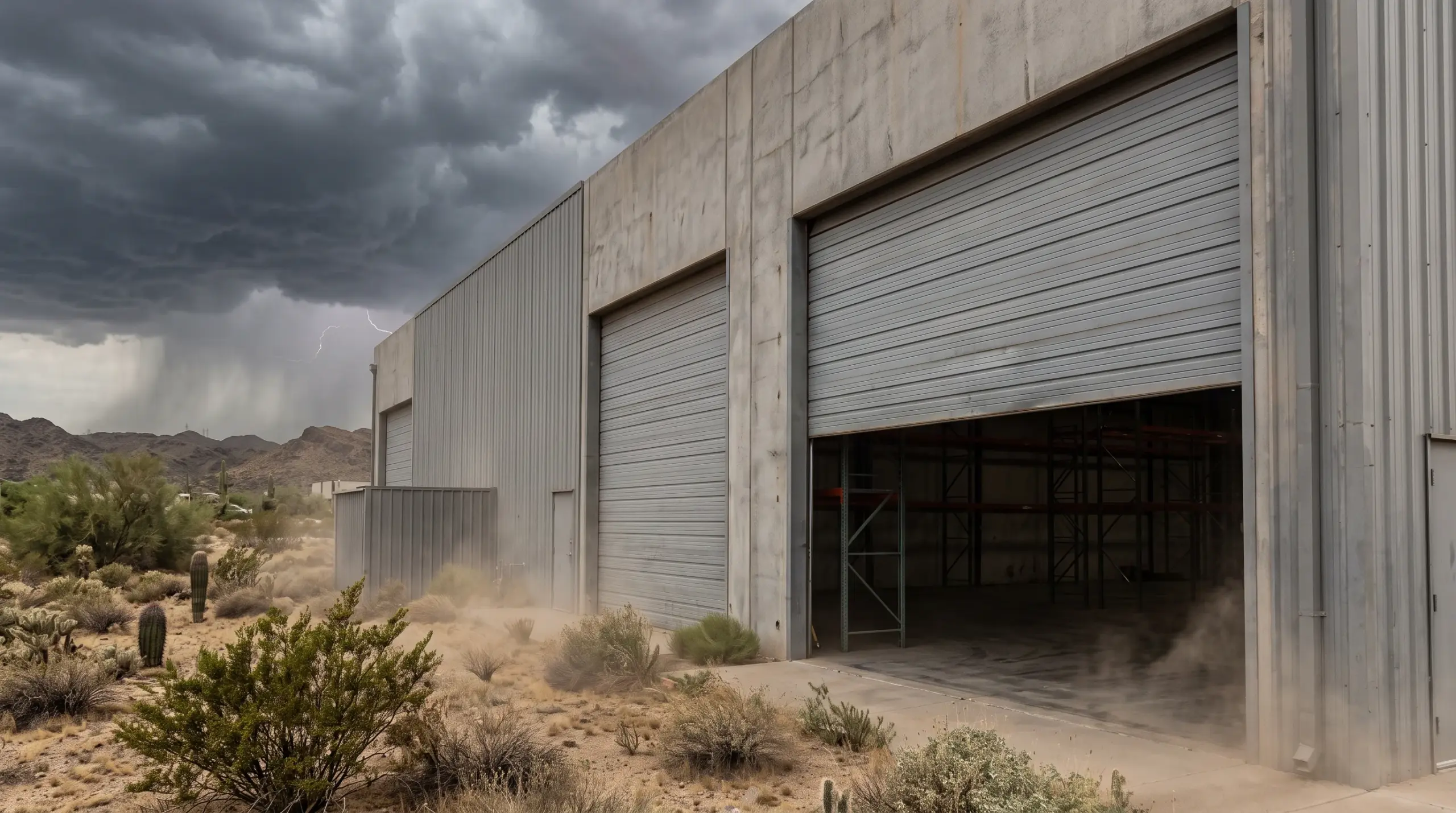
Phoenix’s monsoon season is distinct from typical thunderstorm activity. Between June and September, organized wind systems called haboobs can produce wind gusts that exceed 60 mph in minutes. These aren’t isolated events—they’re recurring seasonal phenomena that test the structural integrity of commercial buildings and their access points.
Roll-up doors in the Phoenix metro area face additional stress from these monsoon conditions because:
- Rapid pressure changes: Monsoon winds don’t build gradually; they arrive suddenly, creating shock loads on door assemblies.
- Sustained high winds: Unlike brief gusts, monsoon events can maintain elevated wind speeds for extended periods, fatiguing door components.
- Thermal cycling: Arizona’s extreme heat combined with monsoon wind events creates expansion and contraction cycles that degrade seals, lubricants, and fasteners.
- Dust and debris impact: Haboobs carry sand and debris that can damage door surfaces, jam tracks, and compromise safety sensors.
- Corrosion acceleration: Wind-blown salt and mineral particles combined with moisture accelerate rust formation on unprotected steel components.
Older roll-up doors installed before 2002 may not meet current wind load standards. Industry testing and Florida Building Code investigations have shown superior performance for roll-up doors installed 2002 and later, where doors were required to be traced to testing standards for product approval. If your facility’s doors predate this era, wind-resistant upgrades should be a priority before the next monsoon season.
Choosing Wind-Rated Roll-Up Doors for Arizona Facilities
When selecting wind-rated roll-up doors for commercial applications in Phoenix, AZ, several factors determine whether a door will perform reliably during monsoon conditions.
Door Construction and Materials
Modern commercial roll-up doors designed for high-wind regions use galvanized or powder-coated steel slats with reinforced bottom bars and end-of-slat wind locks. These features enhance wind load capability by preventing slat separation and distributing pressure more evenly across the door assembly. The barrel (coil mechanism at the top) must be securely anchored to the building structure, as this is where vertical wind loads concentrate.
Spring systems and motor operators also factor into wind resistance. Heavy-duty commercial operators with force-limiting features prevent door damage if wind pressure exceeds design specifications. Properly sized springs ensure the door can be manually opened if power fails during a monsoon event—a critical safety feature when business operations must continue despite weather disruptions.
Installation and Anchoring
Even the highest-rated roll-up door will fail if improperly installed. Structural anchors must be sized for the calculated wind loads and fastened to the building’s primary structural frame, not just surface masonry. In Phoenix, AZ, where many commercial buildings use concrete block or stucco, installation contractors must verify that anchors penetrate to structural backing and use appropriate fastener specifications.
Track alignment is equally critical. Misaligned tracks create binding, which reduces the door’s ability to move freely under wind pressure. During monsoon season, a door that binds under load is far more likely to derail or fail catastrophically.
Maintenance and Preparation for Monsoon Season
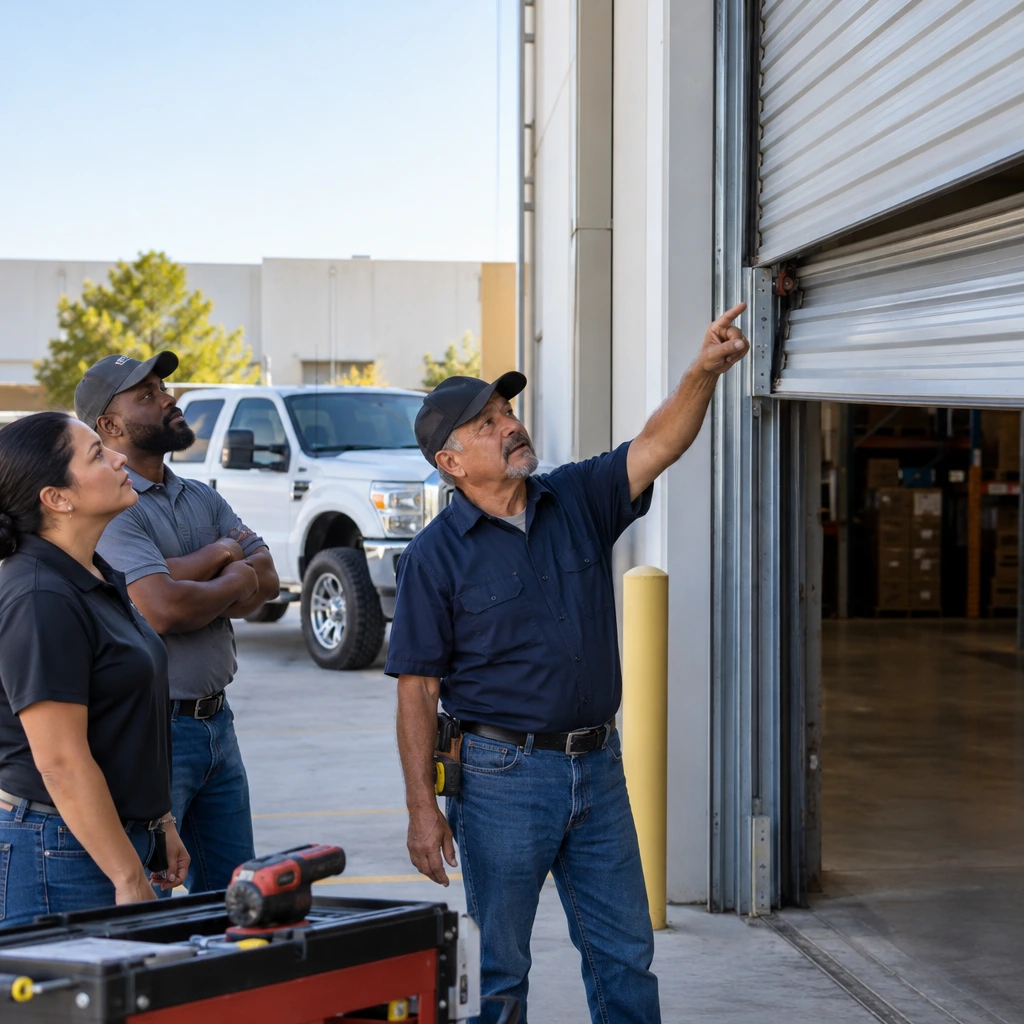
Proper maintenance is your first line of defense against monsoon-related door failures. Arizona Roll Up Door Service recommends a comprehensive pre-monsoon inspection and maintenance program for all commercial roll-up doors.
Pre-Monsoon Inspection Checklist
- Spring and cable tension: Verify springs are properly tensioned and cables show no signs of fraying or damage. Weak springs reduce the door’s ability to close smoothly under wind pressure.
- Track condition and alignment: Remove debris, check for dents or misalignment, and ensure rollers move freely. Clean tracks reduce binding and allow the door to respond to wind loads without jamming.
- Slat integrity: Inspect slats for cracks, dents, or separation. Damaged slats compromise the membrane effect and reduce wind load capacity.
- Motor and operator function: Test opening and closing cycles, force limits, and safety features. Ensure the door operates smoothly at all speeds.
- Safety sensors and edge systems: Verify photo eyes and safety edges function correctly. These systems must operate reliably even if wind pressure affects door movement.
- Weather seals and gaskets: Replace any deteriorated seals. Arizona’s intense heat degrades rubber and foam components faster than in moderate climates.
- Fastener inspection: Check all bolts, brackets, and hinges for corrosion or looseness. Tighten any loose hardware and replace corroded fasteners.
For high-use commercial doors (20+ cycles per day), Arizona Roll Up Door Service recommends quarterly maintenance. Moderate-use doors benefit from semi-annual service, while low-use doors should receive annual inspections. This proactive approach prevents emergency failures during monsoon season when repair response times may be delayed due to widespread storm damage.
Documentation and Compliance
Maintain detailed records of all maintenance and repairs. If your facility requires compliance with specific wind load standards or insurance requirements, documentation proves that doors have been maintained to manufacturer specifications. This record-keeping also helps identify patterns—if a particular door requires frequent repairs, it may be a candidate for replacement with a higher-rated unit.
When to Upgrade Your Roll-Up Doors
Not all roll-up doors are created equal, and not all facilities have identical wind load requirements. Consider upgrading your doors if:
- Your current doors are older than 15 years and predate modern wind load testing standards.
- Your facility experienced damage during previous monsoon events.
- Recent building code updates increased wind speed requirements for your location in Phoenix, AZ.
- Your business expanded and you added larger door openings that require higher wind load ratings.
- Insurance carriers have flagged your doors as not meeting current standards.
- You’ve experienced repeated repairs to springs, cables, or motor systems.
Modern wind-rated roll-up doors offer additional benefits beyond storm resistance: improved energy efficiency through better sealing, reduced noise from smoother operation, enhanced security features, and lower long-term maintenance costs. When calculated over a 20-year lifespan, the investment in quality, wind-resistant doors often pays for itself through avoided emergency repairs and downtime.
Preparing Your Phoenix Facility for Monsoon Season
Beyond door maintenance, comprehensive facility preparation ensures your business remains operational during severe weather. Review your emergency response plan and verify that staff understand how to operate roll-up doors manually if power fails. Test backup power systems if your doors have motorized operators. Ensure that safety features like photo eyes and edge sensors are functional and not obstructed by stored items or debris.
Communicate with your insurance carrier about your door maintenance and upgrade plans. Some policies offer premium reductions for facilities that maintain wind-resistant doors and documented maintenance records. This documentation also protects your business if storm damage occurs—it demonstrates that you took reasonable precautions to prevent loss.
Arizona Roll Up Door Service serves the entire Phoenix metro area, including Avondale, Buckeye, Goodyear, Scottsdale, and North Phoenix communities. With over 20 years of experience, our team understands the specific wind load challenges facing commercial facilities in the region and can help you select, install, and maintain roll-up doors that will protect your business through monsoon season and beyond.
Conclusion: Protect Your Business Before Monsoon Season Arrives
Wind load ratings aren’t abstract technical specifications—they’re the difference between a secure facility and a catastrophic failure during monsoon season. By understanding how wind loads are calculated, recognizing the unique challenges Phoenix, AZ faces during monsoon months, and implementing a comprehensive maintenance program, you can ensure your roll-up doors perform reliably when storms arrive.
Don’t wait until monsoon season to address door concerns. Contact Arizona Roll Up Door Service today for a free consultation and pre-monsoon inspection. Our team will assess your current doors, verify they meet current wind load standards, and recommend upgrades if needed. With proper maintenance and quality doors, your business can weather any storm with confidence. Call us for prompt, professional service and let us help keep your facility secure and functional year-round.