Why Commercial Roll-Up Doors Fail in Buckeye’s Dust Storm Season is a question many facility managers ask only after a door begins dragging, grinding, or refusing to close. In Buckeye, AZ, summer monsoon outflows can push desert dust and debris into every exposed opening, while dry winter wind events create additional blowing-dust problems. The National Weather Service explains that haboobs form when thunderstorm outflow winds lift dust into an advancing wall that can stretch for miles and rise thousands of feet. National Weather Service guidance on dust storms and haboobs This article explains how that dust affects commercial roll-up doors, which warning signs deserve immediate attention, and why preventive maintenance before dust storms can reduce downtime and emergency repair costs.
Why Commercial Roll-Up Doors Fail in Buckeye’s Dust Storm Season
Commercial roll-up doors are designed for repeated daily operation, but they still depend on clean tracks, properly adjusted moving parts, balanced springs, secure hardware, and reliable motor components. Dust storms attack each of those systems at once. Fine particles settle on guide tracks, work into rollers and bearings, collect around weather seals, and enter motor or control enclosures through small gaps.
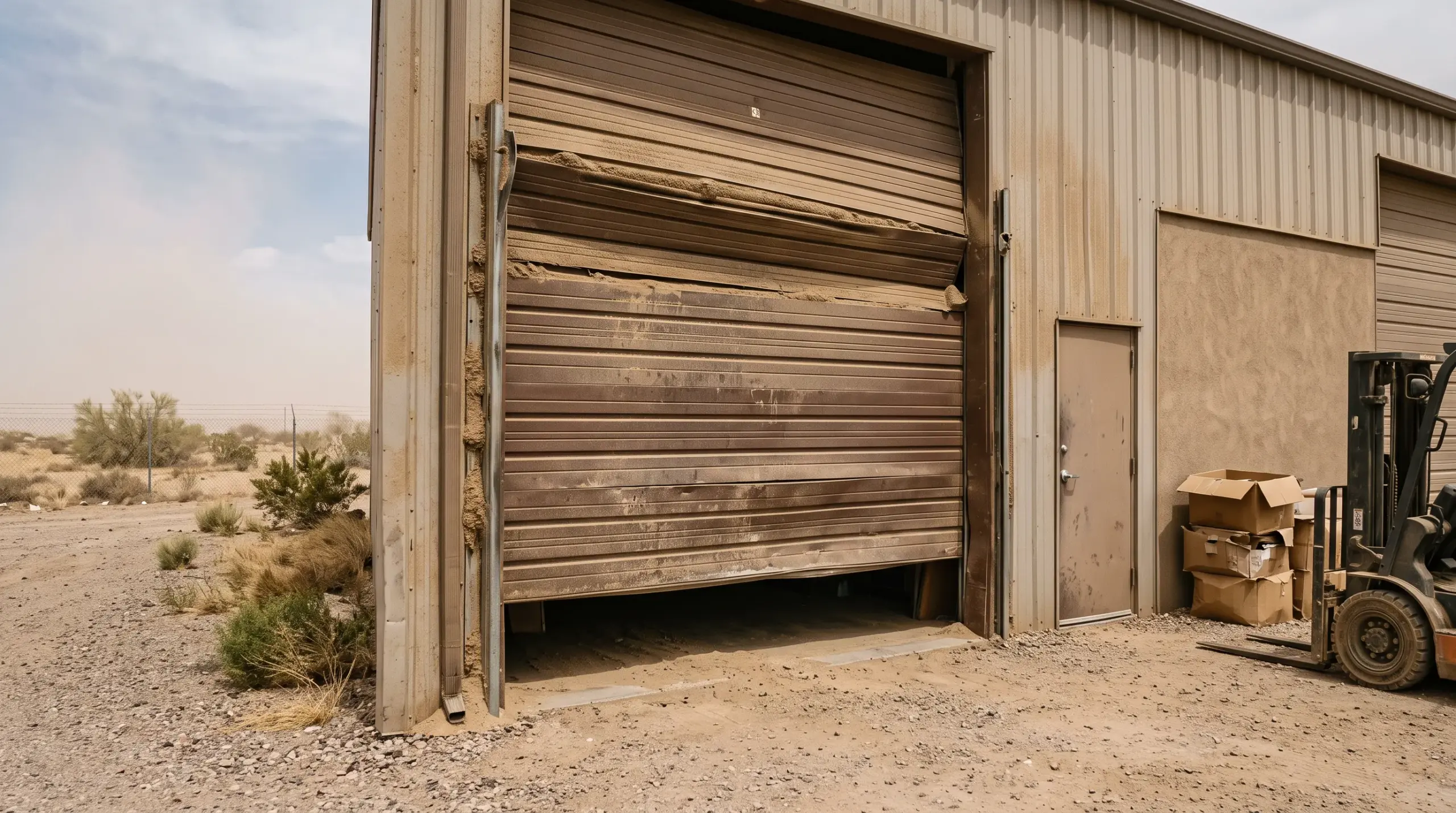
The result is rarely one dramatic failure at the beginning. More often, dust creates friction gradually. The door becomes slower, noisier, or less balanced. A motor works harder to lift the curtain, springs lose effective performance, and operators may continue using the door until a minor issue becomes a complete shutdown.
Arizona’s dust conditions are not limited to one type of storm. The Arizona Department of Transportation describes winter dust storms as strong winds moving across broad desert areas, while monsoonal haboobs are commonly associated with thunderstorm downdrafts or microbursts that blast dust into the air. ADOT’s explanation of Arizona dust storm types For Buckeye businesses, that means door protection and maintenance should be treated as a year-round concern, with extra preparation before the summer monsoon period.
Dust is abrasive, not merely dirty
Desert dust can act like a fine abrasive when it becomes trapped between moving surfaces. On a commercial roll-up door, that may increase resistance between rollers and tracks or prevent hardware from seating correctly. Dust can also combine with existing lubricant, producing a thick residue that attracts even more debris.
Simply spraying more lubricant over a dirty component may temporarily quiet the door, but it can also create a paste-like buildup. Proper service requires cleaning first, inspecting the affected parts, and then applying the appropriate lubricant in the correct amount.
Wind adds force to existing weaknesses
A haboob does not need to directly damage a door curtain to cause trouble. Strong wind can rattle loose guides, stress fasteners, shift debris into the opening, and expose weak weather seals. If a door is already out of alignment, the added movement may accelerate wear or cause the curtain to bind.
That is why a door that operated acceptably in May may begin failing after several intense storm events in Buckeye. Dust exposes weaknesses that normal operation may have been quietly hiding.
How Desert Dust Damages the Main Door Components
Tracks, guides, and rollers
Track contamination is one of the most common causes of sluggish operation. Dust, small stones, leaves, and windblown packaging material can settle inside the guides. As the door moves, rollers encounter resistance instead of traveling smoothly. The operator may continue lifting, but the increased load can shorten the life of the motor, chain, belt, or drive components.
Track cleaning commercial doors Arizona businesses rely on should include more than wiping the visible front edge. A technician should inspect the full travel path, remove obstructions, check for bent or shifted guides, and confirm that the door curtain is centered. A clean track cannot correct a structural bend, so alignment must be checked as part of the same visit.
Springs, cables, and balance
Commercial roll-up doors depend on spring and cable assemblies to offset the curtain’s weight. When the door is properly balanced, the operator does not carry the entire lifting load. Dust does not usually break a spring by itself, but contamination, repeated friction, corrosion around hardware, and continued operation under abnormal resistance can contribute to premature wear.
If the door feels unusually heavy, drops faster than normal, pauses during travel, or rises unevenly, stop forcing it. A broken spring or cable can create a safety hazard and may lead to additional damage if the operator continues cycling the door.
Motors, controls, and safety equipment
Dust can enter around covers, conduit openings, vents, and cable penetrations. Accumulation inside a motor or control box may contribute to overheating, unreliable connections, or nuisance shutdowns. Safety sensors and related equipment can also become dirty or misaligned, preventing the door from closing correctly.
Employees should not bypass a safety device simply to keep the opening operating. A professional inspection can determine whether the problem is contamination, alignment, wiring, a failed component, or a separate mechanical issue.
Warning Signs Your Buckeye Commercial Door Needs Service
Door failures often provide warning signs before the equipment stops completely. A simple reporting process helps employees identify problems early rather than treating unusual behavior as normal.
- Slow or sluggish travel: The door takes longer to open or close than it did previously.
- Grinding, scraping, or popping sounds: Noise may indicate track contamination, worn rollers, loose hardware, or a balance problem.
- Uneven movement: One side rises or lowers before the other, suggesting alignment or tension concerns.
- Repeated reversing: The door opens after attempting to close because sensors are dirty, blocked, or misaligned.
- Visible gaps around the opening: Damaged seals or shifted guides can allow more dust into the facility.
- Motor overheating or frequent resets: Increased resistance may be forcing the operator to work beyond normal conditions.
- Loose brackets, bolts, or fasteners: Wind vibration and repeated cycling can worsen unsecured hardware.
These symptoms are especially important after a major storm. On August 25, 2025, the National Weather Service documented a massive dust storm, severe winds, and flash flooding affecting the Phoenix metropolitan area. NWS Phoenix’s August 25, 2025 storm summary A storm of that scale demonstrates why a post-storm inspection can be worthwhile even when a door still appears to function.
When to stop operating the door
Stop using the door and request professional service if the curtain is hanging unevenly, a cable is frayed or displaced, a spring is broken, the door is jammed in the opening, or the operator is making severe electrical or mechanical noises. Repeatedly pressing the controls may turn a repairable condition into a damaged panel, drive assembly, or opening structure.
For businesses handling deliveries, inventory, vehicles, or temperature-sensitive materials, a disabled opening can affect far more than convenience. It can interrupt receiving schedules, restrict access, and create security concerns after hours.
Preventive Maintenance Before Dust Storms
Preventive maintenance before dust storms is one of the most practical ways to protect a commercial opening in Buckeye. The goal is not to make a roll-up door dustproof; no exposed operating system can completely prevent airborne particles from reaching it. The goal is to remove accumulated debris, correct developing wear, and ensure the door can operate with as little unnecessary resistance as possible.
Recommended maintenance steps
- Clean the tracks and guides. Remove dust, stones, trash, and other obstructions from the complete travel path.
- Inspect alignment. Check that guides, brackets, rollers, and the curtain are positioned correctly.
- Test balance and spring condition. Look for unusual heaviness, uneven travel, fraying, or signs of damage.
- Lubricate appropriate moving parts. Clean first and use products suitable for the specific door system.
- Tighten and examine hardware. Storm vibration can reveal loose bolts, brackets, covers, and fasteners.
- Check seals and weather protection. Replace damaged or compressed seals that allow excessive dust infiltration.
- Test the operator and safety equipment. Confirm proper reversing, stopping, sensor response, and manual operation.
- Inspect electrical enclosures. Look for dust accumulation, moisture intrusion, damaged wiring, or loose connections.
Maintenance timing matters. Schedule a detailed inspection before the most active monsoon period, then arrange a post-storm check after unusually strong winds or a visible dust wall. Businesses with high cycle counts, open yards, construction exposure, or frequent deliveries may need more frequent service than facilities in protected commercial areas.
Daily checks for employees
Employees can perform a brief visual and operational check without opening covers or adjusting springs. Watch the door during one complete cycle, listen for new sounds, confirm that the opening is clear, and report any change immediately. Do not attempt to clean inside a motor enclosure, adjust spring tension, or remove damaged components without training.
Keeping a simple maintenance log can also reveal patterns. If the door slows after every storm or begins reversing during dusty afternoons, that information helps a technician diagnose the underlying issue faster.
Choosing the Right Repair Response in Phoenix’s West Valley
When a commercial roll-up door fails, speed matters, but the fastest response is not always the best repair. Replacing a motor without addressing a dirty or misaligned track may leave the original problem in place. Likewise, adjusting tension without checking the curtain, guides, and operator can create new safety concerns.
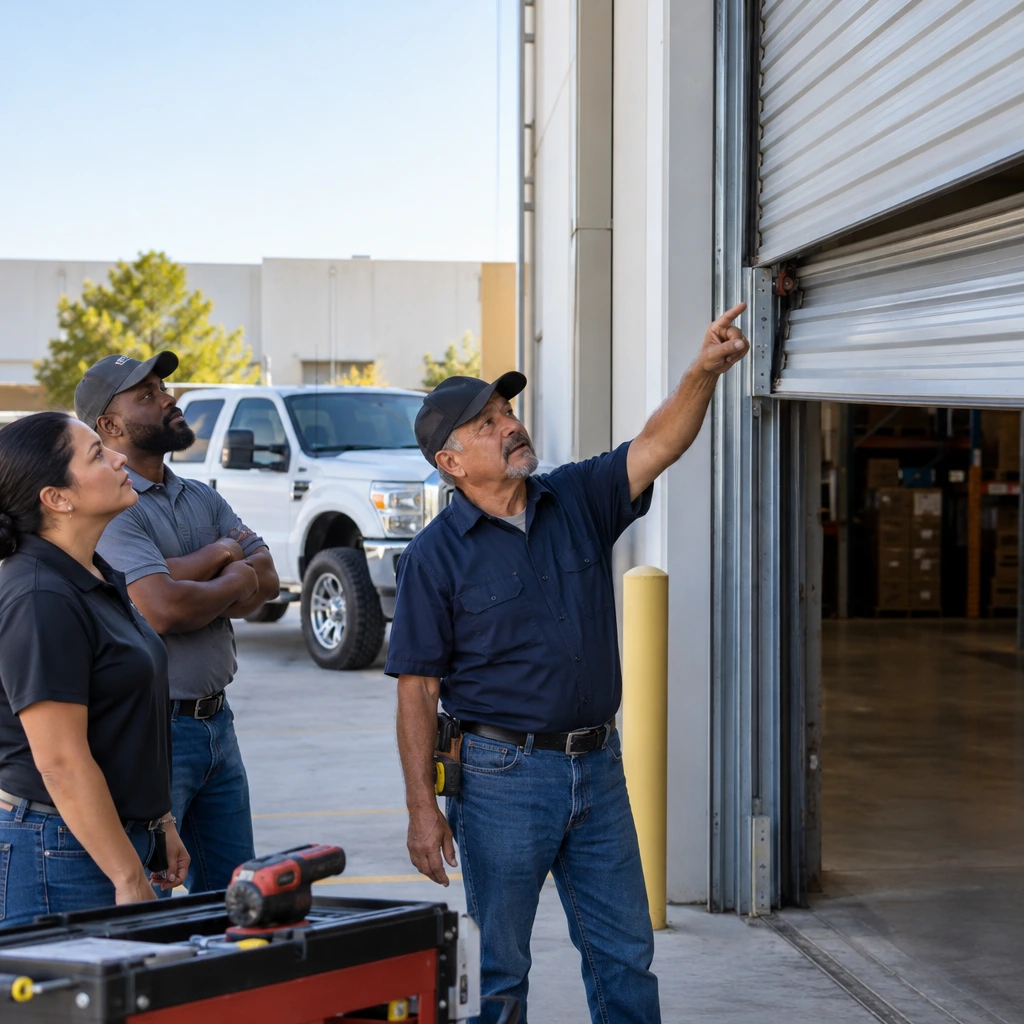
A proper service call should begin with diagnosis. The technician should identify whether the failure involves track alignment, obstruction removal, spring or cable assemblies, damaged panels, motor and opener components, safety sensors, or a combination of issues. The repair plan should then match the door’s condition and operating demands.
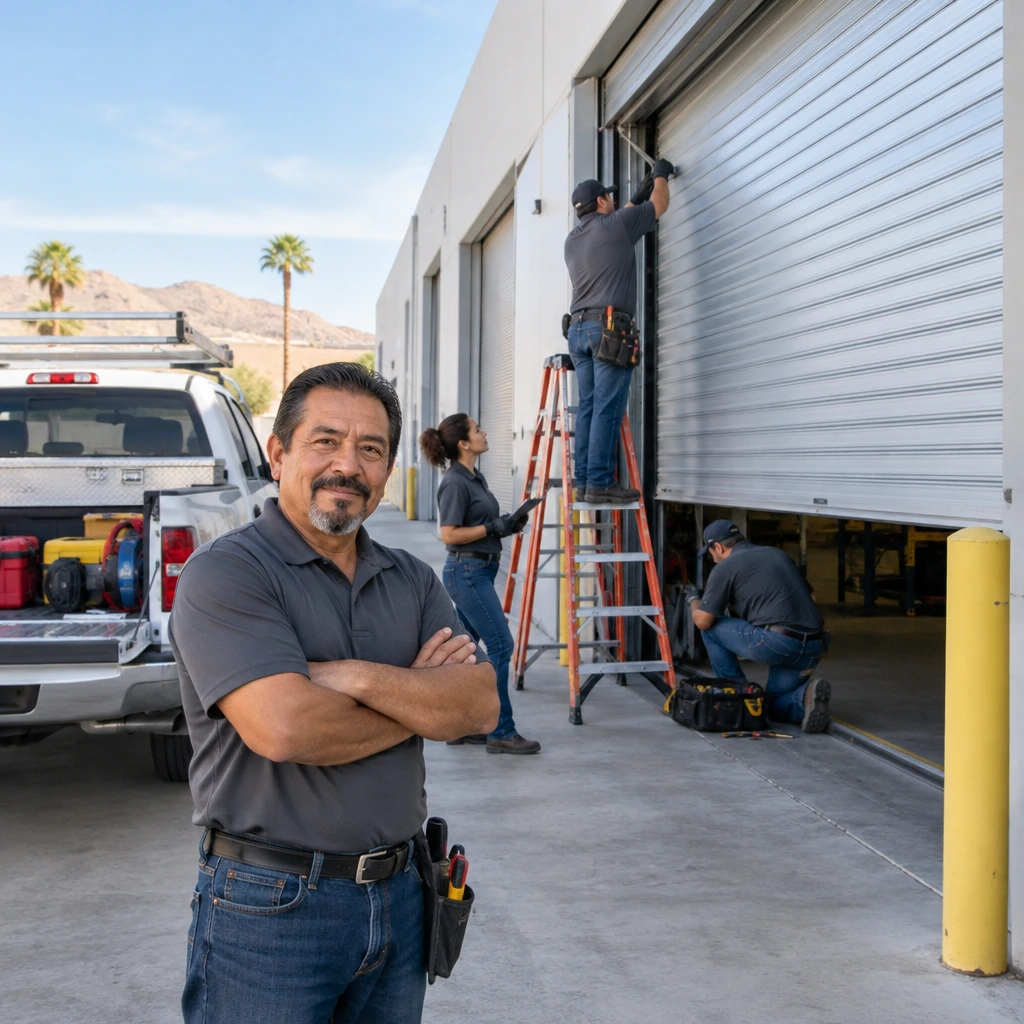
For Buckeye facilities, it is also helpful to work with a company familiar with desert conditions across the Phoenix metro area. Arizona Roll Up Door Service has over 20 years of experience providing commercial and residential roll-up door installation, repair, and maintenance throughout Buckeye, Avondale, Goodyear, Scottsdale, North Phoenix, and surrounding communities.
Common service priorities include:
- Same-day repair capability when scheduling and parts availability allow
- Replacement of worn springs, cables, rollers, panels, and hardware
- Motor and opener diagnosis
- Track cleaning, obstruction removal, and alignment
- Safety sensor testing and correction
- Customized maintenance schedules for high-use commercial facilities
ADOT maintains a dust detection system that uses environmental sensor stations and camera verification to provide early warning of low-visibility conditions. ADOT’s description of its dust detection system While that system is designed for transportation safety, the same principle applies to facility management: early awareness gives businesses time to secure exposed areas, postpone unnecessary door cycling, and schedule inspections before a minor issue becomes an emergency.
Conclusion: Protect Your Commercial Roll-Up Door Before the Next Storm
Commercial roll-up doors fail during Buckeye’s dust storm season because dust increases friction, wind exposes weak hardware, and repeated operation under added resistance strains tracks, springs, cables, operators, and safety equipment. Ignoring slow travel or unusual noise can allow a manageable maintenance issue to become a costly interruption.
Before the next haboob or blowing-dust event, arrange track cleaning, alignment checks, hardware inspections, lubrication, balance testing, and safety equipment verification. After a significant storm, inspect the door again for debris, shifted guides, damaged seals, and new operating symptoms.
Arizona Roll Up Door Service provides expert commercial roll-up door installation, repair, and maintenance throughout Buckeye and the Phoenix metro area. With over 20 years of experience, a professional team, competitive pricing, and replacement parts available for many same-visit repairs, the company helps keep business facilities secure and functional. Contact Arizona Roll Up Door Service today for a free consultation or prompt, professional service.