OSHA Compliance for Commercial Roll-Up Doors: Phoenix Safety Requirements 2026 is not simply a matter of installing a durable door and checking that it opens. Phoenix-area employers must also address moving equipment, electrical controls, emergency access, maintenance procedures, and local building and fire-code requirements. Although OSHA does not publish one dedicated standard covering every commercial roll-up door, related workplace rules can still apply to the door, its operator, safety devices, and servicing procedures.
This guide explains the practical requirements businesses should review in 2026, including OSHA roll-up door requirements Phoenix employers commonly encounter, Arizona’s ADOSH enforcement structure, reversing edge switches, emergency exit concerns, lockout/tagout, and Phoenix code updates. Arizona Roll Up Door Service helps businesses throughout Phoenix, Avondale, Buckeye, Goodyear, Scottsdale, North Phoenix, and surrounding communities keep commercial doors dependable, functional, and safer for employees.
OSHA Compliance for Commercial Roll-Up Doors: Phoenix Safety Requirements 2026
The first point to understand is that OSHA does not have a single regulation titled “commercial roll-up door safety.” In a September 10, 2002 interpretation, OSHA stated that there were no specific federal OSHA standards or requirements applicable to overhead doors. However, the same interpretation explained that general industry or construction standards may apply depending on the work being performed. OSHA’s interpretation of overhead door requirements remains an important starting point for evaluating workplace safety.
For Phoenix businesses, that means compliance is based on the hazards created by the entire installation—not just the curtain or door panel. Employers should evaluate:
- Moving parts, pinch points, and exposed rotating components.
- Automatic operation, controls, photoelectric sensors, and reversing edge switches Phoenix facilities depend on.
- Door travel, stopping distance, and whether the door reverses when an obstruction is detected.
- Electrical wiring, disconnects, control stations, and operator access.
- Safe procedures for inspection, repair, adjustment, and spring or cable replacement.
- Whether the roll-up door is being used as an exit route or could obstruct required emergency egress.
Arizona has an OSHA-approved State Plan administered by the Arizona Division of Occupational Safety and Health, or ADOSH. The plan covers most private-sector workplaces and adopts federal OSHA standards by reference, while also allowing Arizona-specific requirements in certain areas. Businesses should therefore treat commercial door safety compliance Arizona employers need as both a federal-standard and state-enforcement issue. OSHA’s Arizona State Plan overview explains ADOSH coverage and enforcement responsibilities.
General OSHA rules that may affect a roll-up door
Depending on the facility and the work being done, employers may need to consider machine guarding, electrical safety, walking-working surfaces, emergency action planning, and hazardous-energy control. OSHA’s general industry standards are not a substitute for a professional site evaluation, but they provide the framework for identifying hazards around powered commercial doors.
In practice, a door that has missing guards, exposed moving parts, damaged wiring, an inoperative safety sensor, or a control that allows unexpected movement may create a recognized workplace hazard even when no “roll-up door” rule directly names the condition.
Door Safety Devices Commercial Facilities Should Inspect
Safety devices are intended to prevent a door from striking a person, vehicle, pallet, or other obstruction. They are not optional conveniences for high-traffic facilities. A commercial roll-up door should be evaluated according to its design, operator, manufacturer instructions, use frequency, and surrounding hazards.
Reversing edges, photo eyes, and controls
A reversing edge switch is typically installed along the lower edge of a powered door. When the edge contacts an obstruction, the operator should stop or reverse according to the equipment design. Photoelectric sensors, sometimes called photo eyes, create another protective layer by detecting an object in the door opening.
These devices require routine testing because dust, impact, vibration, misalignment, wiring damage, and Arizona heat can affect performance. The inspection should confirm that:
- The reversing edge is intact and securely attached.
- Photoelectric sensors face each other and remain properly aligned.
- The door stops or reverses when the test procedure calls for it.
- Control stations are clearly identified and accessible.
- Emergency stop or disconnect equipment is present where required by the installation.
- Safety devices have not been bypassed to solve an operational problem.
Businesses should document testing, especially when the door serves a warehouse, loading area, distribution center, manufacturing space, or other location with frequent pedestrian and vehicle traffic. A door that operates slowly, hesitates, fails to reverse, or closes unexpectedly should be removed from normal use until it has been evaluated.
Guarding and physical condition
OSHA’s machine-guarding principles can be relevant when employees may contact moving machinery. The operator, drive components, chains, sprockets, shafts, and counterbalance assemblies should be protected where their location creates an exposure. Damaged panels, loose guides, bent tracks, frayed cables, broken springs, and worn fasteners can also cause uncontrolled movement.
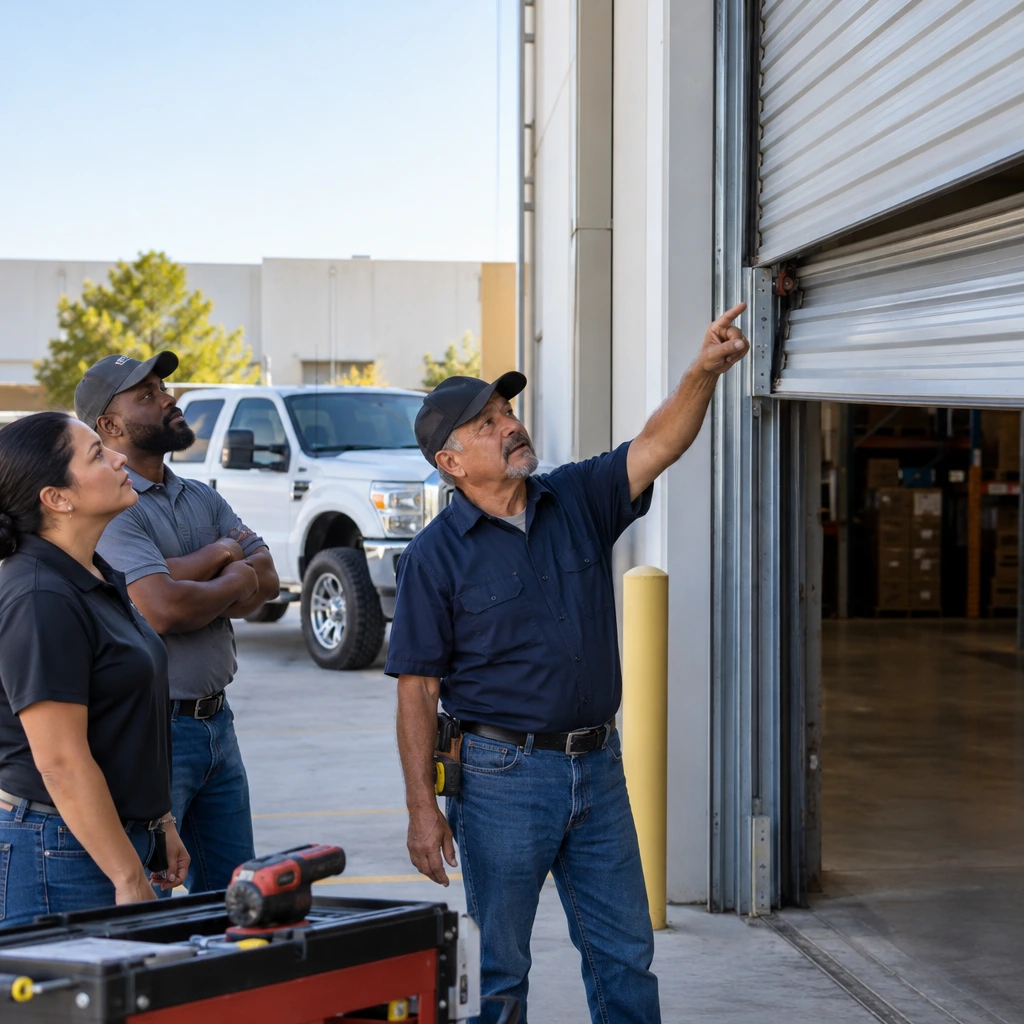
Do not allow employees to improvise repairs or hold a damaged door open with unsecured materials. Professional repair may include track alignment, obstruction removal, hardware adjustment, cable or spring replacement, motor diagnosis, or replacement of failed safety equipment.
Maintenance, Lockout/Tagout, and Employee Procedures
Preventive maintenance is one of the most effective ways to support OSHA overhead door standards and reduce emergency failures. A maintenance plan should match the door’s cycle count, environment, operating speed, and traffic level. A lightly used interior door may need a different schedule from a loading-area door exposed to dust, forklifts, temperature changes, and constant daily operation.
What a commercial maintenance inspection should cover
- Door travel, balance, stopping, and reversing performance.
- Springs, cables, drums, guides, tracks, rollers, hinges, and fasteners.
- Operator mounting, motor performance, control wiring, and disconnects.
- Photoelectric sensors, reversing edges, warning devices, and control stations.
- Lubrication of appropriate moving parts according to manufacturer guidance.
- Track cleanliness, alignment, and clearance from stored materials or vehicles.
- Visible damage, corrosion, impact marks, unusual noise, and sluggish operation.
OSHA’s compliance assistance materials note that employers may be subject to lockout/tagout requirements when employees service or maintain equipment that could start unexpectedly or release hazardous energy. OSHA’s general industry compliance guidance identifies hazardous-energy control as a key workplace responsibility.
For roll-up door work, lockout/tagout may involve electrical energy, stored spring tension, suspended door weight, moving components, and pneumatic or hydraulic systems where applicable. Employees should not remove covers, adjust springs, replace cables, or work beneath an unsecured door without a documented procedure and appropriate training.
Employee training matters
Staff should know how to recognize warning signs and report them promptly. Useful training topics include keeping people clear of the opening, not walking or driving beneath a moving door, reporting unusual sounds, avoiding damaged controls, and understanding who is authorized to perform service work.
A written procedure should explain what happens when a safety device fails. The correct response is generally to stop using the door, restrict access, notify a supervisor, and arrange qualified service—not to bypass the device so operations can continue.
Phoenix Building and Fire-Code Considerations in 2026
OSHA compliance is only one part of commercial door safety. Local building and fire requirements can affect door installation, clearances, electrical work, fire-rated assemblies, and emergency access.
The City of Phoenix approved the 2024 Phoenix Building Construction Code on June 18, 2025, with an effective date of August 1, 2025. The city’s published code list includes the 2024 International Building Code, 2023 National Electrical Code, and related adopted standards. The City of Phoenix Building Construction Code page provides the current adoption information and code resources.
Phoenix also lists the adopted 2024 International Fire Code as effective February 17, 2026. The Phoenix Fire Code page identifies the current fire-code adoption and provides contact information for questions involving local fire-code application.
Do not use a roll-up door as a required exit without review
One common compliance mistake is assuming that a large commercial opening can automatically serve as an employee exit. OSHA’s exit-route rules contain specific requirements, and OSHA guidance warns that a revolving, sliding, or overhead door may not serve as a required exit door in the circumstances described by the standard. A facility should have properly designed and accessible personnel exits, with doors that can be opened from the direction of exit travel without special knowledge or unreasonable effort.
Keep roll-up door openings, exit paths, fire equipment, and electrical disconnects clear. Do not stack inventory where it blocks sensors, limits travel, prevents inspection, or forces employees to walk through vehicle paths. If the opening is part of a fire-rated or smoke-control assembly, alterations should be reviewed by the responsible building or fire-code professional before work begins.
How Phoenix Businesses Can Build a Practical Compliance Program
Compliance works best when it becomes part of normal facility management rather than a response to an accident. Arizona businesses can begin with a door inventory listing each opening, location, operator type, use frequency, safety devices, inspection history, and known defects.
A practical program should include:
- Initial evaluation: Have each commercial roll-up door inspected for mechanical, electrical, operational, and access hazards.
- Written inspection schedule: Set service intervals based on use, manufacturer guidance, and site conditions.
- Functional safety tests: Test reversing edges, photo eyes, stopping action, controls, and emergency features.
- Repair documentation: Record defects, corrective work, parts used, and the date the door returned to service.
- Employee reporting: Give staff a clear process for reporting slow operation, impact damage, sensor failure, or unusual noise.
- Qualified service: Use trained technicians for springs, cables, operators, electrical components, and structural adjustments.
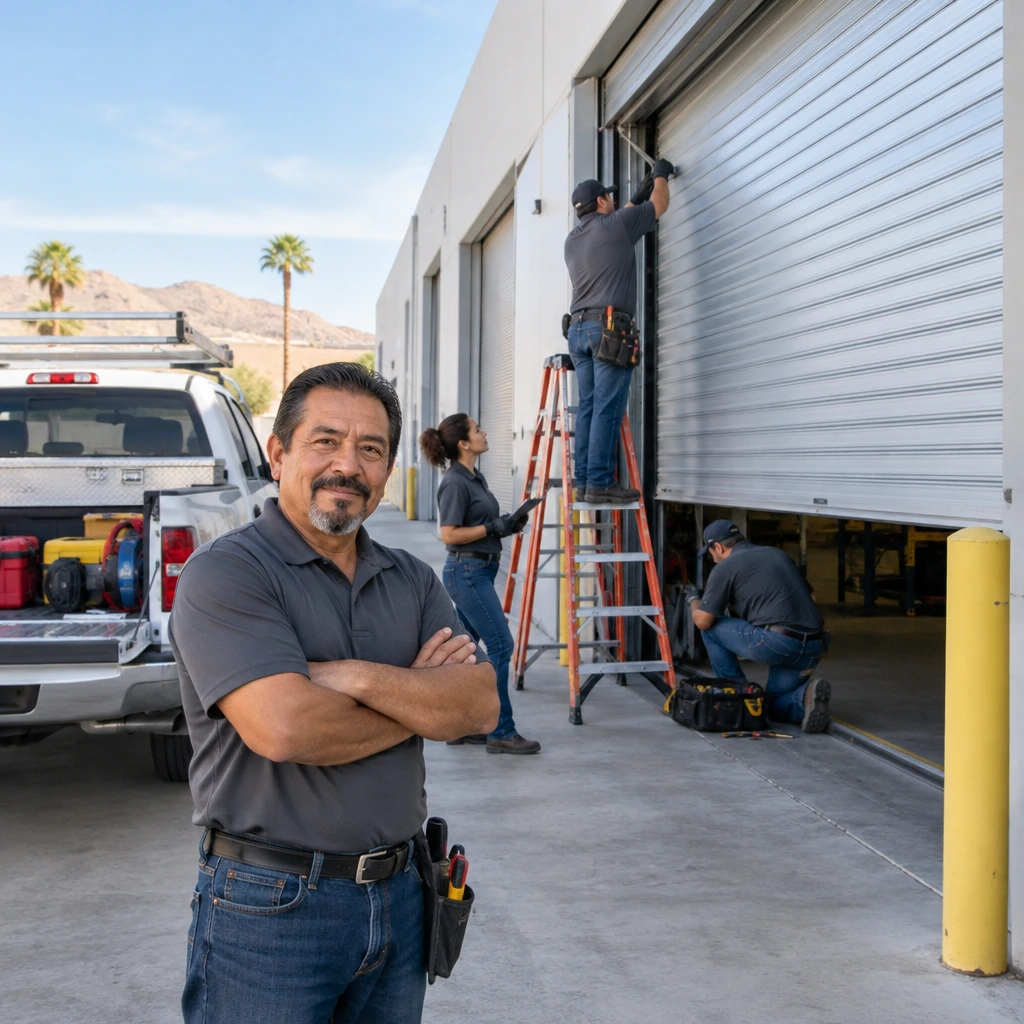
Arizona Roll Up Door Service has more than 20 years of experience helping businesses throughout the Phoenix metro area with installation, repair, and preventive maintenance. A stocked service vehicle and professional diagnosis can often reduce downtime while addressing problems such as sluggish operation, track misalignment, damaged panels, motor issues, and failed safety sensors.
Conclusion: Keep Your Phoenix Roll-Up Doors Safe and Dependable
OSHA roll-up door requirements Phoenix businesses need to understand are built around hazard control rather than one door-specific regulation. Employers should evaluate moving parts, guarding, safety sensors, reversing edge switches, electrical systems, emergency egress, hazardous energy, and maintenance procedures. They should also confirm that installation and alterations align with current Phoenix building and fire-code requirements in effect during 2026.
Regular professional maintenance can identify small issues before they become a safety incident or costly business interruption. Arizona Roll Up Door Service provides expert commercial installation, repair, and maintenance throughout Phoenix, Avondale, Buckeye, Goodyear, Scottsdale, North Phoenix, and surrounding communities. Contact Arizona Roll Up Door Service today for a free consultation, or call for prompt, professional service that helps keep your facility secure, functional, and ready for daily operations.