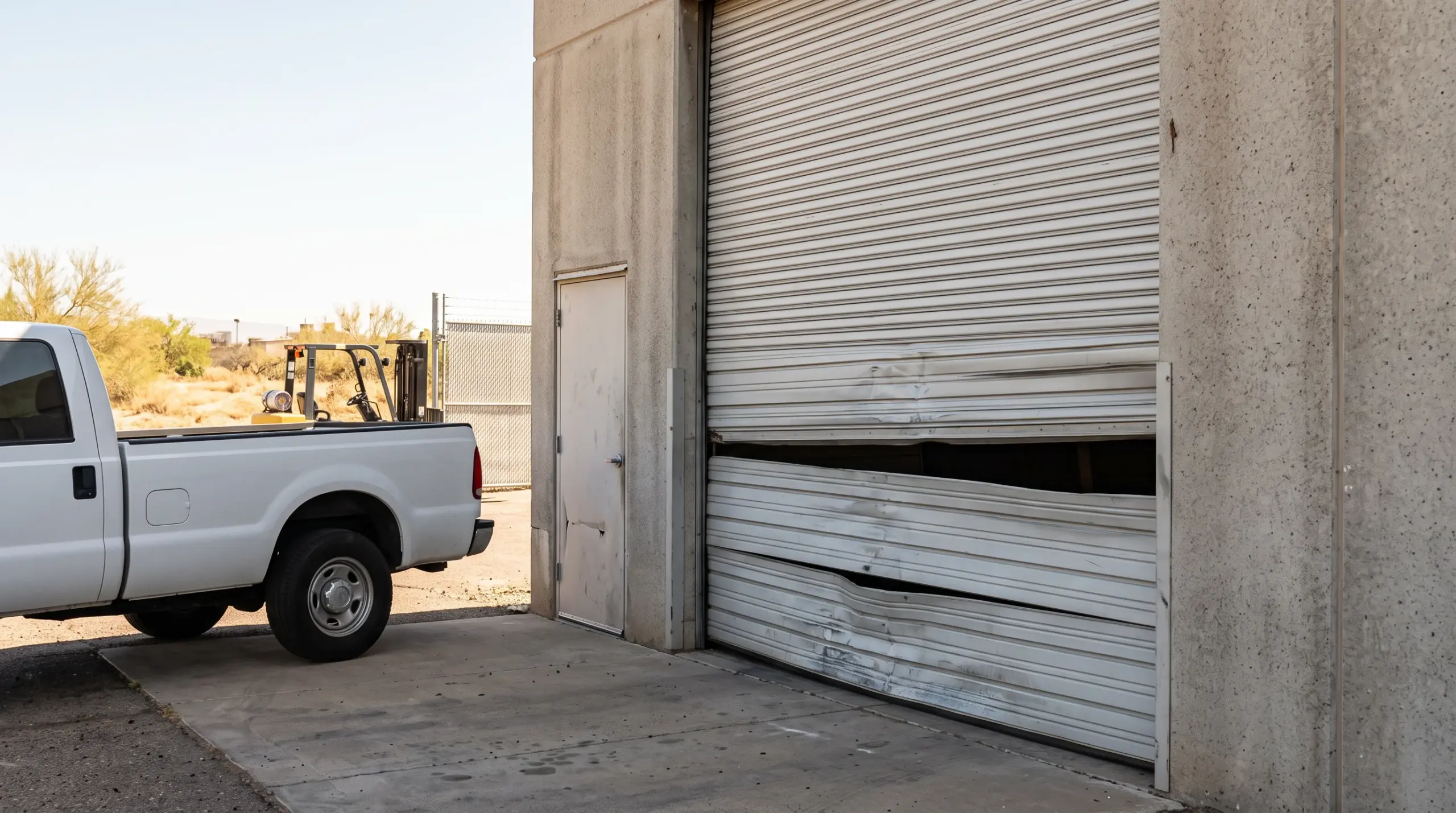
Roll-up door panel damage in Phoenix can create more than a cosmetic concern. A dented, cracked, bent, or separated panel may allow heat, dust, wind, and unauthorized access into your property. It can also place extra stress on tracks, springs, cables, the motor, and other operating components. For a business, even a door that still opens may be reducing security and slowing daily operations.
The difficult question is whether the damaged section should be repaired or replaced. The right answer depends on the panel’s material, location, age, structural condition, operating performance, and the extent of the impact. A minor dent may be serviceable, while a distorted panel that binds in the tracks may require replacement to prevent a more expensive failure.
This guide explains how professionals evaluate damage, when repair makes sense, when replacement is the safer investment, and which factors affect Phoenix door repair costs. Arizona Roll Up Door Service has more than 20 years of experience helping commercial and residential customers throughout the Phoenix metro area, including Avondale, Buckeye, Goodyear, Scottsdale, and North Phoenix.
Roll-Up Door Panel Damage in Phoenix: What a Proper Assessment Includes
A reliable decision begins with a complete roll-up door damage assessment rather than a quick visual estimate. Panel problems can affect the entire door assembly, particularly when the damage occurred during a vehicle impact, loading activity, high wind event, or attempted forced entry.
Inspecting the Panel and Its Connections
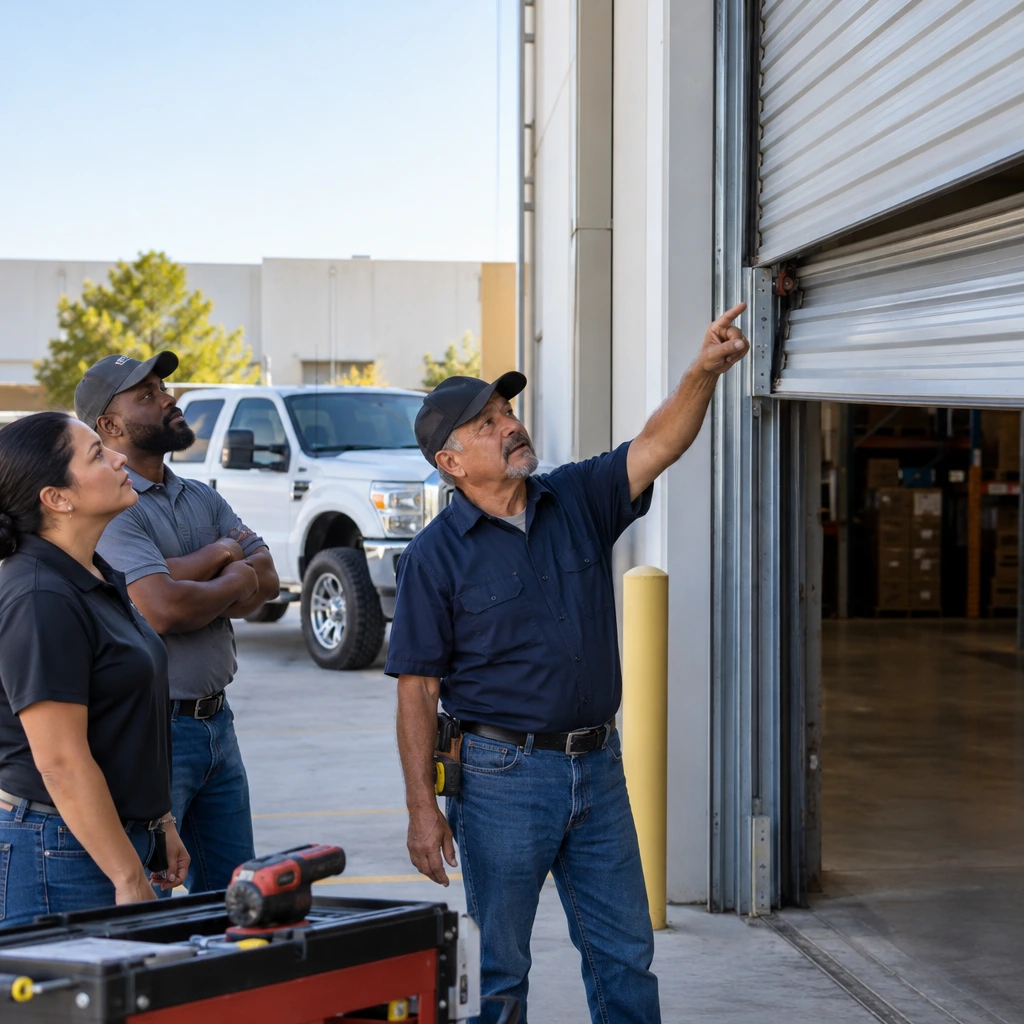
A technician first examines the visible panel damage, including dents, punctures, cracks, creases, corrosion, separated seams, and distorted edges. The inspection also includes hinges, fasteners, guides, tracks, brackets, and the connection points that allow sections to move together. If a panel is bent out of shape, it may not travel correctly even when the damage appears limited.
Technicians also check whether the panel remains square within the opening. A shifted panel can rub against the guides or create uneven pressure across the assembly. Over time, that pressure may cause sluggish operation, unusual noise, premature spring wear, or motor strain.
Testing Door Performance and Safety
A complete assessment should include several operating cycles, when it is safe to do so. The technician looks for hesitation, binding, shaking, uneven movement, gaps, and failure to stop or reverse correctly. Springs and cables are inspected for signs of excessive tension, fraying, or damage because an impact can affect these components even when they appear intact.
Safety equipment, including sensors and automatic stopping features, should also be tested. A panel that seems repairable may still create a safety concern if it interferes with the door’s normal travel. Because roll-up doors are heavy and under tension, property owners should not attempt to force, straighten, or remove a damaged section without professional assistance.
When Roll-Up Door Panel Repair Is Usually the Better Choice
Repair is often appropriate when the damage is limited, the panel remains structurally sound, and the door continues to operate safely. Minor dents, light bends, loose hardware, and localized alignment problems may be corrected without replacing an entire section.
Common Repairable Conditions
- Small dents that do not affect the panel’s edges or movement
- Loose bolts, fasteners, hinges, or brackets
- Minor track obstruction or alignment issues caused by the impact
- Surface damage that does not compromise the panel’s structure
- Limited separation at a seam that can be secured correctly
- Hardware wear that is independent of the panel itself
In some cases, commercial door panel repair in Phoenix may involve carefully reshaping a small area, reinforcing a connection, replacing hardware, or realigning the guides. The goal is not simply to make the panel look better. A successful repair should restore smooth operation, maintain reasonable weather protection, and reduce stress on the rest of the assembly.
Repair may also be practical when a matching replacement panel is difficult to source or when the existing door is near the end of its service cycle but does not yet justify a full replacement. A professional can explain the expected service life after repair and identify any limitations so you can make an informed decision.
However, a repair is not a permanent solution for every type of damage. Straightening a badly folded panel or securing a cracked section may provide only temporary improvement. If the panel continues to flex, rub, or pull the door out of alignment, repeated service calls can cost more than replacing the affected component at the outset.
When to Replace Door Panels Instead of Repairing Them
Knowing when to replace door panels is especially important for busy commercial properties. Replacement is generally recommended when damage affects the panel’s structure, operating path, security function, or ability to protect the opening from Arizona’s intense heat, dust, and seasonal weather.
Signs Replacement Is the Safer Investment
- The panel is severely bent, folded, cracked, or punctured
- Edges no longer fit properly within the guides or tracks
- The door binds, jumps, drags, or stops during operation
- Damage has spread to hinges, brackets, or adjoining sections
- The panel cannot maintain security or close the opening evenly
- Rust, corrosion, or deterioration has weakened the panel
- Previous repairs have failed or the same area keeps deforming
A damaged panel can create a chain reaction. For example, a bent lower section may place extra load on the lifting system. That stress can contribute to broken springs, cable problems, track wear, or motor failure. Replacing the panel before those issues develop can reduce downtime and protect the rest of the door.
Repairing One Panel or Replacing More Than One?
Not every situation requires a complete door replacement. If the frame, guides, operator, and remaining sections are in good condition, replacing one damaged panel may be the most cost-effective option. However, matching the profile, thickness, finish, insulation characteristics, and hardware is essential for dependable performance.
Multiple damaged sections, outdated components, repeated breakdowns, or extensive corrosion may justify a broader replacement plan. A professional inspection can compare the cost of replacing individual sections with the long-term value of installing a new commercial-grade roll-up door. The recommendation should account for safety, operating frequency, energy efficiency, security, and expected service life—not just the initial price.
Factors That Affect Phoenix Door Repair Costs
Phoenix door repair costs vary because panel damage is rarely identical from one property to another. A small dent in an accessible section will typically require less labor than a distorted panel that has damaged the tracks, hinges, springs, or motor system.
What Influences the Estimate?
- Extent of damage: Minor surface issues cost less to address than structural deformation or multiple damaged sections.
- Panel type and availability: Custom sizes, older profiles, special finishes, and hard-to-source parts can affect material pricing and scheduling.
- Labor and access: Large commercial openings, restricted work areas, and difficult access may require additional time or equipment.
- Related component damage: Bent tracks, broken cables, worn rollers, damaged brackets, or motor strain can increase the scope of work.
- Urgency: Same-day or emergency service may carry different pricing than planned maintenance or scheduled replacement.
- Door condition: A heavily worn assembly may make panel replacement less economical than upgrading the complete door.
A trustworthy estimate should clearly separate the recommended repair from optional improvements. It should also explain whether the proposed work restores full operation or only addresses a temporary issue. Arizona Roll Up Door Service maintains an inventory of replacement parts whenever possible, helping reduce delays and increasing the chance of completing a repair during the first visit.
Property owners should be cautious about choosing the lowest quote without understanding what is included. A partial repair that leaves misaligned tracks, unsafe sensors, or weakened hardware can lead to additional downtime and expense. Quality craftsmanship, proper measurements, and safety testing are important parts of the value—not just line items on an estimate.
How to Prevent Future Roll-Up Door Panel Damage
Preventative maintenance can reduce the likelihood of panel damage and help identify small problems before they become costly failures. Commercial doors experience frequent cycles, contact with equipment, changing temperatures, and exposure to dust. A regular service schedule is therefore a practical investment in reliability.
Practical Maintenance Steps
- Keep the opening and travel path clear of vehicles, pallets, tools, and stored materials.
- Have tracks cleaned and checked for alignment on a regular schedule.
- Inspect panels, hinges, rollers, brackets, springs, and cables for wear.
- Lubricate approved moving parts using the correct products and procedures.
- Test safety sensors and automatic stopping features.
- Address unusual sounds, slow operation, or uneven movement promptly.
- Train employees to avoid forcing the door or operating it after an impact.
Arizona weather can make maintenance even more important. Heat, dust, wind, and temperature changes can contribute to dry components, contamination, and premature wear. Professional service includes hardware tightening, tension inspections, track alignment, safety testing, and performance adjustments tailored to the door’s use.
If a vehicle or piece of equipment strikes a panel, stop using the door if it is binding, hanging unevenly, or making unusual noises. Contact a qualified technician for an inspection rather than attempting to push the section back into position. Prompt attention may prevent a localized problem from becoming a full operational shutdown.
Conclusion: Get a Professional Panel Damage Recommendation
The repair-versus-replace decision depends on more than the size of a dent. Panel structure, track alignment, safety performance, security, door age, part availability, and the condition of the surrounding components all matter. A professional roll-up door panel damage assessment helps you avoid unnecessary replacement while also preventing short-term repairs that leave your property exposed or your equipment at risk.
Arizona Roll Up Door Service has over 20 years of experience providing expert installation, repair, and maintenance throughout Phoenix, Avondale, Buckeye, Goodyear, Scottsdale, North Phoenix, and surrounding communities. Our team serves commercial properties first and delivers quality craftsmanship at competitive prices, with prompt response times and same-day repair capability when possible.
Contact Arizona Roll Up Door Service today for a free consultation. Call us for prompt, professional service, and let us help keep your facility secure, efficient, and functional.