Quarterly maintenance plans for commercial roll-up doors give Phoenix-area businesses a practical way to protect daily operations, control repair costs, and reduce unexpected interruptions. A door that opens slowly, binds in its guides, or fails during a busy shipping period can affect employees, deliveries, security, climate control, and customer access at the same time.
Preventative maintenance is more than lubrication. A professional inspection evaluates the curtain, guides, bottom bar, springs, cables, operator, limits, sensing equipment, fasteners, and overall balance. It also creates a service history that helps facility managers budget for repairs before a minor wear issue becomes an emergency. This guide explains how quarterly maintenance works, which tasks matter most, how scheduled service can extend door lifespan, and why businesses across Phoenix, Avondale, Buckeye, Goodyear, Scottsdale, and North Phoenix use customized commercial door maintenance programs in Arizona.
Quarterly Maintenance Plans for Commercial Roll-Up Doors: What They Include
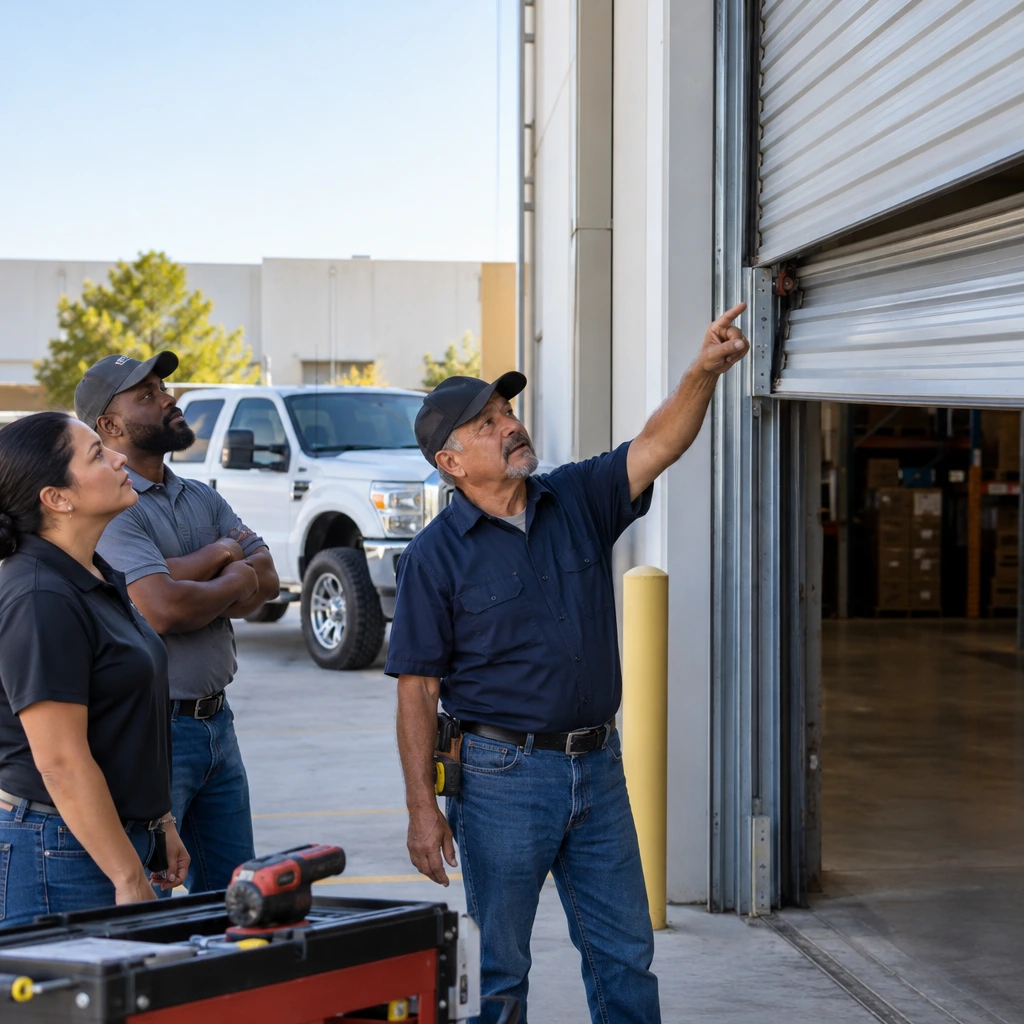
A quarterly visit places inspection and adjustment work on a predictable schedule, typically every three months. That frequency is especially useful for facilities with high traffic, multiple shifts, dusty environments, frequent deliveries, or doors exposed to Arizona heat and wind. Instead of waiting for a door to stop working, technicians monitor its condition and correct developing problems while access remains available.
Core inspection and service tasks
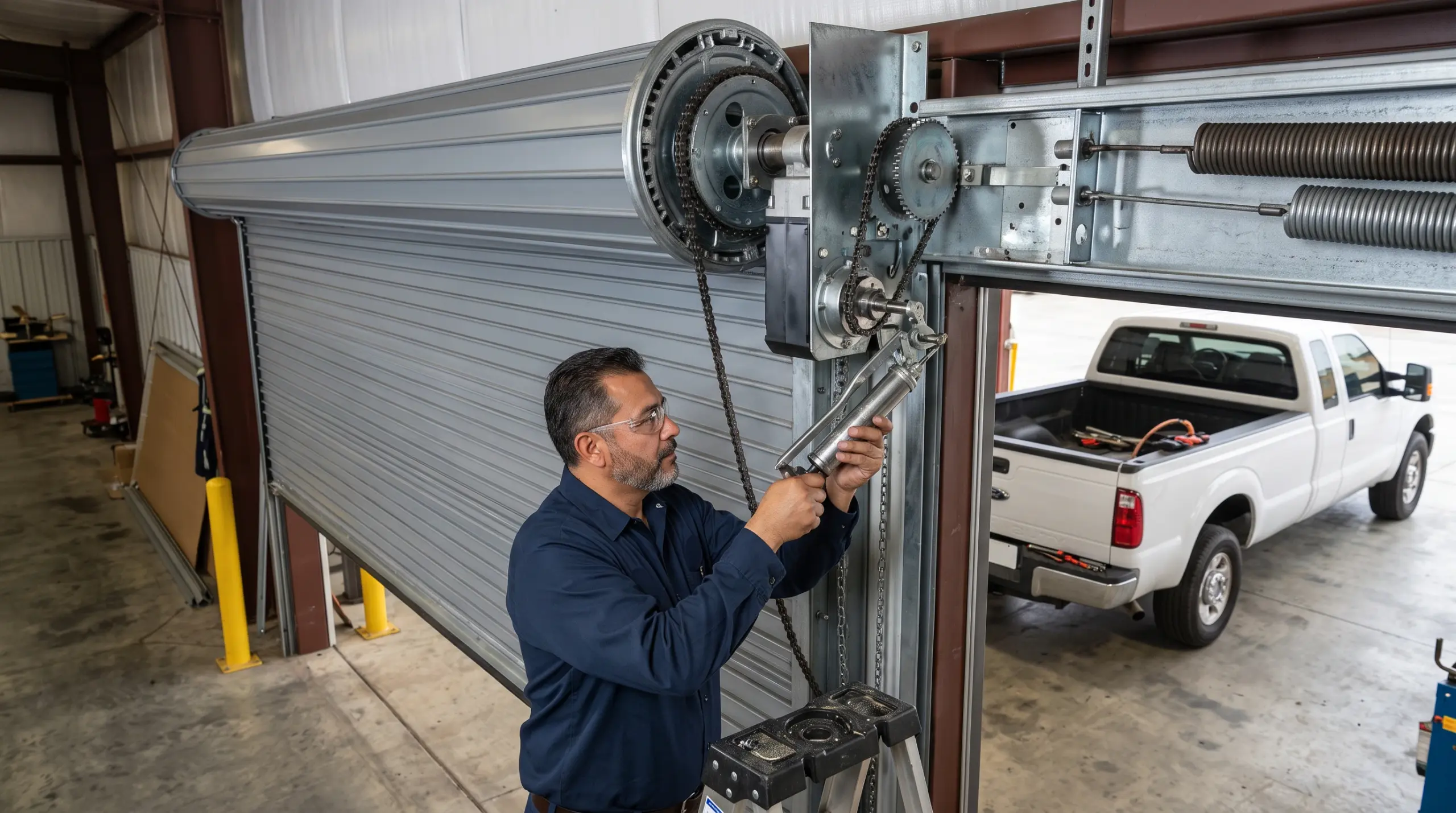
A professional quarterly maintenance plan may include:
- Inspecting springs, cables, counterbalance components, brackets, and attachment points
- Cleaning and examining guides, tracks, hoods, curtain sections, and bottom bars
- Checking alignment, balance, fasteners, and signs of rubbing or binding
- Lubricating approved moving parts according to manufacturer recommendations
- Testing motors, operators, hand chains, open and close limits, and control stations
- Testing sensing edges, photoelectric eyes, and other safety equipment when installed
- Removing obstructions and correcting minor track or guide alignment problems
- Documenting worn parts, recommended repairs, and operational concerns
The Door and Access Systems Manufacturers Association, or DASMA, recommends periodic inspection and maintenance by a trained door systems technician at least annually or according to the manufacturer’s recommendations. Its rolling door guidance also warns that counterbalance components can remain under extreme spring tension, meaning spring adjustments and related repairs should be handled by qualified professionals—not improvised by employees. See the DASMA rolling door performance evaluation guidance for inspection points and safety precautions.
Why quarterly service can be better than annual service
Annual maintenance may satisfy a basic schedule for some low-use doors, but it can leave too much time between inspections. A small alignment problem can grow after months of repeated operation. Dust, temperature changes, delivery impacts, and normal vibration can gradually loosen hardware or increase friction.
Quarterly service does not eliminate every failure, but it improves the opportunity to identify warning signs early. The technician can flag a cable beginning to fray, a spring losing balance, an operator working harder than normal, or a guide that is no longer holding the curtain correctly. That information helps owners plan repairs during a convenient service window rather than during a peak production or shipping period.
How Preventative Maintenance Helps Reduce Door Downtime
When a commercial roll-up door fails, the repair invoice is only one part of the cost. Employees may need to use another entrance, loading activity may slow down, inventory movement may be delayed, and security or weather protection may be compromised. For businesses that depend on frequent access, even a short outage can create operational pressure.
Small corrections prevent larger failures
Many door failures develop through a chain of smaller problems. A dirty guide can increase resistance. Increased resistance places more demand on the operator and counterbalance system. The door then moves more slowly, makes unusual sounds, or stops before reaching its limit. If ignored, the added strain may contribute to damage involving the curtain, motor, brackets, springs, or cables.
Quarterly inspections interrupt that chain. Technicians can clean the travel path, tighten hardware, adjust alignment, lubricate appropriate components, and test the door under controlled conditions. If a component is already damaged, the business can schedule a focused repair before the condition affects the entire opening.
The International Facility Management Association describes proactive maintenance as a strategy that can help facilities lower costs, increase uptime, and operate more efficiently. Its August 18, 2025 discussion of reactive versus preventive maintenance emphasizes that planned work gives teams more control over asset downtime and repair decisions. The same principle applies to commercial roll-up doors: scheduled service moves maintenance from an urgent interruption to a manageable operating expense. Review the IFMA comparison of reactive and preventive maintenance for broader facility-management context.
Protecting safety and dependable operation
A door that closes unpredictably or fails to stop when it encounters an obstruction can create a serious workplace concern. Safety devices must be inspected and tested as part of an appropriate service program. Employees should also be instructed not to bypass sensors, force a binding door, or continue operating a door that is visibly damaged.
OSHA requirements for certain cargo-door environments address issues such as guarding counterweights, securing vertically operated doors, and maintaining lifting gear and hardware in safe condition. The exact requirements depend on the workplace and door application, so a maintenance plan should be coordinated with the facility’s safety procedures. The OSHA cargo door standard provides an example of why door equipment must be maintained and secured properly.
Cost Savings from a Commercial Roll-Up Door Maintenance Program
The value of quarterly service comes from avoiding preventable expenses and improving the useful life of existing equipment. Maintenance cannot guarantee that a spring, motor, or cable will never fail. However, it can reduce the likelihood that several problems will appear at once and make repair planning more predictable.
Fewer emergency repair costs
Emergency service often creates additional costs, including after-hours labor, expedited parts, lost productivity, and schedule disruption. A planned visit gives the technician time to identify parts that may need replacement and allows the customer to approve repairs before the issue becomes urgent.
For example, replacing a worn component during a scheduled visit may be less disruptive than responding after a door becomes stuck open during a weekend shipment. If parts are needed, a documented inspection can also help the service provider prepare for the appointment. Arizona Roll Up Door Service maintains a stocked inventory of common replacement parts whenever possible, supporting faster same-visit repairs when the correct component is available.
Lower wear and better operating efficiency
A properly balanced, aligned, and lubricated door generally operates with less unnecessary resistance. That can help reduce stress on the operator and related components. It may also help the door open and close more consistently, which is important for facilities that use a loading or service opening dozens or hundreds of times each day.
Door performance can also affect building comfort and energy use. The U.S. Department of Energy identifies reducing air infiltration as an important commercial-building efficiency measure. Its Better Buildings program reported that H&M found closing exterior doors produced approximately $10,000 in annual energy savings per store on average, without a discernible impact on foot traffic. That example is not a promise of identical savings for every facility, but it demonstrates why properly operating exterior openings matter. Learn more from the U.S. Department of Energy Better Buildings case study on closing doors.
For Phoenix businesses, reducing unnecessary exposure to outdoor heat can be especially important during the warmer months. A door that closes fully, travels correctly, and does not remain open because of an avoidable mechanical issue supports more consistent facility operation.
Extending door lifespan
Regular inspections help preserve the components that make up the complete door system. Cleaning guides, correcting alignment, tightening hardware, addressing damaged panels or curtain sections, and maintaining the operator can all help limit progressive wear. In practical terms, this can extend door lifespan by allowing the system to receive attention before damage spreads to surrounding parts.
Maintenance records are also useful when planning capital improvements. A repeated repair pattern may show that a door needs a larger upgrade, a different operating method, or replacement with a more suitable commercial-grade system.
Building an Effective Quarterly Maintenance Schedule in Phoenix
The best schedule is based on use, environment, door type, and the consequences of failure. A lightly used interior service opening may need a different plan than a high-cycle loading door exposed to dust, heat, wind, and vehicle traffic.
Factors that determine service frequency
Consider these questions when developing a preventative maintenance roll-up doors plan for a Phoenix facility:
- How often is the door used? High-cycle doors typically require closer monitoring than openings used only a few times each day.
- What is the operating environment? Dust, outdoor exposure, wash-down areas, temperature extremes, and airborne debris can affect moving components.
- What happens if the door stops? A critical shipping, warehouse, retail, or emergency-access opening deserves a more proactive schedule.
- What safety equipment is installed? Sensing edges, photoelectric eyes, automatic closing features, and other devices require appropriate testing.
- What does the manufacturer recommend? Manufacturer instructions should guide lubrication, inspection, adjustment, and component replacement.
Facilities with fire-rated rolling openings may have additional inspection, testing, and recordkeeping requirements. DASMA states that rolling fire doors should be inspected and drop tested annually according to manufacturer instructions and NFPA 80 requirements, with written records maintained and made available to the authority having jurisdiction. Quarterly service can support that annual process, but it does not replace required annual testing or specialized compliance work.
What to expect from a professional service visit
A quality maintenance visit should end with clear documentation. The report should identify the door serviced, work completed, safety concerns, observed wear, recommended repairs, and suggested timing. This creates a useful history for facility managers and helps different employees understand the condition of each opening.
Between visits, employees should report unusual noises, slow operation, uneven travel, visible damage, incomplete closing, sensor problems, or a door that requires repeated attempts to operate. Staff should never attempt to adjust springs, cables, counterbalance components, or other high-tension parts.
Why Phoenix Businesses Choose Arizona Roll Up Door Service
Your business depends on dependable doors, and local service matters when a problem affects daily access. Arizona Roll Up Door Service has more than 20 years of experience providing commercial and residential roll-up door installation, repair, and maintenance throughout the Phoenix metro region.
Our commercial maintenance programs are customized around your facility’s operating schedule and priorities. Service may include lubrication, spring and cable inspections, safety equipment testing, guide cleaning, alignment, hardware adjustments, operator checks, and performance optimization. When a repair is needed, our team can diagnose sluggish operation, damaged panels, broken springs or cables, motor and opener problems, track obstructions, and sensor issues.
We serve businesses in Avondale, Buckeye, Goodyear, Scottsdale, North Phoenix, Central Phoenix, and surrounding West Valley and metro communities. With competitive pricing, rapid response, quality craftsmanship, and replacement parts stocked whenever possible, our goal is to help you reduce door downtime without unnecessary disruption to your operation.
Conclusion: Schedule Quarterly Roll-Up Door Maintenance
Quarterly maintenance is a practical investment for businesses that rely on secure, functional commercial roll-up doors. Regular inspections can reveal wear before it becomes a shutdown, reduce the risk of emergency repair costs, support safe operation, and help extend door lifespan. Just as importantly, a written maintenance history gives facility managers better information for budgeting and long-term planning.
Arizona Roll Up Door Service provides preventative maintenance roll-up doors Phoenix businesses can schedule around their operating needs. Whether you manage a warehouse in Buckeye, a service facility in Goodyear, a retail location in Scottsdale, or a commercial property anywhere in the Phoenix metro area, we can help keep your doors reliable and functional.
Contact Arizona Roll Up Door Service today for a free consultation. Call us for prompt, professional service, or schedule a maintenance plan designed to protect your facility, reduce interruptions, and keep your business moving.