Your business depends on dependable doors, but reliable physical access is just as important as the door itself. Without the right controls, employees may share keys, unauthorized visitors may enter restricted areas, and managers may have little visibility into who is accessing a facility. A properly designed roll-up door access control Phoenix system can improve security while making daily operations faster and more convenient.
Keypad systems and remote controls are two practical options for commercial properties throughout the Valley. Each offers different advantages depending on your building layout, traffic patterns, staffing, and security requirements. In this guide, you will learn how commercial door keypad systems and roll-up door remote control options work, where they fit best, and how professional installation and maintenance can protect your investment. Arizona Roll Up Door Service has more than 20 years of experience helping businesses choose, install, repair, and maintain dependable access systems throughout the Phoenix metro area.
Roll-Up Door Access Control Phoenix Businesses Can Rely On
Access control determines who can operate a roll up door and when they can use it. Instead of relying solely on a physical key, a business can use a keypad code, remote transmitter, card reader, or another compatible control device. The correct choice depends on whether the door serves employees, delivery drivers, tenants, fleet vehicles, or the general public.
For many commercial properties, access control is most effective when it is matched to the way the facility actually operates. A warehouse with frequent vehicle traffic may benefit from remote controls that let authorized drivers open the door without leaving their vehicles. A service business with rotating employees may prefer a keypad because codes can be changed without collecting physical keys. Some facilities use both options to create convenient primary access and a controlled backup method.
Why access control matters
Modern access systems provide more than convenience. They help limit unauthorized entry, reduce the risk of lost keys, and support better accountability. When access credentials are assigned carefully, managers can control who uses a particular opening and remove access when an employee, vendor, or tenant no longer needs it.
Access control can also help protect inventory, equipment, records, and vehicles. In addition, an automated roll up door can improve workflow by reducing delays at loading areas and employee entrances. However, the access device must work together with the door, opener, safety sensors, and electrical components. Professional assessment is important because an improperly matched system may create unreliable operation or safety concerns.
Applications across Phoenix commercial properties
These systems are useful in warehouses, industrial buildings, retail back rooms, distribution facilities, parking structures, storage properties, and service centers. Arizona businesses also need equipment that can perform through high temperatures, dust, wind, and frequent daily use. Choosing durable components and scheduling regular inspections helps support dependable performance year-round.
Commercial Door Keypad Systems: Benefits and Best Uses
Commercial door keypad systems allow authorized users to enter a code to activate a roll up door. They are a practical choice when multiple employees need access or when a manager wants to change credentials without replacing hardware. Depending on the system, codes may be shared by a department, assigned to individuals, or organized by access schedule.
Advantages of keypad access
- No physical key required: Employees do not need to carry or protect a traditional key.
- Easy credential changes: Management can update codes when staffing or access needs change.
- Convenient shared access: Approved employees, delivery personnel, or contractors can receive authorized codes.
- Useful for pedestrian entry: A keypad can be positioned near an employee entrance or controlled opening.
- Potential scheduling features: Certain systems can limit access to designated days or hours.
Keypads work particularly well for businesses with regular employee turnover, multiple shifts, or several people who need entry throughout the day. They can also be helpful when a facility wants to avoid issuing multiple remotes. For example, a manager may provide a temporary code to a service provider rather than hand over a permanent access device.
Security considerations for keypad systems
A keypad is only as secure as its operating practices. Codes should not be posted in visible areas, written beside the keypad, or shared more broadly than necessary. Businesses should also establish a process for changing codes periodically and removing codes that are no longer needed. Mounting location matters as well. The keypad should be convenient for authorized users while positioned away from unnecessary exposure to weather, vehicle impact, or tampering.
Keypad installation should include testing of the opener, door balance, safety sensors, emergency release features, and closing operation. If the roll up door is sluggish, misaligned, or making unusual sounds, access control installation should not replace the needed mechanical repair. A dependable system requires both secure controls and a properly functioning door.
Roll-Up Door Remote Control Options for Daily Operations
A roll-up door remote control gives an authorized user the ability to operate a powered roll up door from a short distance. This option is especially convenient for loading areas, vehicle entrances, and facilities where employees need to move through the opening while remaining in a vehicle or carrying materials.
Remote controls can improve efficiency during deliveries and shift changes. A driver may activate the door before reaching the opening, reducing waiting time and unnecessary vehicle movement. In a busy warehouse, that small improvement can make a noticeable difference over the course of a day. Remotes can also be assigned to specific employees, vehicles, or supervisors, depending on the system and the business’s security procedures.
Choosing the right remote setup
When evaluating remote access, consider the operating range, number of users, signal reliability, and compatibility with the existing opener. A system should provide practical range without allowing operation from locations that are too far away or outside the intended property area. Businesses may also want protective remotes designed to withstand daily use in demanding commercial environments.
Managers should keep an accurate list of issued remotes. If one is lost, stolen, or assigned to someone who leaves the company, its access should be deactivated or reprogrammed as soon as possible. A backup remote should be stored securely rather than left in an unlocked office or vehicle. These simple procedures help prevent convenience from becoming a security weakness.
Combining remotes with other controls
Remote access does not have to be the only control method. A company may use remotes for fleet and loading operations while keeping a keypad for employees or after-hours access. In some facilities, a remote is paired with a card reader, intercom, camera, or monitored security system. Combining technologies can provide flexibility while allowing a business to apply different access rules to different users.
Before adding a control device, have the opener and door inspected. Motor problems, track misalignment, worn springs, damaged panels, and sensor faults can all affect operation. Arizona Roll Up Door Service can diagnose these issues and recommend a compatible access solution rather than simply adding equipment to an unreliable system.
Planning Secure Facility Access Solutions in Arizona
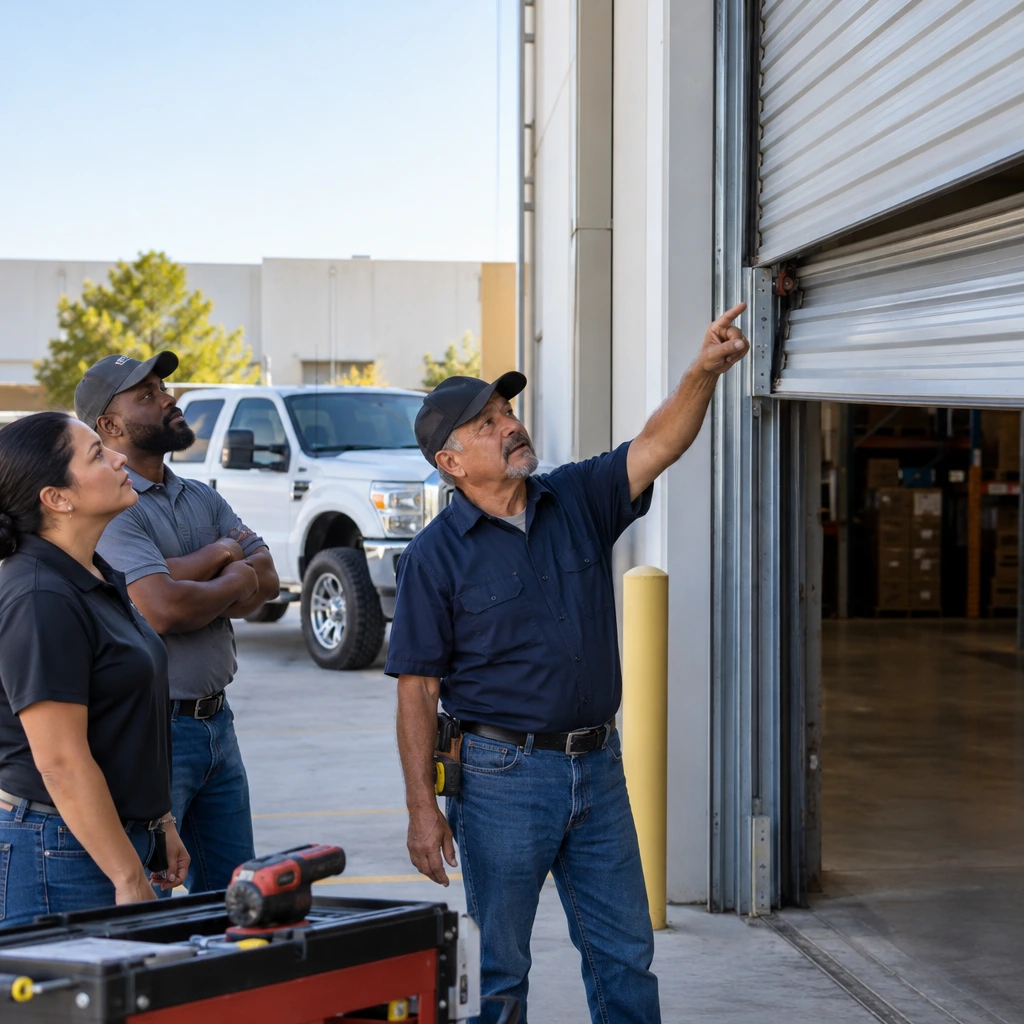
The best access control system starts with a site assessment. A commercial property may have several openings, different user groups, and varying security needs. A loading dock, employee entrance, and restricted storage area should not automatically receive the same access method. A professional evaluation helps identify the right equipment, mounting locations, wiring needs, and operating procedures.
Questions to consider before installation
- Who needs access, and how often will they use the door?
- Will users approach on foot, in vehicles, or both?
- Should access be available only during certain hours?
- How quickly must a lost credential be disabled?
- Does the current opener support the desired keypad or remote?
- Are safety sensors, emergency release components, and closing controls working correctly?
- Would multiple control methods improve convenience without reducing security?
Answering these questions can prevent overspending on features that are not needed while identifying issues that deserve attention. For example, a business with a single employee entrance may need a straightforward keypad. A distribution facility with multiple shifts and heavy vehicle traffic may benefit from remotes, scheduled access, and a separate management procedure for temporary credentials.
Commercial door automation Arizona considerations
Commercial door automation Arizona businesses rely on should be selected for local operating conditions. Heat, dust, temperature changes, and heavy usage can affect electrical and mechanical components over time. Professional installation includes checking alignment, mounting hardware, wiring, opener compatibility, and safety functions. It should also include a clear explanation of how to use the system and what to do if access equipment stops responding.
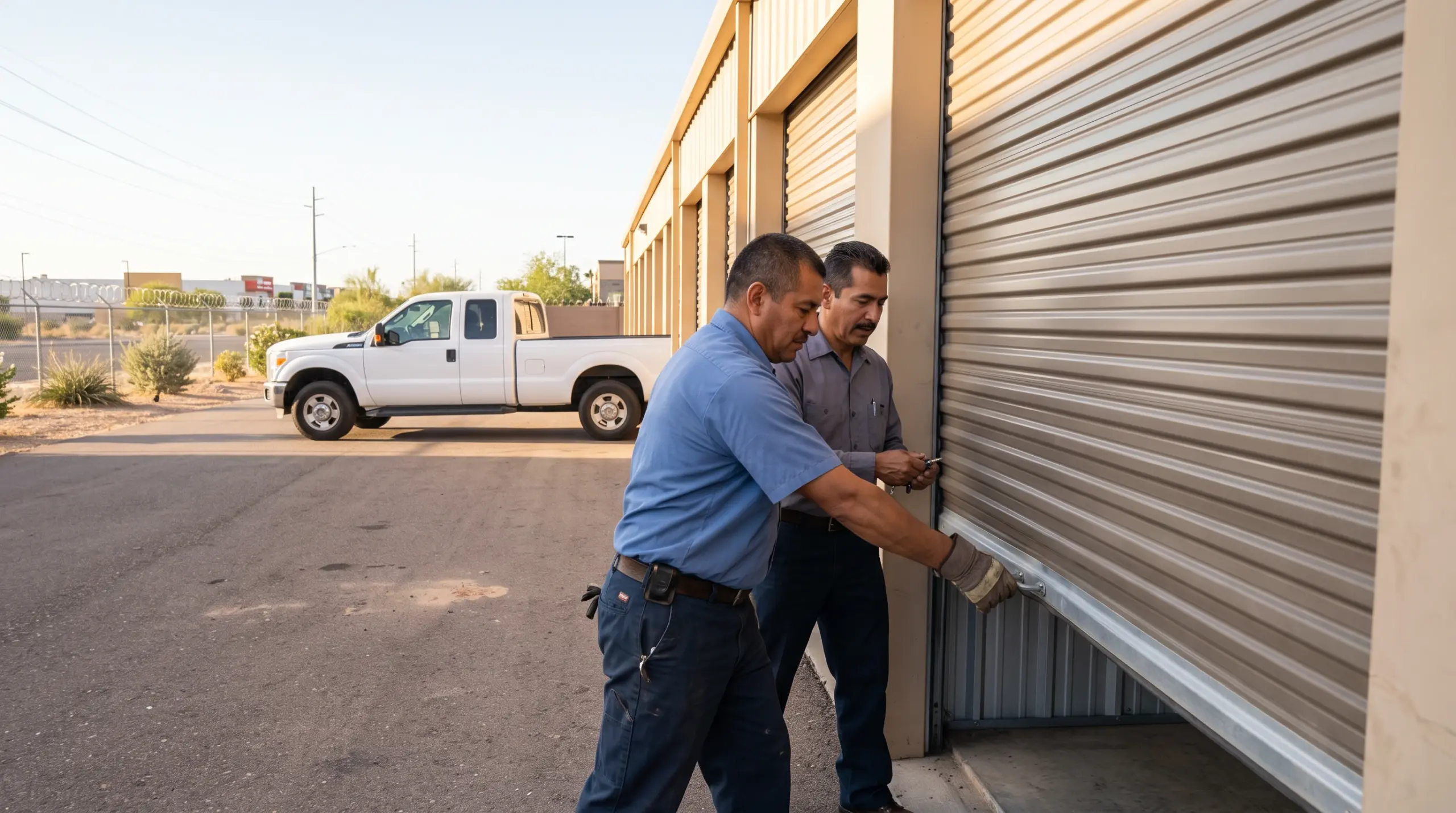
Routine maintenance is equally important. During a service visit, a technician can inspect springs and cables, lubricate moving parts, clean and align tracks, tighten hardware, test safety equipment, and evaluate opener performance. Preventative service can identify wear before it causes an unexpected shutdown or leaves a facility unsecured.
Repair and Maintenance for Reliable Access Control
Even quality access equipment can develop problems when a roll up door is used frequently. Slow operation may indicate a lubrication issue, spring tension problem, obstruction, motor concern, or alignment fault. A remote that works intermittently may have a battery or signal issue, but it could also point to a receiver or opener problem. Keypad failures may result from damaged wiring, worn buttons, incorrect programming, or environmental exposure.
Common service needs include:
- Diagnosing sluggish or uneven door movement
- Replacing broken springs or cable assemblies
- Repairing damaged panels and sections
- Inspecting motors, openers, and receivers
- Realigning tracks and removing obstructions
- Testing or replacing safety sensors
- Programming or replacing compatible keypad and remote components
Do not force a door that will not open or close normally. Continued operation can worsen damage and may create an unsafe condition. Keep employees clear of moving components and contact a qualified technician for diagnosis. Arizona Roll Up Door Service offers prompt repair, with same-day service when possible, and carries replacement parts to support many same-visit repairs.
A customized maintenance schedule can be based on usage, environment, and the consequences of downtime. A high-traffic facility may need more frequent inspections than a low-use commercial property. With more than two decades of experience, Arizona Roll Up Door Service provides practical recommendations, quality craftsmanship, and competitive pricing for businesses throughout Phoenix, including properties in Avondale, AZ, Scottsdale, Goodyear, Buckeye, North Phoenix, and surrounding communities.
Conclusion: Improve Access and Protect Your Business
The right keypad or remote can make a commercial roll up door easier to use while strengthening control over who enters your facility. Keypads are flexible for employees and changing access needs, while remotes are efficient for vehicle traffic and loading operations. In many cases, combining both creates a convenient, secure, and practical solution.
Successful access control depends on more than the device itself. The roll up door, opener, sensors, tracks, springs, cables, and wiring must all work together safely. Arizona Roll Up Door Service provides expert installation, repair, and maintenance throughout the Phoenix metro area, backed by over 20 years of experience. Contact Arizona Roll Up Door Service today for a free consultation, or call for prompt, professional service. Let us help keep your facility secure, functional, and ready for business.