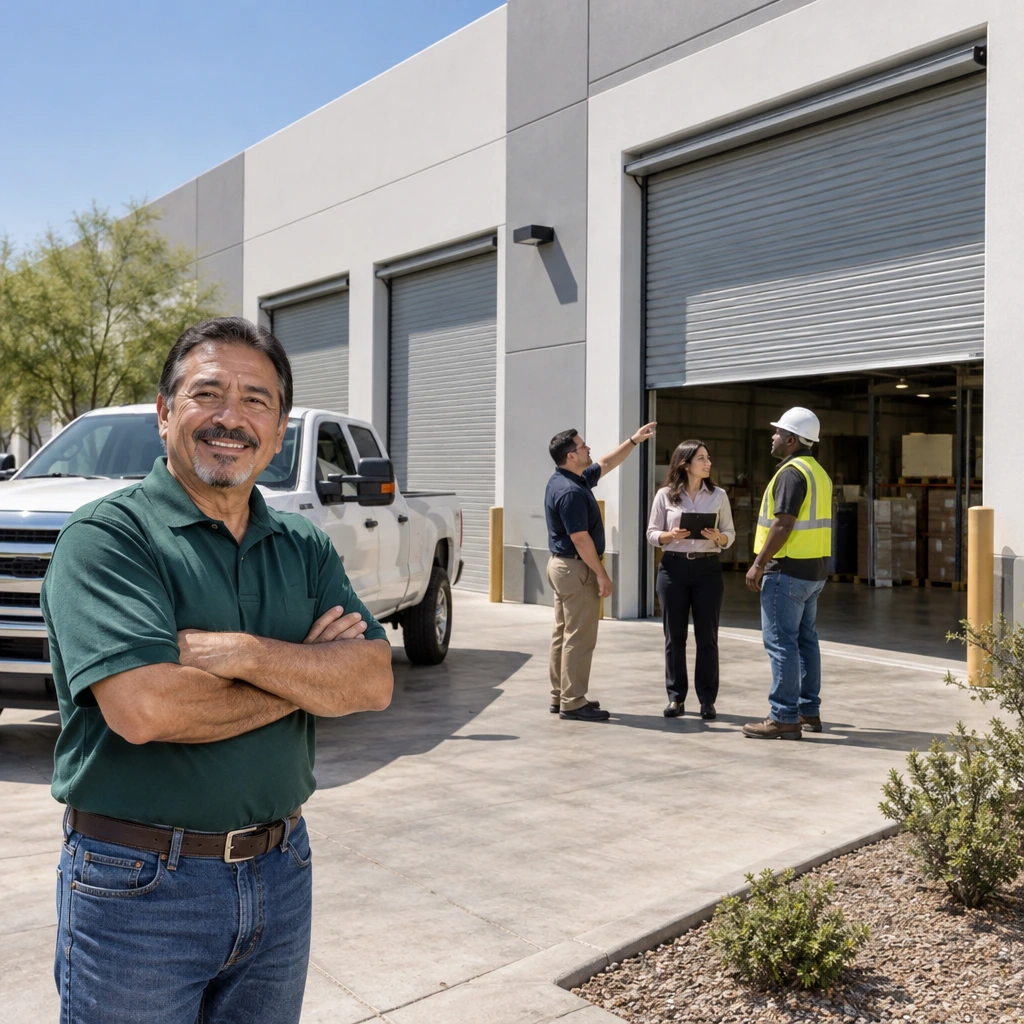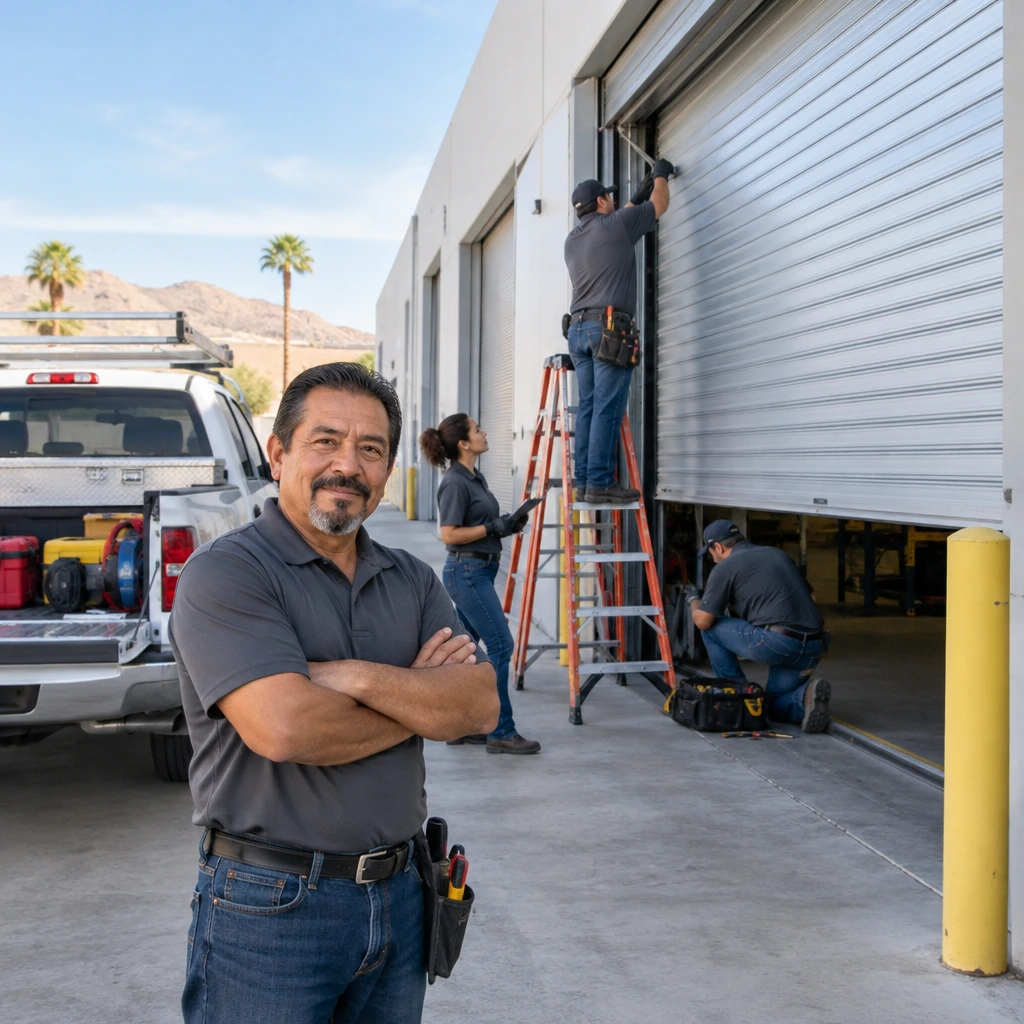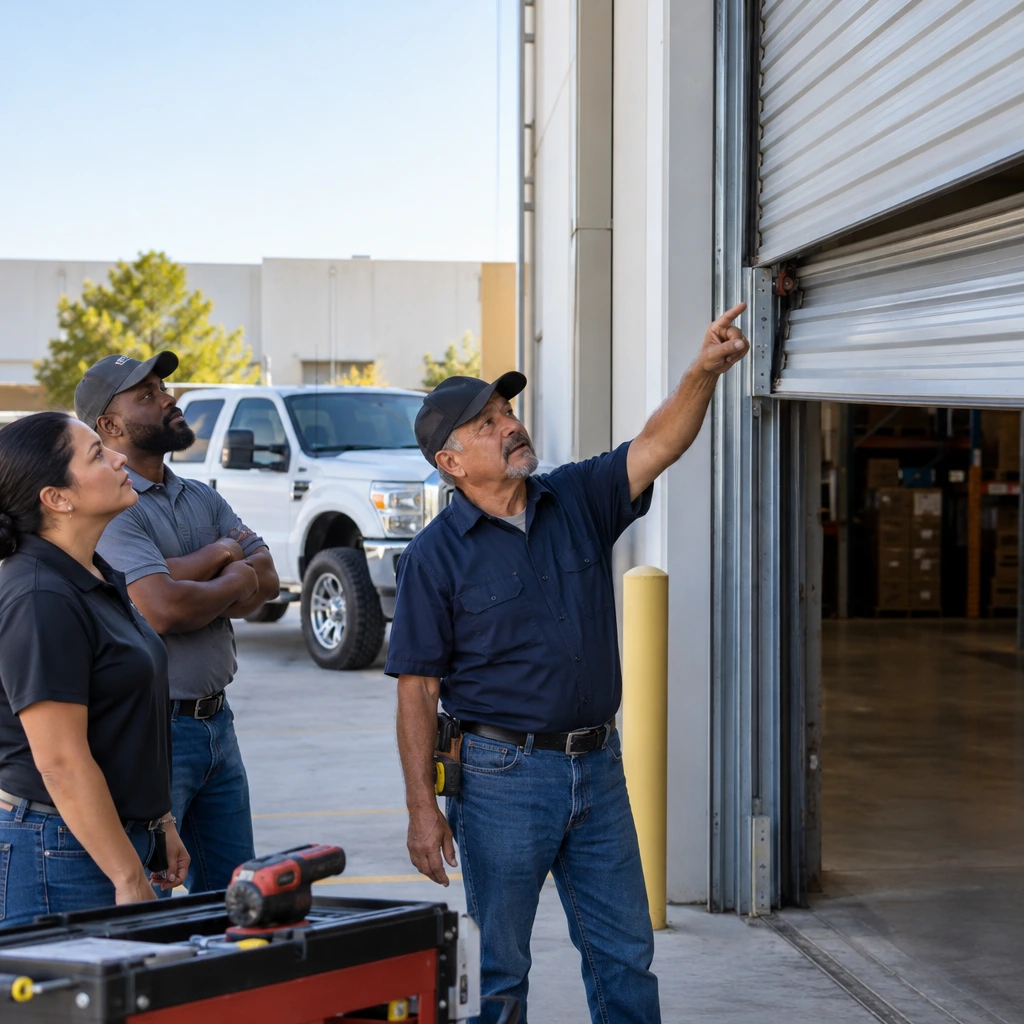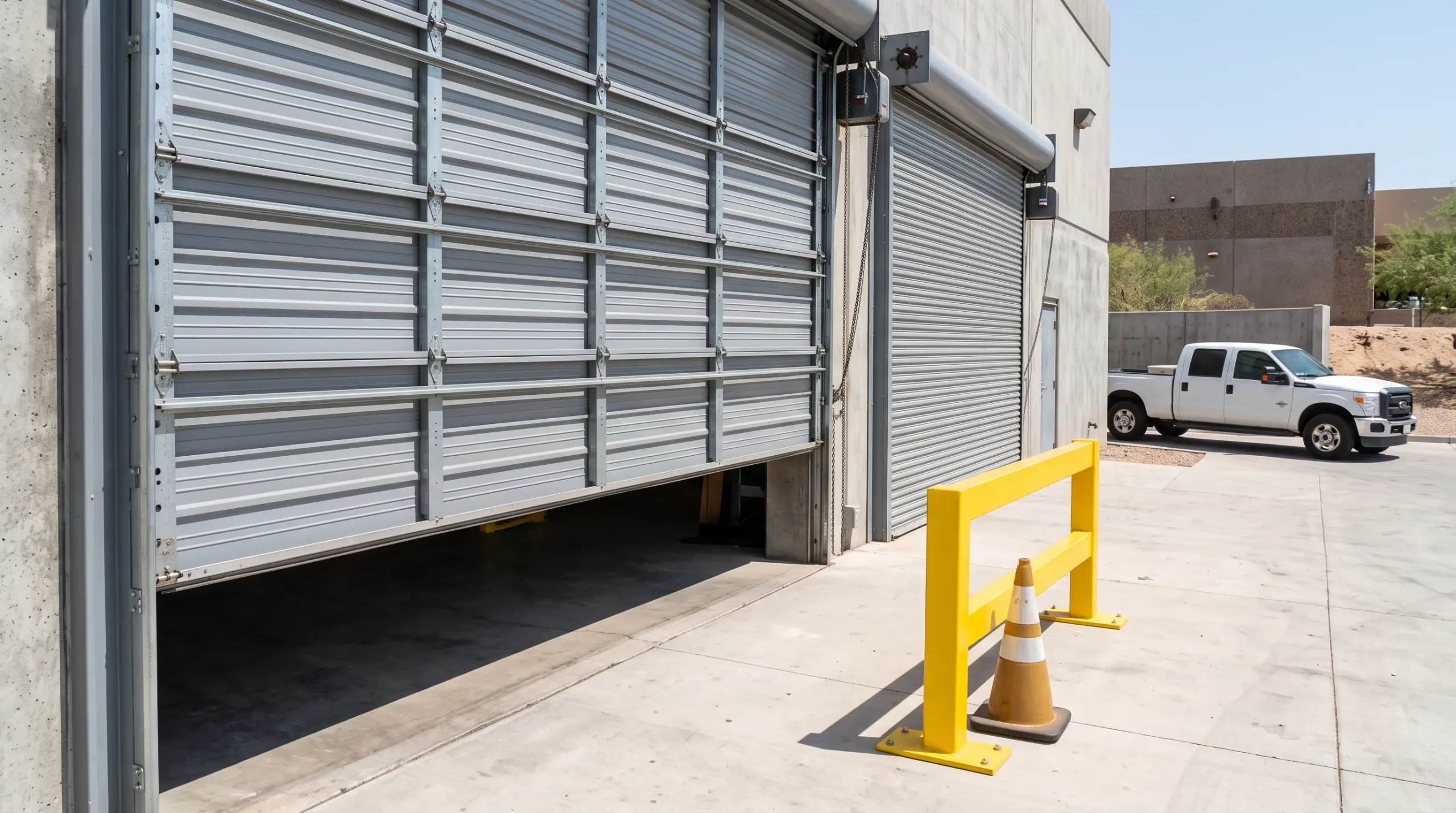
OSHA safety compliance for commercial roll-up doors in Phoenix is an important responsibility for warehouse managers, facility owners, contractors, and business operators. A roll-up door that moves slowly, reverses unpredictably, lacks functioning safety devices, or has damaged springs and cables can create crushing, impact, fall, and entrapment hazards. Compliance also involves more than the door itself: employers must consider machine guarding, hazardous energy control, employee training, emergency access, and applicable Phoenix building and fire codes.
In this guide, you will learn how federal OSHA requirements apply to powered commercial roll-up doors, which roll-up door safety devices should be inspected, how Phoenix requirements may affect commercial properties in 2026, and why scheduled maintenance is one of the most effective ways to reduce workplace risk. Arizona Roll Up Door Service has more than 20 years of experience helping businesses throughout Phoenix, Avondale, Buckeye, Goodyear, Scottsdale, North Phoenix, and the surrounding metro area keep their facilities secure and functional.
OSHA Safety Compliance for Commercial Roll-Up Doors in Phoenix
OSHA does not publish one single regulation titled “commercial roll-up door compliance.” Instead, several workplace safety requirements may apply depending on how the door is powered, used, maintained, and positioned within the facility. Arizona enforces federal OSHA standards through the Arizona Division of Occupational Safety and Health, or ADOSH. Its official guidance confirms that Arizona applies federal standards under 29 CFR Parts 1910, 1926, and 1928.
For most warehouses, distribution centers, manufacturing facilities, retail buildings, and service businesses, the general-industry requirements in 29 CFR Part 1910 are particularly relevant. A powered roll-up door may involve moving components, electrical energy, stored spring tension, pinch points, and vehicle or pedestrian traffic. Those hazards should be identified and controlled through proper installation, protective devices, operating procedures, and maintenance.
The primary compliance areas usually include:
- Protection from moving parts, pinch points, and crushing hazards.
- Functional photo eyes, sensing edges, reversing systems, and emergency controls.
- Safe access to operating controls and protection against unintended activation.
- Lockout/tagout procedures during repair, adjustment, cleaning, or maintenance.
- Clear employee training and documented inspections.
- Compliance with applicable building, fire, and emergency-access requirements.
OSHA’s 29 CFR 1910.212 machine-guarding standard requires employers to protect workers from hazards created by moving machine parts, including ingoing nip points and rotating components. While the exact safeguards depend on the equipment and workplace layout, the principle is straightforward: employees should not be exposed to preventable danger zones during normal operation or servicing.
Why a risk-based evaluation matters
Every facility is different. A low-cycle loading dock door may present different risks than a high-cycle interior door used continuously by forklifts and employees. A qualified inspection should consider the door’s size, speed, operating controls, traffic patterns, visibility, surrounding equipment, and emergency use. Simply installing a sensor does not automatically make a system compliant if the sensor is misaligned, bypassed, damaged, or unable to stop the door under actual operating conditions.
Roll-Up Door Safety Devices and Door Safety Switches Arizona Businesses Need
Modern commercial roll-up doors may use several protective features. The appropriate combination depends on the door design, manufacturer instructions, operating environment, and site-specific hazards. These devices are not optional conveniences; they are part of a complete safety system that must be installed correctly and tested regularly.
Common protective devices
- Photo-eye sensors: Detect a person, vehicle, or object in the opening and signal the door to stop or reverse.
- Sensing edges: Detect contact or pressure along the lower edge of the door.
- Emergency stop controls: Provide a clearly identified method to stop powered movement when a dangerous condition occurs.
- Control stations: Keep push buttons, key switches, or other controls positioned where operators can observe the opening.
- Warning indicators: Audible or visual signals can alert employees when the door is about to move.
- Manual release features: Allow controlled operation or emergency access when power is unavailable, where appropriate for the door system.
- Guards and covers: Protect workers from exposed chains, sprockets, shafts, and other moving components.
Businesses searching for door safety switches in Arizona should avoid treating a replacement switch as a standalone repair. The entire system should be evaluated, including wiring, control logic, mounting position, response time, and whether the door stops or reverses as intended. A safety device that has been disconnected to prevent nuisance stops may leave workers exposed to a serious hazard.
OSHA’s machine-guarding guidance explains that safeguards should prevent contact with dangerous moving parts, remain securely attached, and withstand normal workplace conditions. That guidance is especially relevant to commercial roll-up door operators, drive assemblies, tracks, and other components that may be accessible to employees or contractors.
Testing should be practical and documented
Testing should reflect real operating conditions. Inspectors should check whether the door responds correctly when the photo eye beam is interrupted, whether the sensing edge works across its full length, and whether emergency controls stop movement. The surrounding area should also be checked for pallets, shelving, vehicles, debris, or other obstructions that could interfere with safe operation.
Keep written records showing the inspection date, door location, deficiencies found, corrective action, and person completing the work. Documentation can help demonstrate that the employer maintains a consistent safety program rather than reacting only after an incident or equipment failure.
Commercial Door Safety Requirements 2026: OSHA, Phoenix Codes, and Emergency Access
Commercial door safety requirements in 2026 may involve both workplace regulations and local building or fire requirements. OSHA focuses on employee safety, while the City of Phoenix and other local authorities may regulate construction, fire protection, emergency access, occupancy, and permit requirements. These systems overlap, but they are not interchangeable.
The City of Phoenix states that its 2024 Phoenix Building Construction Code was approved by the City Council on June 18, 2025. The city’s fire-code information also identifies February 17, 2026, as the effective date associated with its current code information. Because local requirements can vary by project type, occupancy, and permit status, property owners should confirm requirements with the authority having jurisdiction before installation or major modification.
A roll-up door should not be assumed to serve as an approved emergency exit simply because it is large enough for people to pass through. OSHA’s exit-route rules generally require exit doors to be unlocked from the inside without keys, tools, or special knowledge. The agency also requires exit routes to remain adequate, accessible, and free from obstructions. Review the official OSHA requirements for exit-route design and construction when evaluating a door located near an employee exit path.
Emergency access and fire-rated applications
Some facilities use rolling doors as part of a fire or smoke-control strategy. In those situations, the assembly may require specific listings, fusible links, automatic closing functions, release mechanisms, or inspection procedures. A standard commercial roll-up door should not be substituted for a fire-rated assembly without confirming the design and approval requirements.
Phoenix also publishes guidance on emergency access for commercial properties. The city notes that fire-code requirements are intended to help the Fire Department respond quickly and safely to occupancies. Door placement, access controls, gates, key switches, and clear approaches may all matter during an emergency.
Before replacing or relocating a commercial roll-up door, coordinate with the building owner, fire-protection professional, electrical contractor, and local permitting authority when necessary. This is especially important for hospitals, schools, shopping centers, industrial buildings, high-occupancy facilities, and properties with fire-rated openings.
Lockout/Tagout and Safe Commercial Roll-Up Door Maintenance
Repairing a commercial roll-up door can expose workers to electrical energy, stored spring tension, gravity, moving shafts, and unexpected activation. Turning off a wall switch is not always sufficient. The employer must determine how energy will be isolated and how the door will be prevented from moving while service work is performed.
OSHA’s 29 CFR 1910.147 lockout/tagout standard applies when servicing or maintenance could expose employees to unexpected energization, startup, or release of stored energy. The standard requires an energy-control program, procedures, training, periodic inspections, and verification that the equipment has been isolated before work begins.
For roll-up door maintenance, safe procedures may include:
- Identify electrical, mechanical, gravitational, and stored-energy hazards.
- Notify affected employees before shutting down the door.
- Disconnect and lock out the appropriate energy source.
- Block, secure, or otherwise restrain components that could move unexpectedly.
- Release or control stored energy, including spring tension where applicable.
- Verify isolation before beginning repair or adjustment.
- Reinstall guards and safety devices before returning the door to service.
- Inspect the area and notify employees before removing locks and restoring power.
Only trained and authorized personnel should perform work involving springs, cables, operators, electrical components, or structural supports. Improvised adjustments can create additional hazards, particularly when a door is binding, out of balance, or operating under excessive tension.
Preventative maintenance reduces compliance risk
A preventative maintenance schedule should include lubrication of approved moving parts, track cleaning, hardware tightening, spring and cable inspections, operator testing, sensor alignment, and examination of panels and guides. Arizona’s heat, dust, wind, and frequent temperature changes can contribute to premature wear and contamination around tracks and sensors.
Regular service also helps identify developing problems before they become emergencies. Sluggish movement may indicate lubrication issues, misalignment, worn rollers, spring problems, or motor trouble. A door that reverses unexpectedly may have a sensor, wiring, control, or obstruction issue. Prompt diagnosis is safer than repeatedly cycling a malfunctioning door until it fails.
Phoenix Workplace Door Compliance Checklist for Business Owners
Business owners and facility managers can use the following checklist as a starting point. It does not replace a professional inspection or a review by OSHA, ADOSH, the City of Phoenix, or the applicable authority having jurisdiction.
- Verify that the door is installed for its intended use and operating frequency.
- Confirm that guards cover accessible moving components.
- Test photo eyes, sensing edges, reversing systems, and emergency stop controls.
- Make sure employees can see the opening or receive an adequate warning before movement.
- Keep the opening, tracks, and surrounding floor area clear of obstructions.
- Inspect springs, cables, brackets, guides, panels, and mounting hardware.
- Confirm that manual release and emergency operating features work as designed.
- Maintain written inspection, repair, and employee-training records.
- Use lockout/tagout procedures for applicable service and maintenance tasks.
- Verify that any door used near an exit route or fire-rated opening meets the applicable local requirements.
When a door is damaged or unsafe, place it out of service if possible and notify affected employees. Do not bypass a sensor, remove a guard, or continue operating a door with broken springs, loose cables, severe track misalignment, or uncontrolled movement.
Protect Your Phoenix Facility With Professional Roll-Up Door Service
OSHA compliance for commercial roll-up doors is an ongoing process, not a one-time installation task. Safe performance depends on correct equipment selection, professional installation, functional safety devices, employee awareness, documented inspections, and timely repair. Local Phoenix building and fire requirements may also apply, particularly when a door affects emergency access, fire protection, or an approved exit route.
Arizona Roll Up Door Service provides commercial roll-up door installation, repair, and preventative maintenance throughout the Phoenix metro area, including Avondale, Buckeye, Goodyear, Scottsdale, North Phoenix, Central Phoenix, and surrounding communities. With more than 20 years of experience, our professional team can inspect slow operation, damaged panels, motor problems, broken springs and cables, track alignment, and safety-sensor issues.
Contact Arizona Roll Up Door Service today for a free consultation. Call us for prompt, professional service and let us help keep your facility secure, functional, and prepared for the demands of daily business operations.