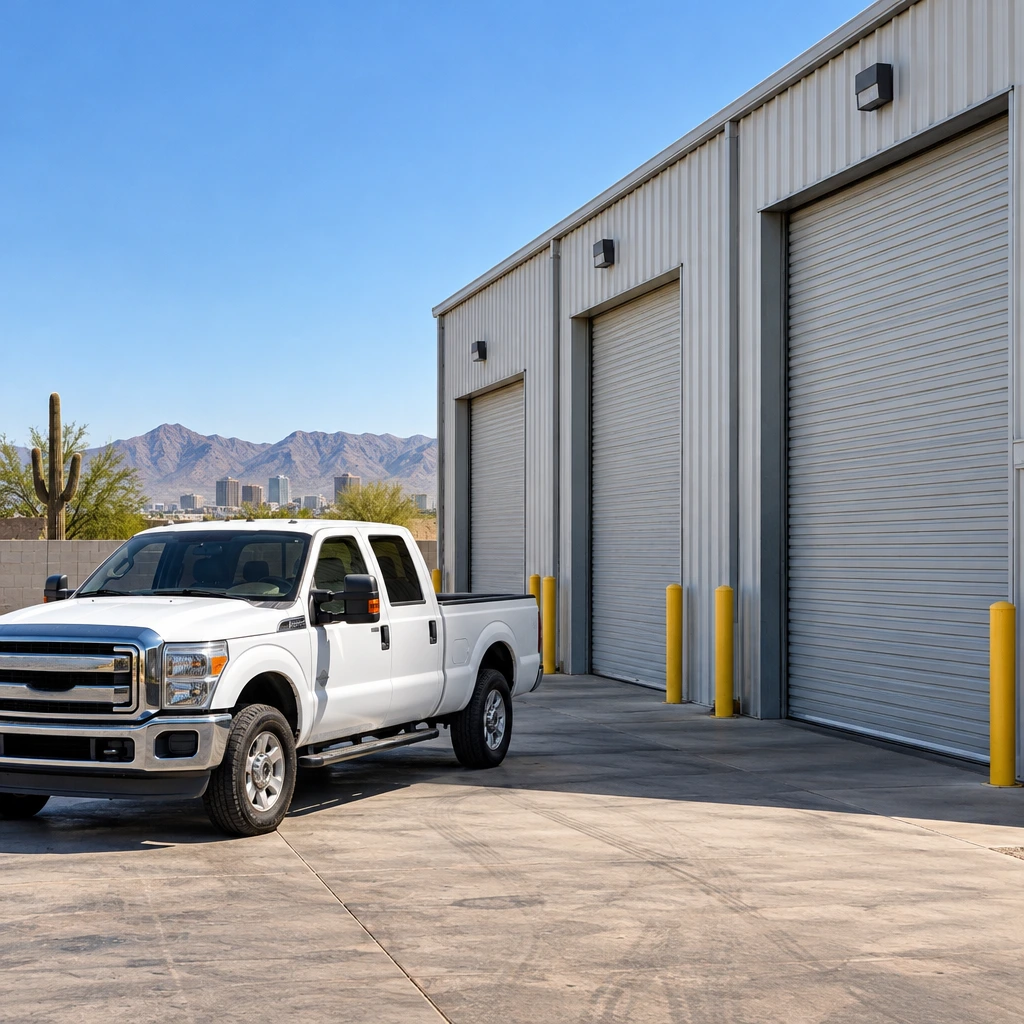
Preventive Maintenance for Roll Up Doors in Phoenix’s Harsh Climate is essential for businesses that depend on secure, reliable access every day. Phoenix-area facilities face intense heat, blowing dust, sudden monsoon winds, heavy rainfall, and rapid weather changes that can accelerate wear on springs, cables, tracks, panels, motors, and safety equipment. In 2024, the National Weather Service reported that Phoenix experienced its warmest year on record, while the region also saw damaging microbursts and a major dust storm. More recently, an August 25, 2025 dust storm brought Phoenix-area wind reports near 50–65 mph and visibility below one-quarter mile.
These conditions make routine commercial door care more than a cosmetic concern. A neglected roll up door can become slow, noisy, difficult to secure, or unsafe to operate. This guide explains how the Phoenix climate affects roll up doors, which maintenance tasks matter most, how often inspections should occur, and when to call a professional. Arizona Roll Up Door Service provides installation, repair, and maintenance throughout Phoenix, Avondale, Buckeye, Goodyear, Scottsdale, North Phoenix, and surrounding communities.
Preventive Maintenance for Roll Up Doors in Phoenix’s Harsh Climate
Phoenix’s desert environment creates a combination of stressors that can shorten the service life of a commercial roll up door. Extreme heat can affect lubricants, electrical components, seals, and motor performance. Fine dust can work into tracks, bearings, hinges, and moving assemblies. During monsoon season, strong outflow winds and sudden rain can push debris against the door or create conditions that expose corrosion-prone components to moisture.
The National Weather Service describes the Southwest monsoon as a period that typically runs from June 15 through September 30 and can bring extreme heat, thunderstorms, high winds, dust storms, and flash flooding. Its Phoenix-area weather summaries also document recent events involving microburst wind damage, hail, flooding, and expansive dust storms. These hazards reinforce why a maintenance schedule should be based on local operating conditions rather than a generic calendar alone.
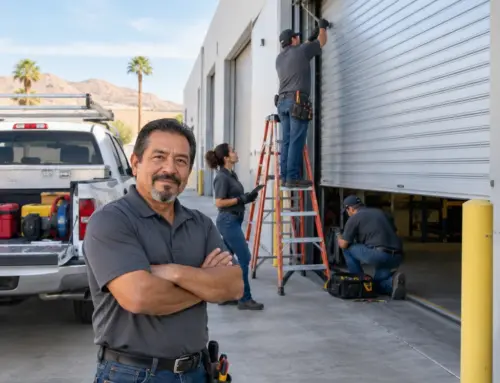
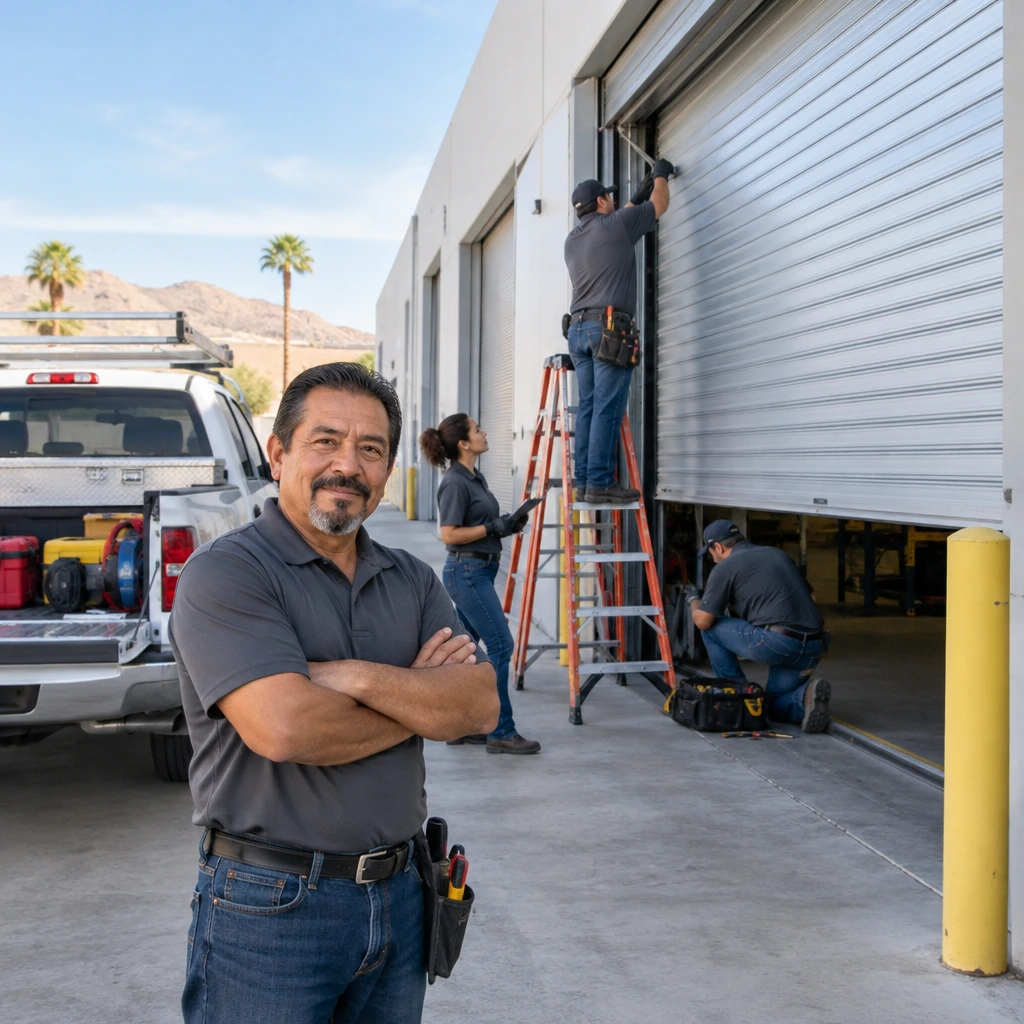
A professional maintenance visit helps identify small problems before they become disruptive failures. Technicians can inspect the door curtain or panels, test the balance and travel, examine spring and cable assemblies, clean and align tracks, tighten hardware, and verify that safety devices respond properly. For high-use facilities, scheduled service is often more cost-effective than waiting for a breakdown during loading, shipping, or customer-facing hours.
How the Phoenix climate affects commercial roll up doors
- Heat: High temperatures can stress motors, openers, wiring, seals, and lubricants.
- Dust: Fine particles can build up in tracks and moving parts, increasing friction and slowing operation.
- Monsoon winds: Sudden gusts can force debris into the opening and damage panels, guides, or exterior hardware.
- Rain and humidity: Short periods of intense moisture can expose weakened seals, drainage issues, and vulnerable electrical connections.
- Daily usage: Repeated opening and closing magnifies the effect of every loose fastener, worn bearing, or alignment issue.
Key Roll Up Door Maintenance Tasks for Phoenix Businesses
Effective door maintenance Phoenix businesses can rely on should combine cleaning, mechanical inspection, safety testing, and performance adjustments. Each part of the system contributes to dependable operation. A door may appear functional while still showing early signs of spring fatigue, track friction, cable wear, or motor strain.
Clean and inspect tracks, guides, and moving parts
Tracks and guides should be checked for dust, rocks, packaging material, insects, and other obstructions. Even a small buildup can cause the door to rub, hesitate, or travel unevenly. Technicians should also look for bent guides, loose mounting hardware, worn rollers, and signs that the door is no longer centered within the opening.
Lubrication is another important part of commercial door care. Appropriate lubricant should be applied to designated moving components without creating a sticky surface that attracts additional dust. Over-lubrication can be counterproductive in a desert environment, so the product and amount should match the door manufacturer’s requirements.
Check springs, cables, balance, and hardware
Spring and cable assemblies manage substantial loads and should not be adjusted by untrained personnel. A qualified technician can look for fraying, stretching, corrosion, unusual gaps, damaged fasteners, and loss of balance. If the door feels heavier than usual, drops unexpectedly, or requires excessive force, stop using it and request an inspection.
Hardware should be tightened as needed, including brackets, guide assemblies, fasteners, mounting points, and operator connections. Vibration from regular use and wind exposure can gradually loosen components. Catching that movement early may prevent panel damage or a more serious alignment problem.
Test the motor, opener, controls, and safety equipment
A maintenance visit should include operational testing from all normal control points. The technician should observe startup, travel speed, stopping position, reversing action, and unusual sounds. A sluggish door may need cleaning or lubrication, but it may also indicate spring imbalance, motor trouble, track misalignment, or an obstruction.
Safety sensors, emergency release features, warning devices, and stop controls should be tested according to the equipment design. Commercial operators should also maintain clear operating areas so employees, forklifts, inventory, and vehicles do not interfere with the door’s movement. OSHA regulations for mechanically operated cargo doors emphasize guarding counterweights and securing vertically operated doors during work, underscoring the importance of controlled access during service.
A Practical Maintenance Schedule for Roll Up Doors Phoenix Facilities
There is no single schedule that fits every property. A low-use storage building may need less frequent service than a warehouse, distribution center, retail facility, apartment complex, or service business operating a door dozens of times each day. Exposure also matters. Doors located near unpaved lots, construction, agricultural areas, or busy delivery lanes may collect more dust and debris.
Daily and weekly checks for employees
Employees can perform simple visual checks without attempting repairs or adjustments. Before opening, confirm that the doorway is clear and look for visible damage, leaning guides, loose hardware, or objects caught beneath the curtain. Listen for new grinding, scraping, popping, or squealing sounds. The door should move smoothly and stop at the expected positions.
Keep the floor, threshold, and nearby approach clear. Do not force a door that is stuck, unusually heavy, or moving unevenly. Report problems immediately and restrict use if continued operation could create a safety risk.
Monthly or quarterly professional service
Many commercial facilities benefit from professional inspections at least quarterly, with more frequent visits for high-cycle doors or locations exposed to heavy dust. A typical service may include:
- Visual inspection of panels, guides, hardware, springs, cables, and mounting points.
- Track and guide cleaning, alignment checks, and obstruction removal.
- Lubrication of approved moving components.
- Balance, travel, and operating-force evaluation.
- Motor, opener, control, and safety-device testing.
- Minor adjustments and documentation of developing concerns.
At minimum, schedule a detailed inspection before the hottest part of summer and another after monsoon season. This timing helps identify heat-related performance concerns before peak usage and allows technicians to check for wind, dust, and moisture damage after seasonal storms.
After severe weather or unusual operation
Do not wait for the next appointment if a dust storm, microburst, hail event, vehicle impact, or flooding affects the facility. The National Weather Service documented an August 25, 2025 Phoenix-area dust storm with near-zero visibility in some locations and wind reports near 50–65 mph. Events of this type can introduce debris, shift guides, damage panels, or loosen exterior components even when damage is not immediately obvious.
After severe weather, inspect the opening from a safe distance and arrange professional service if the door is noisy, off-center, bent, slow, or unable to close completely. Arizona Roll Up Door Service offers prompt diagnosis and same-day repair capability when possible, with replacement parts available for many common repairs.
Common Phoenix Roll Up Door Problems and Their Solutions
Preventive service helps reduce emergency calls, but no mechanical system lasts forever. Recognizing early warning signs allows property owners and facility managers to respond before a small issue interrupts operations.
Sluggish or slow operation
Slow movement may result from dust buildup, inadequate lubrication, track friction, spring tension problems, motor wear, or an electrical issue. Continued operation can place additional strain on the opener. A technician should identify the cause rather than simply increasing motor force.
Broken springs or cables
A broken spring or cable can leave the door unbalanced or inoperable. These components are under significant tension and should be replaced by a trained professional using appropriate parts. Do not attempt to lift or dismantle a door with a failed counterbalance assembly.
Damaged panels or sections
Wind-blown debris, forklift contact, delivery vehicles, and repeated impact can damage panels or sections. Depending on the extent of the damage, repair or replacement may restore safe operation. A technician should also check the guides and mounting structure because panel damage can hide alignment problems.
Motor and opener issues
Grinding, humming, intermittent operation, overheating, or failure to respond may indicate motor, control, wiring, or opener trouble. Phoenix heat can make existing electrical and mechanical weaknesses more noticeable. Prompt diagnosis can sometimes prevent a complete operator replacement.
Track misalignment and safety sensor problems
A door that rubs one side, stops before reaching the floor, reverses unexpectedly, or fails to respond to a safety device needs professional evaluation. Obstructions may be simple to remove, but bent guides, damaged sensors, and control faults require proper testing and adjustment.
Build a Commercial Door Care Plan with Arizona Roll Up Door Service
Reliable roll up doors support security, weather protection, workflow, and business continuity. In Phoenix, preventive maintenance is especially valuable because dust, extreme heat, monsoon winds, and sudden storms can expose weaknesses quickly. A planned service program helps reduce emergency repair costs, extend equipment life, and keep employees and customers moving safely through the facility.
Arizona Roll Up Door Service has over 20 years of experience providing commercial and residential roll up door installation, repair, and maintenance throughout the Phoenix metro area. From Avondale, Buckeye, and Goodyear to Scottsdale, North Phoenix, Central Phoenix, and surrounding communities, our team provides careful inspections, quality craftsmanship, competitive pricing, and responsive service.
Contact Arizona Roll Up Door Service today for a free consultation. Call us for prompt, professional service, or schedule a customized maintenance program designed around your facility’s usage, exposure, and operating requirements. Let us help keep your roll up doors secure, functional, and ready for the demands of Phoenix’s climate.