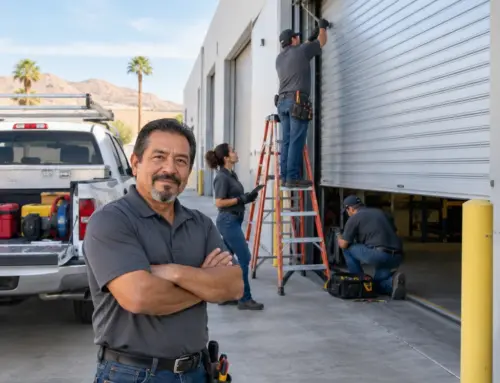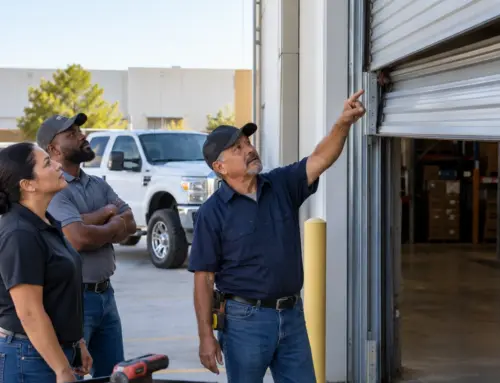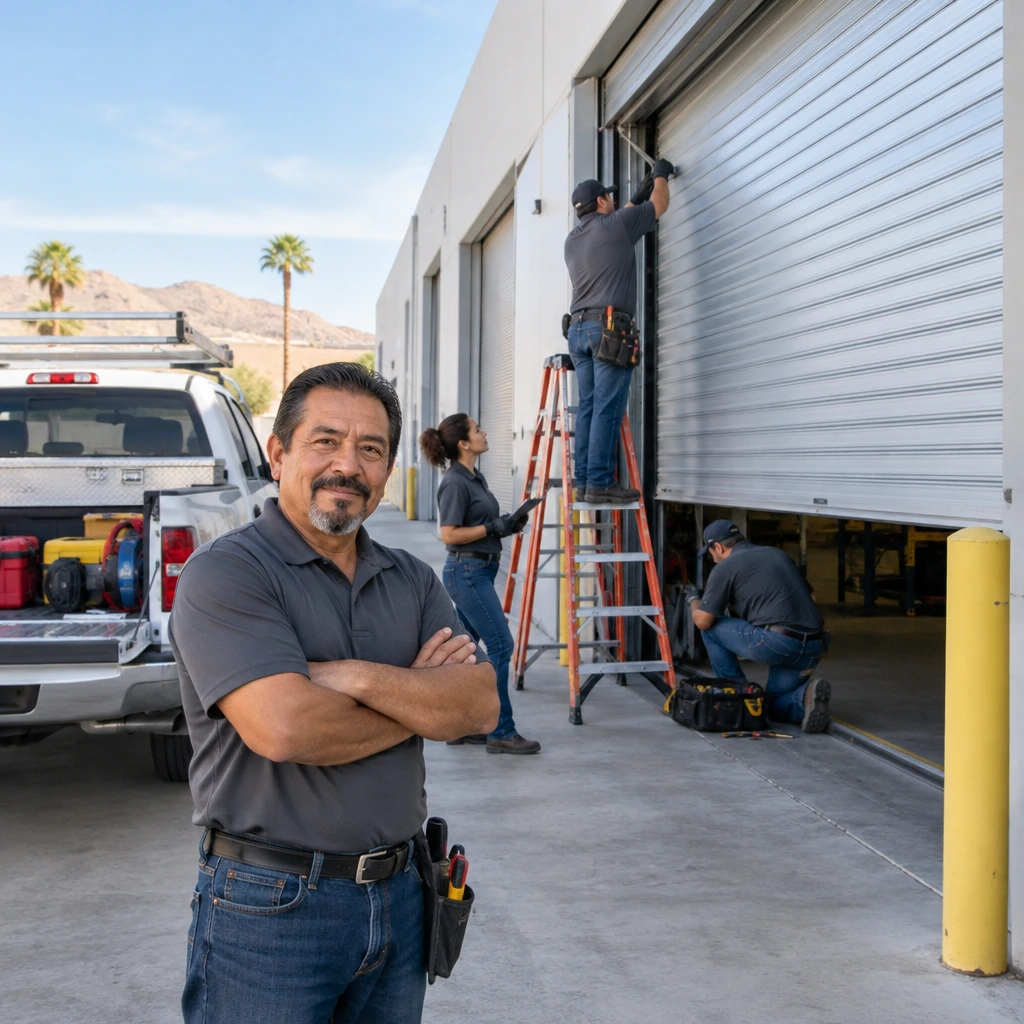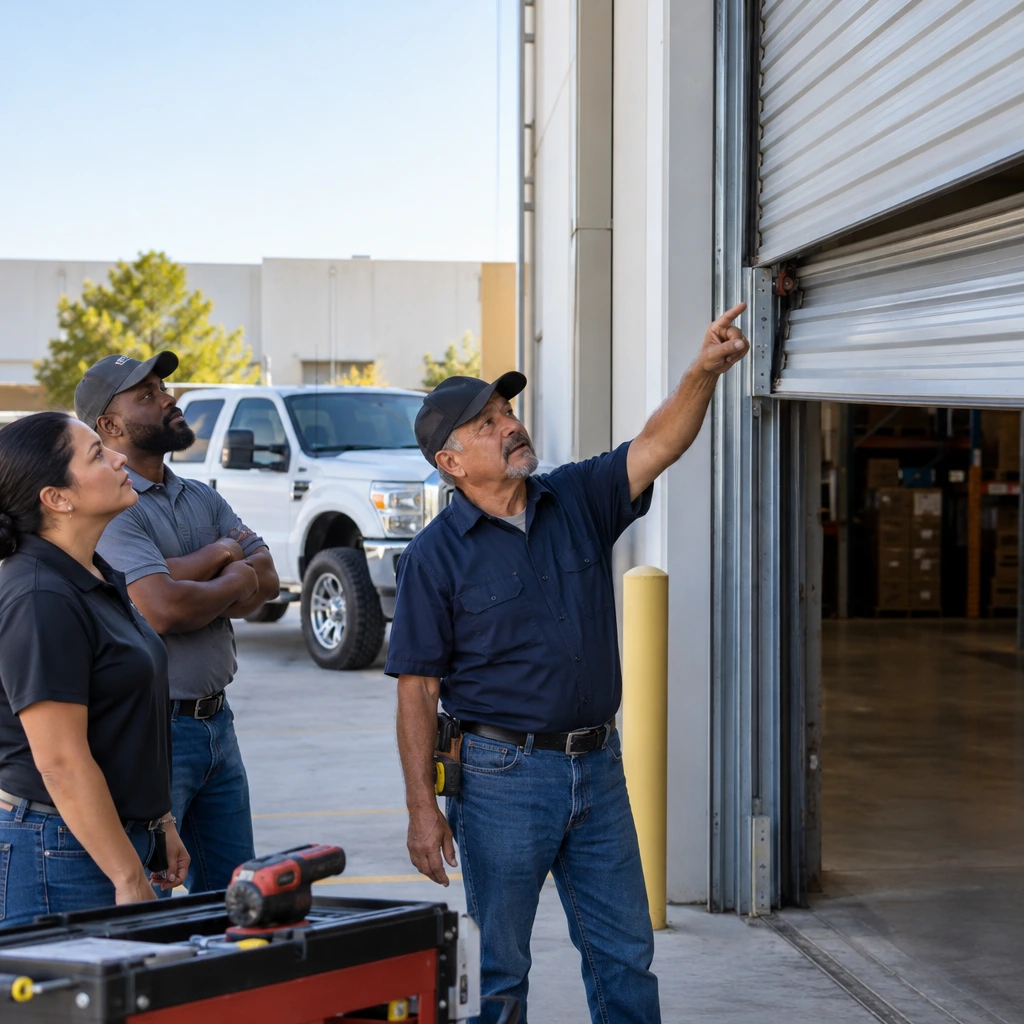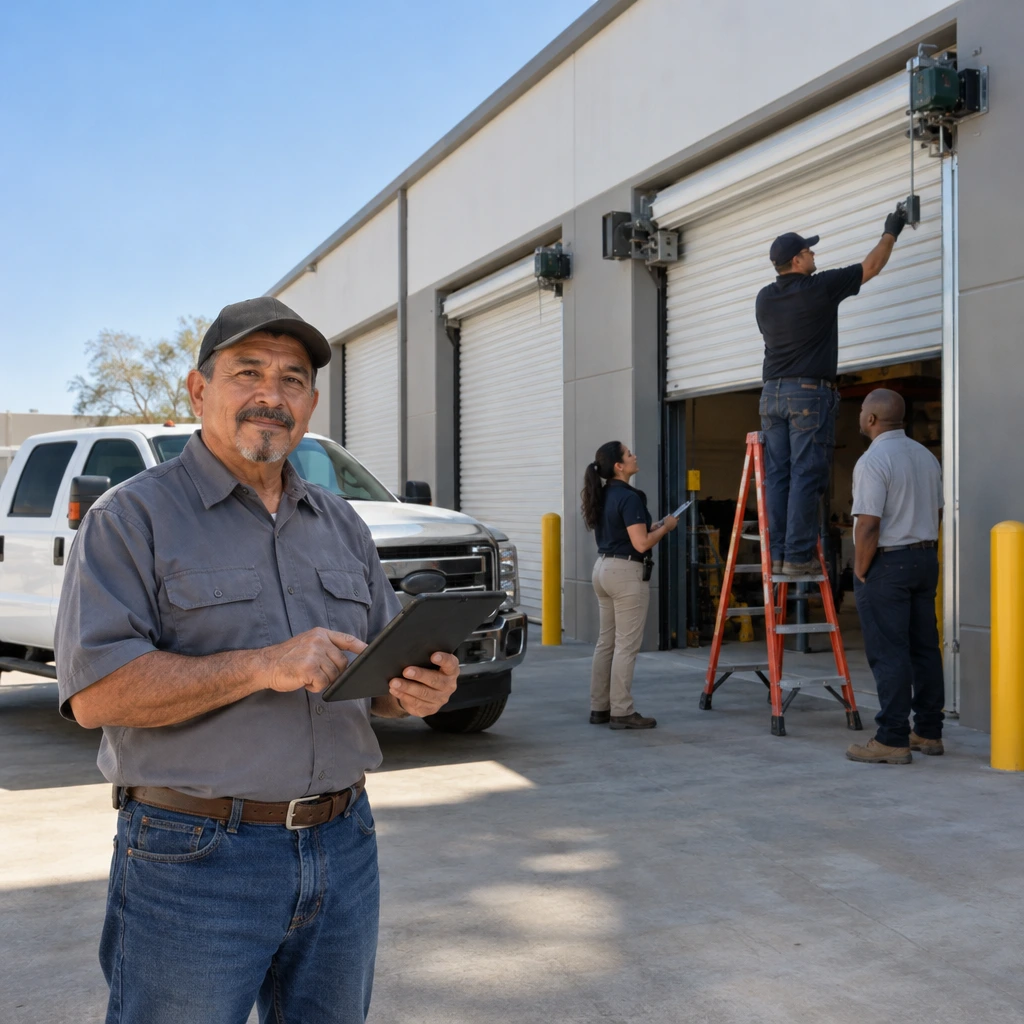
Your business depends on dependable roll up doors for security, access, and daily productivity. When a motor begins operating slowly, stopping unexpectedly, or failing to lift the curtain, choosing the right replacement requires more than selecting the most powerful option available. Understanding roll up door motor types helps Phoenix business owners choose equipment that matches the door’s size, usage, available power, and operating environment. In this guide, Arizona Roll Up Door Service explains the most common commercial motor designs, how they work, and which factors matter when installing or replacing a motor. You will also learn how Arizona heat, dust, frequent operation, and maintenance needs can affect motor performance. With more than 20 years of experience serving businesses throughout the Phoenix metro area, our team can help you find a dependable solution that supports safe, efficient operation.
Roll Up Door Motor Types: Choosing the Right Design
Commercial roll up doors use different motor configurations because every opening has unique requirements. A small service opening that operates a few times each day does not need the same system as a warehouse entrance used continuously. The motor must provide enough lifting force while working smoothly with the door’s springs, shaft, guides, and control equipment.
Side-Mounted Jackshaft Motors
Side-mounted jackshaft motors are among the most common choices for commercial applications. The motor mounts beside the door and turns the drive shaft through a chain or gear assembly. Because the operator sits to the side, it preserves valuable overhead clearance and works well where ceiling space contains lighting, ductwork, storage equipment, or other obstructions.
These motors are available in a range of lifting capacities and duty ratings. They can support doors that open frequently, making them suitable for warehouses, loading areas, retail facilities, service businesses, and industrial properties. Many models also include a manual chain hoist, allowing trained personnel to operate the door during a power outage or certain motor-related failures.
Tubular and Barrel Motors
Tubular motors fit inside the barrel or shaft around which the door curtain rolls. Their compact design is useful when appearance, available space, or a concealed installation is important. They are often selected for smaller or lighter commercial openings with moderate operating demands.
Although compact motors can be effective, they must be correctly matched to the door’s weight and cycle frequency. Using an undersized motor may lead to overheating, premature wear, slow movement, or repeated shutdowns. A professional assessment determines whether this design can handle the opening reliably over the long term.
Hoist and Heavy-Duty Configurations
Some commercial installations require a heavier-duty operator, especially when the door is large, frequently used, or exposed to demanding conditions. These systems may use stronger gear reductions, higher-duty motors, and enhanced control components. The correct choice depends on the door dimensions, curtain weight, spring condition, shaft design, and expected number of cycles per day.
Arizona Roll Up Door Service evaluates the complete system rather than recommending a motor based on size alone. Proper sizing improves performance, reduces strain, and helps prevent avoidable service calls.
How Phoenix Conditions Affect Commercial Roll Up Door Motors
Phoenix businesses face operating conditions that can influence motor life and door performance. High temperatures can place additional stress on electrical components, lubricants, and protective housings. Dust and airborne debris may accumulate around tracks, sensors, chains, and ventilation areas. In addition, many businesses operate on demanding schedules, which increases the number of opening and closing cycles each day.
Heat, Dust, and Daily Usage
A motor that works well in a lightly used location may not be suitable for a busy warehouse or distribution facility. Frequent cycling can increase heat buildup, particularly when the motor is poorly ventilated, overloaded, or working against a binding door. Dust can also combine with grease and debris, creating resistance in moving parts.
When comparing Phoenix roll up door motors, consider these factors:
- Door size and weight: The operator must provide adequate torque without unnecessary strain.
- Cycle frequency: A busy commercial entrance needs a higher-duty design than a door used occasionally.
- Available electrical service: Voltage and phase requirements must match the property’s power supply.
- Mounting space: Side-mounted systems can be advantageous where overhead clearance is limited.
- Environmental exposure: Outdoor or dusty locations may require appropriate housing and more frequent inspection.
- Safety equipment: Photo sensors, sensing edges, brakes, and emergency controls must work with the operator.
Why Proper Sizing Matters
A motor is only one part of a balanced roll up door system. Broken springs, worn bearings, bent tracks, damaged panels, or excessive friction can make even a properly sized motor appear weak. Replacing the motor without correcting those problems may result in continued sluggish operation and another failure soon afterward.
A qualified technician checks the door’s balance and movement before recommending equipment. The team may inspect spring tension, cables, guides, shaft components, mounting hardware, and control wiring. This process helps identify whether the motor needs repair, adjustment, or replacement. It also protects your investment by preventing a new motor from compensating for an underlying mechanical issue.
Key Features to Compare When Selecting a Motor
Commercial roll up door motors differ in more than horsepower. Control options, safety features, backup operation, duty rating, and serviceability can all affect the value of an installation. Choosing equipment based on the lowest initial price may create higher costs if the motor cannot keep up with your business.
Duty Rating and Operating Capacity
The duty rating indicates how frequently the motor can operate within a specified period. Light-duty equipment may be appropriate for a small opening at a low-traffic property. Medium- and heavy-duty operators are better suited to facilities with constant deliveries, multiple shifts, or frequent vehicle movement.
Ask how many cycles the motor is designed to handle and whether that rating matches your actual usage. A professional installer can also explain how seasonal demands, delivery schedules, and future business growth may affect the selection.
Controls, Safety, and Backup Operation
Modern commercial operators may support wall controls, remote controls, key switches, access systems, loop detectors, or building automation. The best configuration depends on how employees, customers, and vehicles use the opening. Emergency stop controls and warning devices may also be appropriate for certain locations.
Safety equipment deserves equal attention. A properly installed system may include photoelectric sensors, a sensing edge, automatic reversing functions, and a brake that helps control the door. These components require testing during installation and maintenance. If a sensor is dirty, misaligned, damaged, or incorrectly wired, the door may refuse to close or may not respond as intended.
A manual chain hoist or other emergency operating feature can be valuable when electrical power is interrupted. However, backup equipment should be used according to manufacturer instructions and inspected regularly. Arizona Roll Up Door Service can review your operating requirements and explain which features make sense for your facility.
Motor Repair, Replacement, and Preventative Maintenance
Not every motor problem requires complete replacement. A sluggish door may need lubrication, track alignment, spring adjustment, or removal of an obstruction. Other symptoms, including grinding sounds, repeated thermal shutdowns, inconsistent stopping, and failure to respond to controls, may indicate worn components or electrical problems.
Common Warning Signs
- The door opens or closes more slowly than usual.
- The motor hums, clicks, or makes unusual mechanical noises.
- The operator stops during travel or needs repeated attempts to run.
- The door reverses unexpectedly or will not close fully.
- A chain, cable, spring, or track appears damaged or out of position.
- Safety sensors show an error or fail to respond consistently.
- The motor housing becomes unusually hot during normal use.
Continuing to operate a door with these symptoms can place additional strain on the motor and other components. It can also create security, safety, and workflow concerns. Turn off the system when appropriate and arrange an inspection instead of forcing the door to operate.
Maintenance That Extends Motor Life
Preventative maintenance helps identify small issues before they become disruptive failures. A service visit may include cleaning and aligning tracks, lubricating moving components, inspecting springs and cables, tightening hardware, testing safety equipment, and checking motor performance. The technician can also evaluate the door’s balance and confirm that it travels smoothly from fully open to fully closed.
Maintenance schedules should reflect usage and environment. A high-traffic facility in West Phoenix, Buckeye, or Goodyear may need more frequent attention than a lightly used location. Dust exposure, outdoor placement, and long operating hours can also influence the recommended schedule. Regular care may reduce emergency repair costs and help maintain consistent access for employees, deliveries, and customers.
Why Phoenix Businesses Choose Arizona Roll Up Door Service
Selecting a motor is important, but dependable installation and responsive service matter just as much. Arizona Roll Up Door Service has more than 20 years of experience providing commercial roll up door installation, repair, and maintenance throughout the Phoenix metro area. Our technicians understand the demands placed on business entrances in Avondale, Buckeye, Goodyear, Scottsdale, North Phoenix, Central Phoenix, and surrounding communities.
We provide custom measurements, site assessments, motor and opener troubleshooting, safety testing, track alignment, spring and cable service, and replacement of damaged components. Our fully stocked inventory often allows us to complete repairs during the first visit when the required parts are available. When a new operator is needed, we focus on proper sizing, reliable operation, minimal business downtime, and long-term value.
Whether you need a compact motor for a moderate-use opening or a heavy-duty system for demanding commercial traffic, our team will explain the options clearly. We deliver quality craftsmanship at competitive prices and keep your operational needs at the center of every recommendation.
Conclusion: Get Expert Help With Phoenix Roll Up Door Motors
Understanding roll up door motor types makes it easier to choose equipment that fits your facility, usage level, power supply, and available space. Side-mounted jackshaft motors, tubular designs, and heavy-duty configurations each have advantages when correctly matched to the opening. However, motor performance also depends on balanced springs, aligned tracks, working safety devices, and regular maintenance.
Your business depends on dependable doors. If your current motor is slow, noisy, unreliable, or unable to handle daily traffic, contact Arizona Roll Up Door Service today for a free consultation. We serve the entire Phoenix metro area with expert installation, repair, and maintenance. Call us for prompt, professional service, and let us help keep your facility secure and functional.