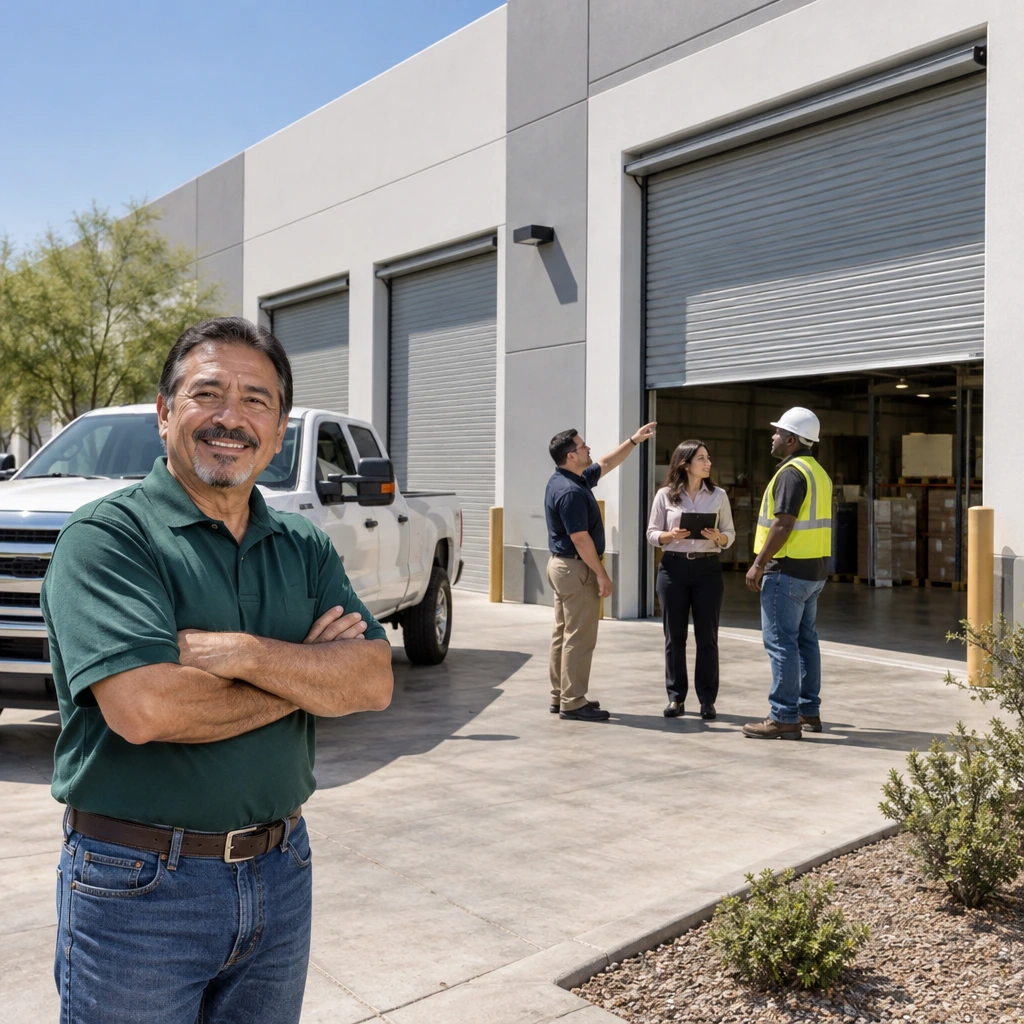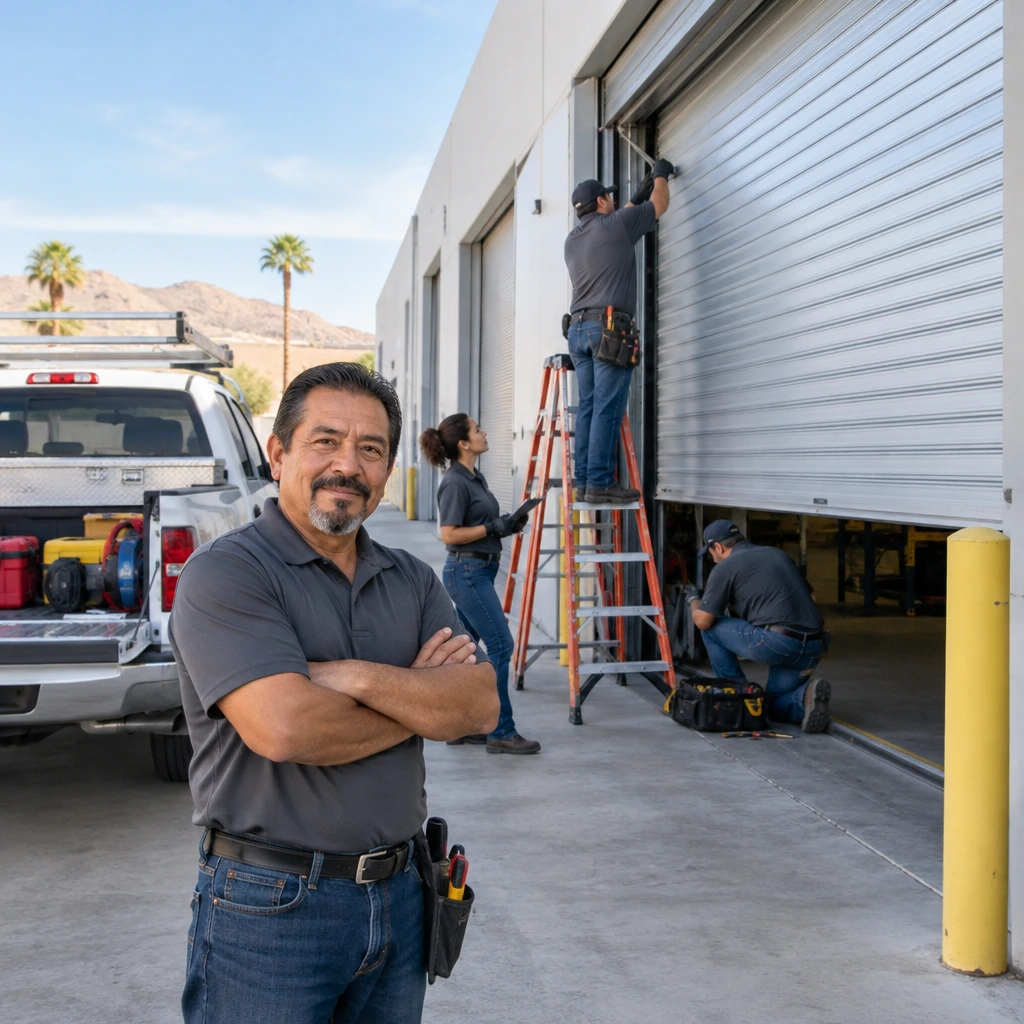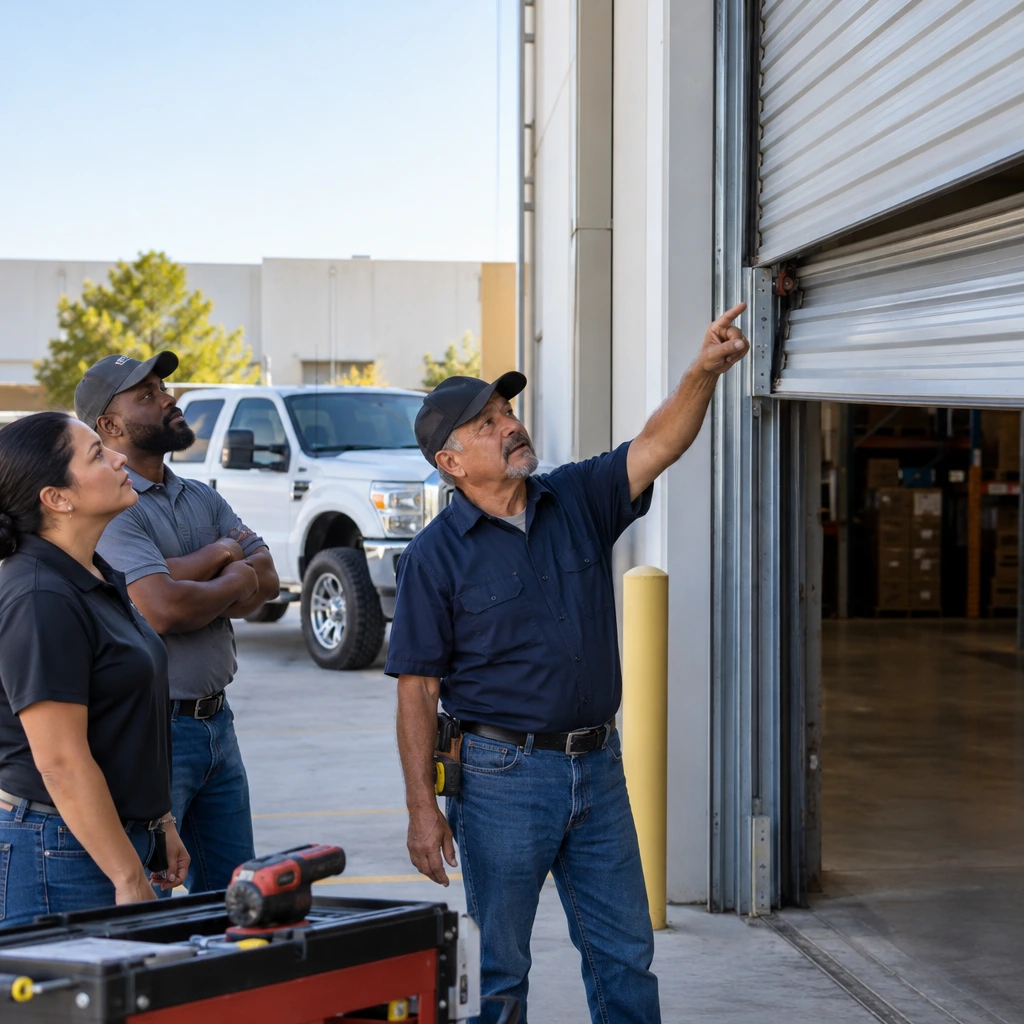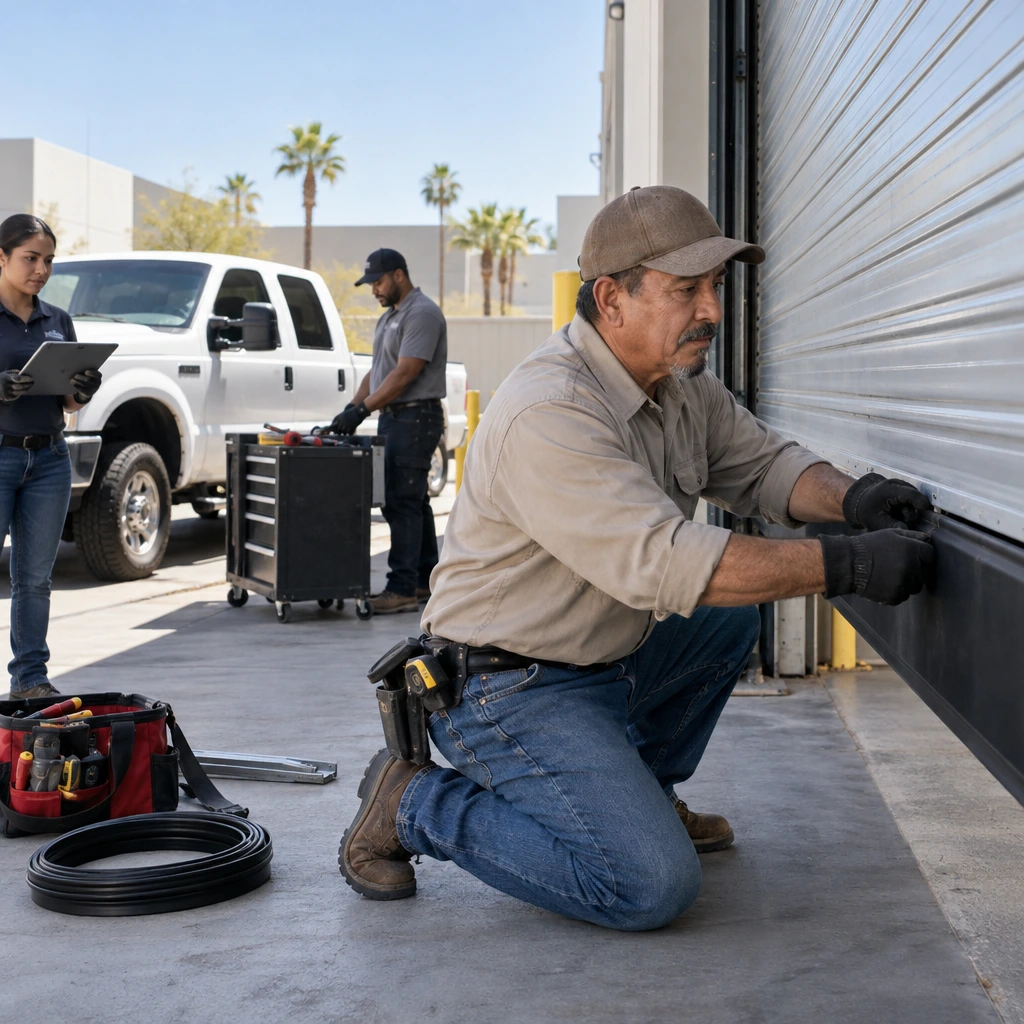
When a roll up door closes on a vehicle, product, or employee, the bottom safety edge is often the last line of protection. If that sensing edge fails, the door may continue downward instead of stopping or reversing. For Phoenix businesses, prompt roll-up door safety edge replacement can restore safe operation, reduce downtime, and help prevent a small electrical or rubber-edge problem from becoming a larger door failure. In this guide, you will learn the common safety edge failure signs, realistic Phoenix repair costs, how long replacement usually takes, and what a professional technician should test before returning the door to service. Arizona Roll Up Door Service provides commercial and residential roll up door repair throughout Phoenix, Avondale, Buckeye, Goodyear, Scottsdale, North Phoenix, and surrounding communities.
Roll-Up Door Safety Edge Replacement: What the Component Does
A safety edge, sometimes called a sensing edge, is installed along the bottom bar of a motorized roll up door. When the edge contacts an obstruction, its internal switch, pneumatic tube, or electrical sensor signals the operator to stop or reverse. The system is designed to reduce the risk of crushing injuries and property damage during closing.
The component is exposed to frequent contact, sunlight, dust, temperature changes, forklifts, carts, and repeated compression. In Phoenix, intense heat and ultraviolet exposure can accelerate hardening, cracking, and loss of flexibility. A technician should inspect the entire edge assembly rather than replacing only the visible rubber section. Wiring, coil cords, cord reels, connection points, limits, and the operator control board can all affect performance.
The Door and Access Systems Manufacturers Association guidance on sensing edges recommends checking for cuts, holes, compression, hardening, and other physical damage. It also highlights the importance of inspecting tubing, wiring, coil cords, and the door’s stop or reverse response. These checks are especially important at busy warehouses, loading areas, service bays, and commercial storage facilities.
Common safety edge failure signs
- The door touches an object but does not stop or reverse.
- The operator works intermittently or reverses without a visible obstruction.
- The bottom edge is cracked, flattened, brittle, or permanently compressed.
- Wires are loose, pinched, cut, or pulled from the edge.
- The door will operate only when the safety device is bypassed or reset.
- An operator displays a safety, sensor, or obstruction fault.
- The door closes unevenly because the bottom bar or edge has been damaged.
Never bypass a failed safety edge to keep production moving. A temporary workaround can leave employees, vehicles, inventory, and the door itself unprotected. Instead, place the opening out of service when necessary and arrange commercial door safety edge repair in Phoenix.
Phoenix Roll Up Door Safety Edge Replacement Cost
The cost of a bottom edge sensor replacement depends on the door width, edge design, operator brand, wiring condition, access height, and whether the technician finds related damage. A straightforward replacement on a common commercial roll up door is usually less expensive than a job involving a damaged bottom bar, control circuit, cord reel, or door operator.
For planning purposes, many Phoenix property owners should expect approximately $250 to $650 for a standard safety edge replacement, including typical labor and testing. A basic sensor adjustment, wiring repair, or connection correction may fall below that range. Larger openings, specialty sensing edges, high-cycle operators, difficult access, emergency scheduling, and multiple failed components can push the total toward $700 to $1,200 or more.
These are planning ranges, not a guaranteed quote. A technician must identify the exact door and safety system before confirming the price. General repair-cost data from Angi’s 2026 door repair cost guide places typical roll-up repairs in a broad $300-to-$800 range, illustrating why the final invoice depends heavily on the part and the complexity of the service. A safety edge replacement may be below or above that general benchmark because it is a specialized commercial safety repair.
What affects the final invoice?
- Door size: Wide commercial openings require longer sensing edges and more installation time.
- Edge type: Pneumatic and electrical sensing edges use different components and testing procedures.
- Operator compatibility: The replacement must match the operator’s safety circuit and control logic.
- Wiring damage: A failed coil cord, cord reel, junction, or terminal can add parts and labor.
- Bottom bar condition: A bent or crushed bar may prevent the new edge from seating correctly.
- Access and scheduling: High openings, congested work areas, after-hours calls, and urgent service may increase labor costs.
A professional quote should identify the replacement edge, labor, testing, and any related repairs separately. Ask whether the price includes a complete operational test, not just installation of the new rubber or sensor strip. Arizona Roll Up Door Service focuses on clear recommendations, competitive pricing, and same-visit repairs when the correct replacement parts are available.
How Long Does Commercial Door Safety Edge Repair Take?
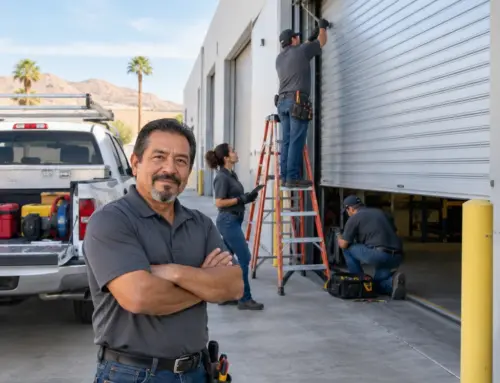
For a common Phoenix roll up door with an accessible bottom bar and an in-stock replacement part, the physical repair often takes about one to three hours. That includes securing the work area, disconnecting the safety circuit, removing the damaged edge, installing the new component, reconnecting wiring, adjusting the operator if needed, and completing stop-and-reverse tests.
Many service calls can be diagnosed the same day. If the edge, cord, and operator circuit are standard and parts are available, the repair may be completed during that visit. Special-order sensing edges, unusual door brands, oversized openings, damaged control boards, or a bent bottom bar can extend the timeline to several business days. A practical planning range is:
- Same-day diagnosis: Often possible in Phoenix metro service areas.
- Same-visit replacement: Common when the correct edge is stocked and the door has no major secondary damage.
- Two to seven business days: Possible when a specialty part must be ordered or additional fabrication is required.
- Longer projects: Likely when the safety edge failure is connected to operator, track, curtain, or structural damage.
Businesses should describe the symptoms accurately when scheduling service. Tell the technician whether the door is stuck open, closes but does not reverse, reverses randomly, makes unusual sounds, or has visible damage along the bottom. Photos of the operator label and sensing edge can also help identify the correct replacement before arrival.
What happens during a professional replacement?
- The technician secures the opening and prevents unexpected movement.
- The existing edge, wiring, cord, and bottom bar are inspected.
- The failed component is removed without damaging the door curtain or operator circuit.
- The replacement edge is installed and connected according to manufacturer requirements.
- Down limits and compression are checked so the edge is not over-compressed.
- The door is tested at the center and near both sides of the opening.
- The customer receives an explanation of the repair and recommended maintenance.
That final testing matters. The DASMA inspection guidance calls for testing the door’s stop or reverse function with an obstruction beneath the center and near both sides of the opening. A door that moves correctly without a load is not necessarily safe if the sensing edge has not been tested under realistic contact conditions.
Phoenix Roll-Up Door Compliance Repair and Safety Testing
Safety requirements vary by door type, operator, building use, manufacturer instructions, and applicable local rules. Therefore, a safety edge replacement should be treated as a functional safety repair, not merely a cosmetic parts swap. The technician should verify that the door’s protective devices work together and that no control has been bypassed.
For commercial facilities, the risk is higher because roll up doors may cycle hundreds of times daily and operate around forklifts, delivery vehicles, employees, and customers. The DASMA technical data sheets for rolling doors and edge sensors provide industry guidance on inspection, testing, maintenance, and related door systems. They are useful reference material, but the manufacturer’s instructions and applicable local requirements should also be followed.
A proper Phoenix roll-up door compliance repair may include checking the following:
- Safety edge response during downward travel.
- Photoelectric sensors or other non-contact protection, when installed.
- Operator stop and reverse settings.
- Bottom-bar alignment and edge compression.
- Coil cord, cord reel, junction box, and terminal connections.
- Warning labels and visible safety information.
- Manual release and emergency operation, where applicable.
- Door balance, travel limits, tracks, guides, and obstructions.
Do not assume a new edge alone resolves every safety problem. If the door continues to close after replacement, the operator may have a control-board fault, incorrect limit setting, damaged wiring, or an incompatible component. The door should remain out of service until the complete safety circuit responds correctly.
When to Call Arizona Roll Up Door Service
Call for service promptly if the safety edge is visibly damaged, the door will not reverse, or employees are compensating by standing clear and manually controlling the opening. Delaying a safety repair can increase the risk of injury, vehicle impact, security exposure, and an avoidable business interruption.
Arizona Roll Up Door Service has more than 20 years of experience with commercial and residential roll up door installation, repair, and maintenance. The team serves the entire Phoenix metro region, including Avondale, Buckeye, Goodyear, Scottsdale, North Phoenix, Central Phoenix, and surrounding West Valley communities.
During a service visit, technicians can diagnose sluggish operation, broken springs and cables, damaged panels, motor and operator problems, track misalignment, obstruction issues, and safety sensor failures. Preventative maintenance can also include lubrication, hardware tightening, spring and cable inspections, track cleaning, and scheduled safety testing.
Before approving work, ask for:
- A diagnosis of why the safety edge failed.
- The exact replacement part or compatible component.
- A written price range for labor and materials.
- An estimated completion time and parts availability.
- Confirmation that stop-and-reverse testing is included.
Conclusion: Schedule Roll-Up Door Safety Edge Replacement in Phoenix
A failed sensing edge is a safety issue, not a minor inconvenience. In many Phoenix applications, roll-up door safety edge replacement can be completed in one visit, with typical costs depending on door size, component type, wiring, access, and related damage. Prompt diagnosis helps protect people, equipment, inventory, and daily operations while avoiding a larger operator or door repair later.
Arizona Roll Up Door Service provides dependable commercial door safety edge repair throughout Phoenix, Avondale, Buckeye, Goodyear, Scottsdale, North Phoenix, and nearby communities. With over 20 years of experience, quality craftsmanship, stocked replacement parts, and same-day repair capability when possible, the team is ready to help keep your facility secure and functional. Contact Arizona Roll Up Door Service today for a free consultation or call for prompt, professional service.