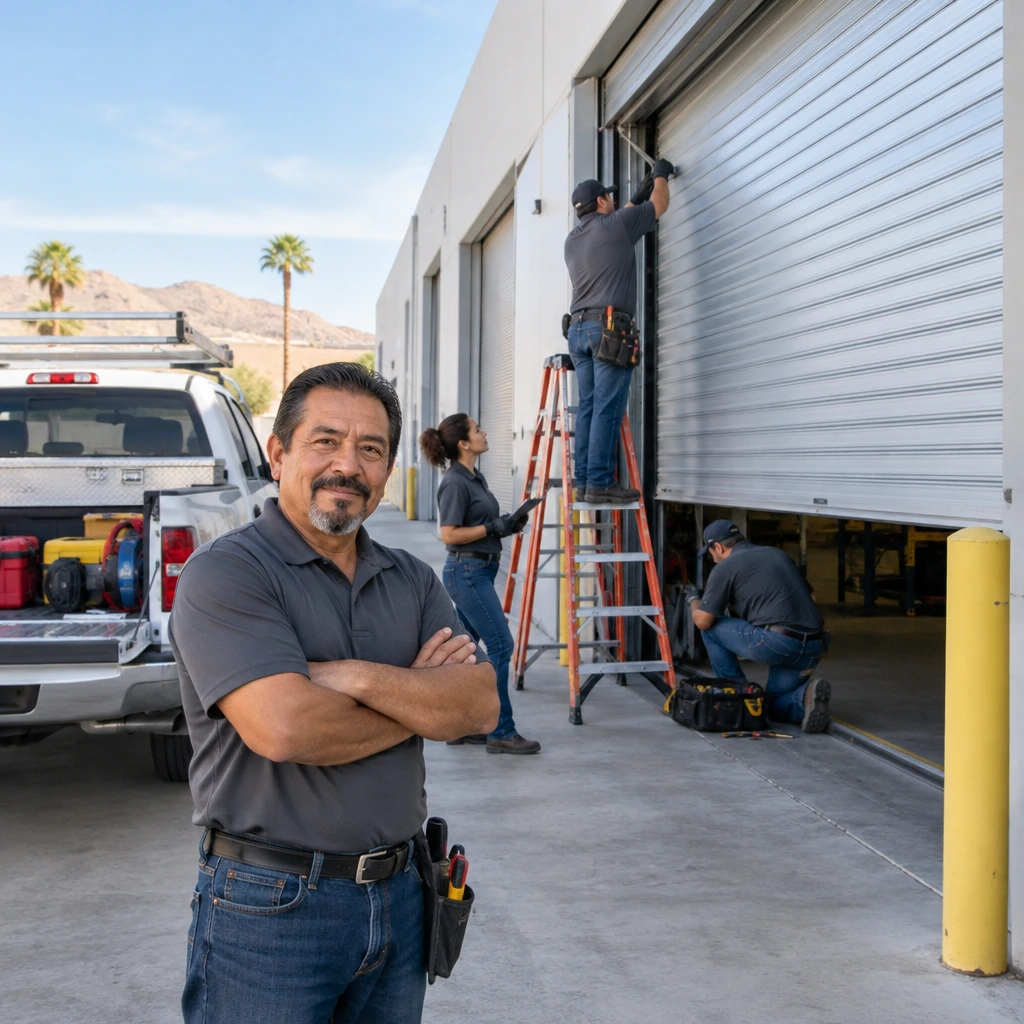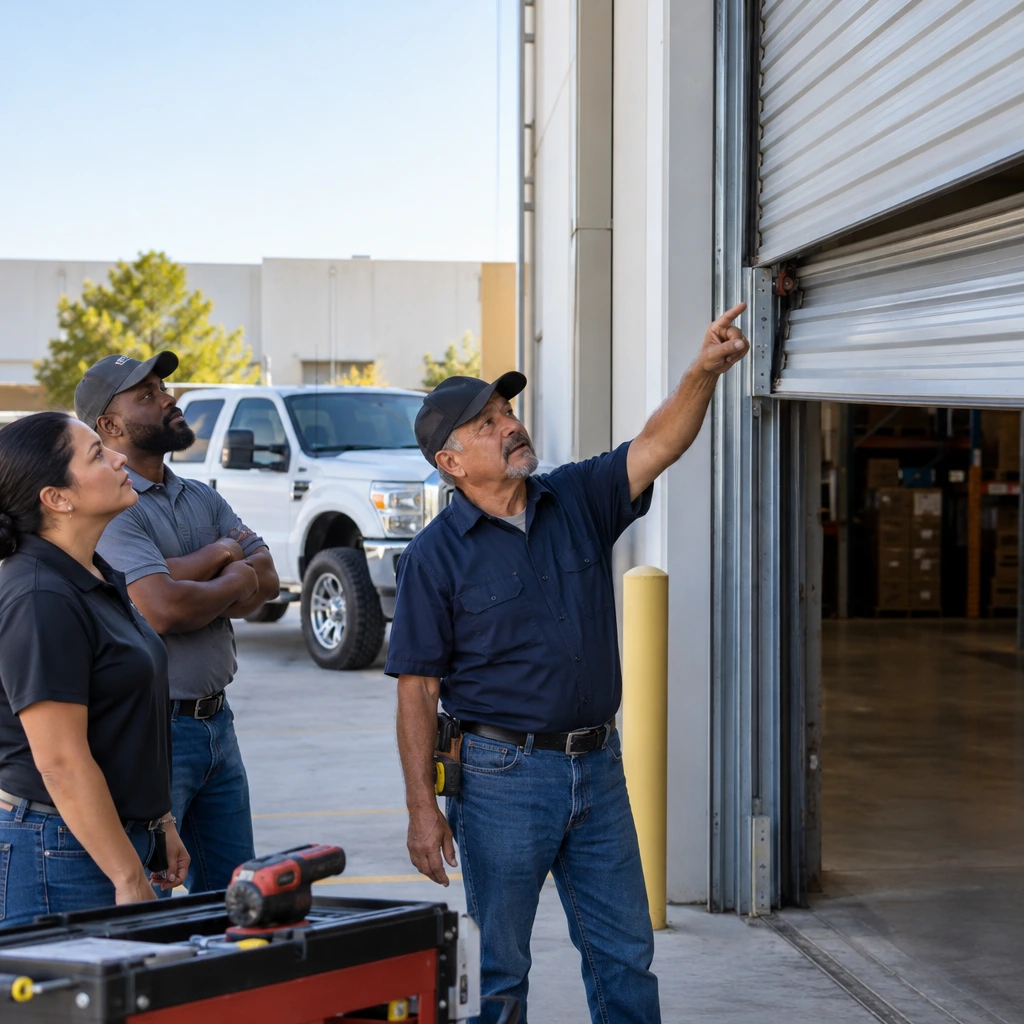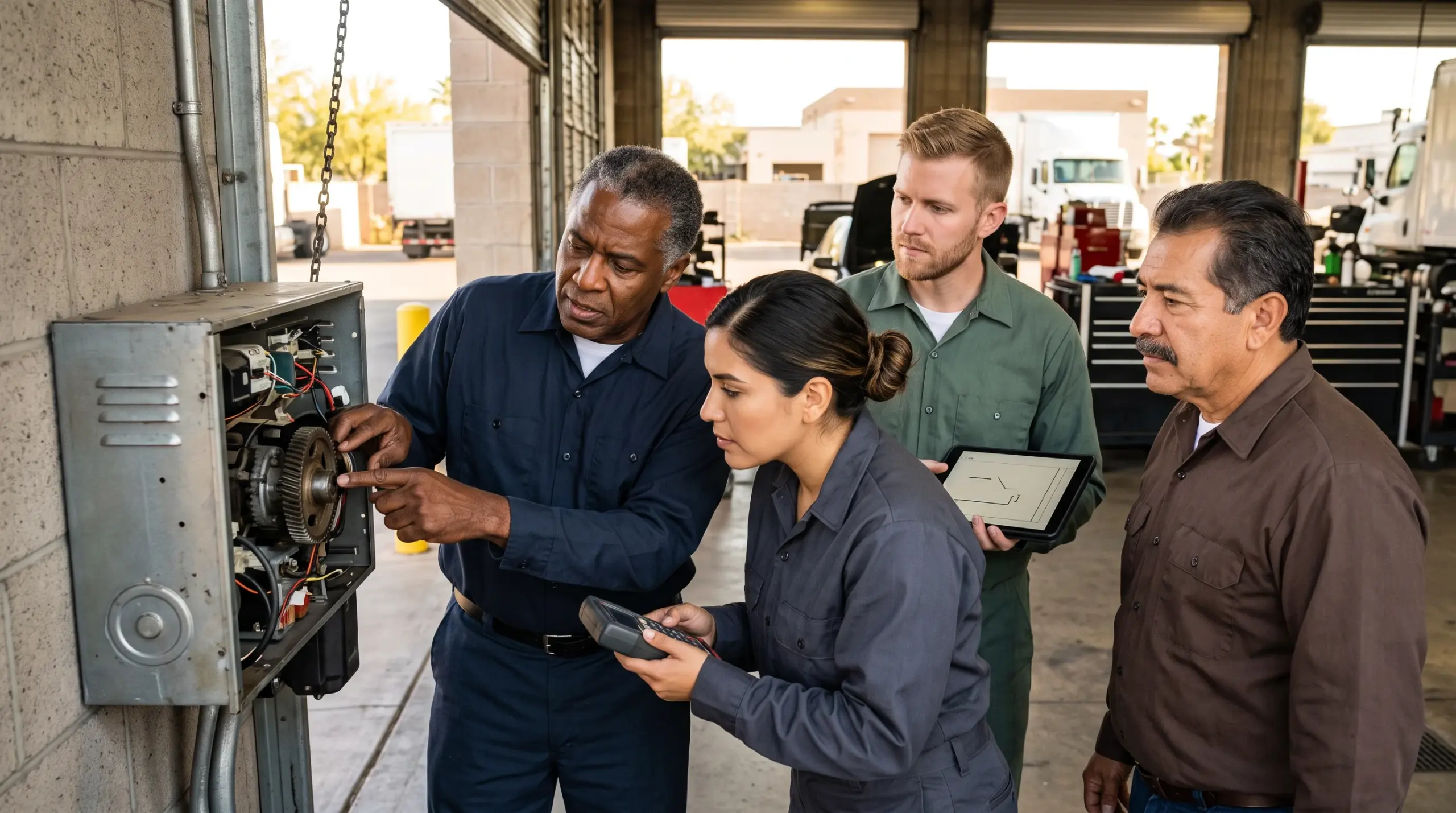
Roll-up door motor failure can interrupt deliveries, slow down employees, and leave a commercial property exposed. In Phoenix, extreme heat, dust, frequent operation, and demanding work schedules can place added stress on motors and opening systems. When a roll-up door begins moving slowly, stopping unexpectedly, or making unusual sounds, waiting for a complete breakdown can lead to greater damage and higher repair costs.
This guide explains the most common causes of roll-up door motor failure, the warning signs property owners should recognize, and the repair solutions that restore dependable operation. You will also learn when basic checks may be appropriate, why some problems require professional attention, and how preventative door maintenance helps protect your investment. Arizona Roll Up Door Service has more than 20 years of experience helping businesses and property owners throughout the Phoenix metro area keep their doors secure, functional, and reliable.
Roll-Up Door Motor Failure: Common Causes in Phoenix
A motor does not always fail without warning. In many cases, the motor is responding to another problem in the door system. Excessive resistance, poor alignment, electrical issues, or worn components can force the motor to work harder than intended. Over time, that extra strain may cause overheating, premature wear, or complete failure.
Mechanical stress and operating conditions
Roll-up doors are designed for repeated use, but they still depend on properly balanced springs, secure cables, clean tracks, and correctly adjusted components. A damaged panel or an obstruction in the guides can increase the lifting load. Similarly, loose hardware or track misalignment may make the door bind during travel. The motor then draws more power and may trip its overload protection.
Phoenix conditions can contribute to these issues. Fine dust may collect in tracks and moving parts, while high temperatures can affect electrical connections and motor components. A door that is opened dozens or hundreds of times each day may show wear sooner than a lightly used system. Commercial facilities should therefore consider usage frequency when establishing a service schedule.
Electrical and control-related causes
Not every motor problem is mechanical. A faulty wall control, damaged wiring, failed circuit component, or inconsistent power supply can prevent the motor from receiving the correct signal. Safety equipment may also stop operation when sensors detect an obstruction or lose alignment. In some cases, the motor is operational, but the control system is preventing movement.
Common causes of commercial door motor failure include:
- Overheating from excessive cycles or restricted movement
- Worn motor gears, bearings, or internal components
- Broken springs or cables that increase the lifting load
- Track obstruction, misalignment, or physical impact
- Loose, corroded, or damaged electrical connections
- Incorrect motor sizing or an aging opener assembly
- Safety sensor, limit switch, or control board problems
Identifying the underlying cause matters. Replacing a motor without correcting a binding track or broken spring may result in another failure shortly afterward.
Warning Signs of a Failing Roll-Up Door Motor
Early symptoms are often easier and less expensive to address than a complete shutdown. Facility managers should pay attention to changes in speed, sound, consistency, and response. A door that still opens today may be signaling a problem that becomes an emergency tomorrow.
Changes in movement and performance
Sluggish operation is one of the most noticeable warning signs. The door may take longer to open or close, pause during travel, or require multiple attempts to respond. It might also stop before reaching the normal open or closed position. These symptoms can indicate motor wear, incorrect limit settings, excess friction, or a problem elsewhere in the assembly.
Intermittent operation deserves attention as well. If the door works normally in the morning but struggles after repeated cycles, overheating or an overloaded motor may be involved. A motor that hums without moving the door could have worn gears, a mechanical obstruction, or insufficient power. Avoid repeatedly pressing the control, since continued cycling can worsen the damage.
Unusual sounds, odors, and electrical behavior
Grinding, buzzing, clicking, squealing, or loud humming should not be ignored. Different sounds can point to loose hardware, worn gears, strained bearings, or electrical relay problems. A burning odor, visible smoke, or a motor housing that becomes unusually hot requires immediate shutdown and professional inspection.
Other warning signs include:
- Breaker trips or fuses fail when the door operates
- The motor runs but the curtain or door does not move
- The door reverses unexpectedly or stops without an obstruction
- Remote or wall controls respond inconsistently
- The door becomes noisy after impact or weather-related damage
- Visible frayed cables, damaged panels, or loose mounting hardware
Some symptoms resemble roll-up door opener problems even when the opener is not the primary cause. For example, a door that is difficult to lift manually may be placing unnecessary strain on a functioning motor. A professional inspection separates motor failure from spring, track, panel, and control issues.
Roll-Up Door Motor Troubleshooting and Safety
Simple observations can help identify a problem, but motor and spring systems contain powerful components that can cause serious injury if handled incorrectly. Property owners should not remove motor covers, adjust springs, bypass safety devices, or attempt to manually repair energized wiring. Door motor troubleshooting in Arizona should account for both electrical safety and the physical demands of commercial equipment.
Safe checks property owners can perform
Before calling for service, you may check whether the power source is active and whether a breaker has tripped. Look for obvious objects in the door path and confirm that the control has not been switched off. If the system uses safety sensors, make sure they are clean and positioned correctly, provided they can be inspected without entering a hazardous area.
Observe the door from a safe distance while another person operates the control. Note whether the motor hums, clicks, or remains silent; whether the door moves evenly; and where it stops. This information can help a technician diagnose the issue more efficiently.
When to stop troubleshooting
Stop using the door if it is crooked, hanging unevenly, making harsh grinding sounds, producing a burning smell, or showing damaged cables or springs. Do not force a stalled door open or closed. Do not hold down a control to overcome resistance, and never bypass a safety sensor to make the system run.
Professional troubleshooting typically includes:
- Inspecting the motor, controls, wiring, and power supply
- Testing safety sensors, limit switches, and operating controls
- Checking tracks, guides, bearings, panels, springs, and cables
- Evaluating door balance and identifying excess resistance
- Determining whether repair, adjustment, or replacement is appropriate
- Testing the complete system after service and confirming safe operation
This process helps prevent misdiagnosis. A motor may appear defective when the true issue is a broken spring, damaged panel, or obstructed track. Conversely, continuing to operate a worn motor can damage other components.
Repair Solutions for Motor and Opener Problems
The correct repair depends on the failure type, the age of the equipment, the door’s usage level, and the condition of related parts. A qualified technician should explain the cause, recommended solution, and expected service life before work begins.
Repairs and component replacement
Minor problems may be resolved through electrical adjustments, control replacement, limit-switch calibration, lubrication, or removal of an obstruction. If the motor is overheating because the door is binding, correcting track alignment and restoring proper balance may solve the problem without replacing the motor.
More serious failures may require replacement of worn gears, bearings, circuit components, or the complete motor and opener assembly. A properly selected replacement should match the door’s size, weight, cycle frequency, and operating environment. Installing an underpowered unit may create repeat failures, while an unsuitable system may not provide the required control or safety features.
Related repairs are often necessary. Arizona Roll Up Door Service can address sluggish operation, broken spring and cable assemblies, damaged panels, track alignment, obstruction removal, safety sensor faults, and motor or opener malfunctions. Resolving these connected issues helps ensure that a new or repaired motor is not overloaded immediately after service.
Repair versus replacement
Repair may be practical when the motor is relatively modern and the damage is limited to a replaceable component. Replacement may offer better value when the unit is outdated, repeatedly failing, difficult to source parts for, or no longer suitable for the door’s workload. A technician can compare the cost of continued repairs with the reliability and efficiency of a new system.
Fast service is especially important for commercial properties. A nonoperating entry can disrupt shipping, limit access, and affect security. Arizona Roll Up Door Service maintains an inventory of commonly needed replacement parts and offers same-day repair capability when possible. The team serves Avondale, Buckeye, Goodyear, Scottsdale, North Phoenix, Central Phoenix, and surrounding communities throughout the Phoenix metro area.
Preventative Door Maintenance to Avoid Motor Failure
Regular maintenance is one of the most effective ways to reduce unexpected motor problems. Preventative door maintenance identifies wear before it becomes an operational emergency and helps the entire system work with less strain. It can also improve safety, extend component life, and reduce long-term repair expenses.
What a maintenance program should include
A professional service visit should be based on the door’s age, environment, and frequency of use. High-cycle commercial doors may need more frequent inspections than doors used only occasionally. A comprehensive program may include:
- Lubrication of appropriate moving parts
- Inspection of spring and cable tension
- Track cleaning, alignment, and obstruction removal
- Hardware tightening and adjustment
- Motor, opener, controls, and electrical connection testing
- Safety sensor and emergency release testing
- Panel, curtain, guide, bearing, and mounting inspections
- Operational testing and performance recommendations
Lubrication should be applied correctly and only to components designed for it. Excess lubricant can attract dust, while the wrong product may damage certain materials. Likewise, spring tension and cable adjustments should be handled by trained professionals because these parts can store significant energy.
Why scheduled service matters in Arizona
Dust, heat, heavy traffic, and rapid temperature changes can accelerate wear in the Phoenix area. Regular inspections help catch buildup, loose fasteners, electrical deterioration, and alignment changes before they place excessive load on the motor. Businesses can also schedule service during low-activity periods to minimize downtime.
Maintenance records are useful for tracking recurring symptoms and planning future replacement. If a door requires frequent motor repairs, a broader evaluation may reveal that the opener, door balance, or operating conditions need improvement. Consistent care provides better reliability than waiting for a complete failure.
Conclusion: Restore Reliable Roll-Up Door Operation
Roll-up door motor failure can result from motor wear, electrical faults, overloaded equipment, poor alignment, damaged components, or inadequate maintenance. Slow movement, unusual sounds, overheating, intermittent response, and repeated breaker trips are important warning signs. Addressing them early can prevent downtime and protect the rest of the door system.
For dependable diagnosis and repair, contact Arizona Roll Up Door Service today for a free consultation. With over 20 years of experience, quality craftsmanship, competitive pricing, and prompt service, the team helps businesses and property owners throughout Phoenix and the surrounding metro area. Whether you need motor repair, opener troubleshooting, a safety inspection, or a customized maintenance plan, let Arizona Roll Up Door Service help keep your facility secure and functional.