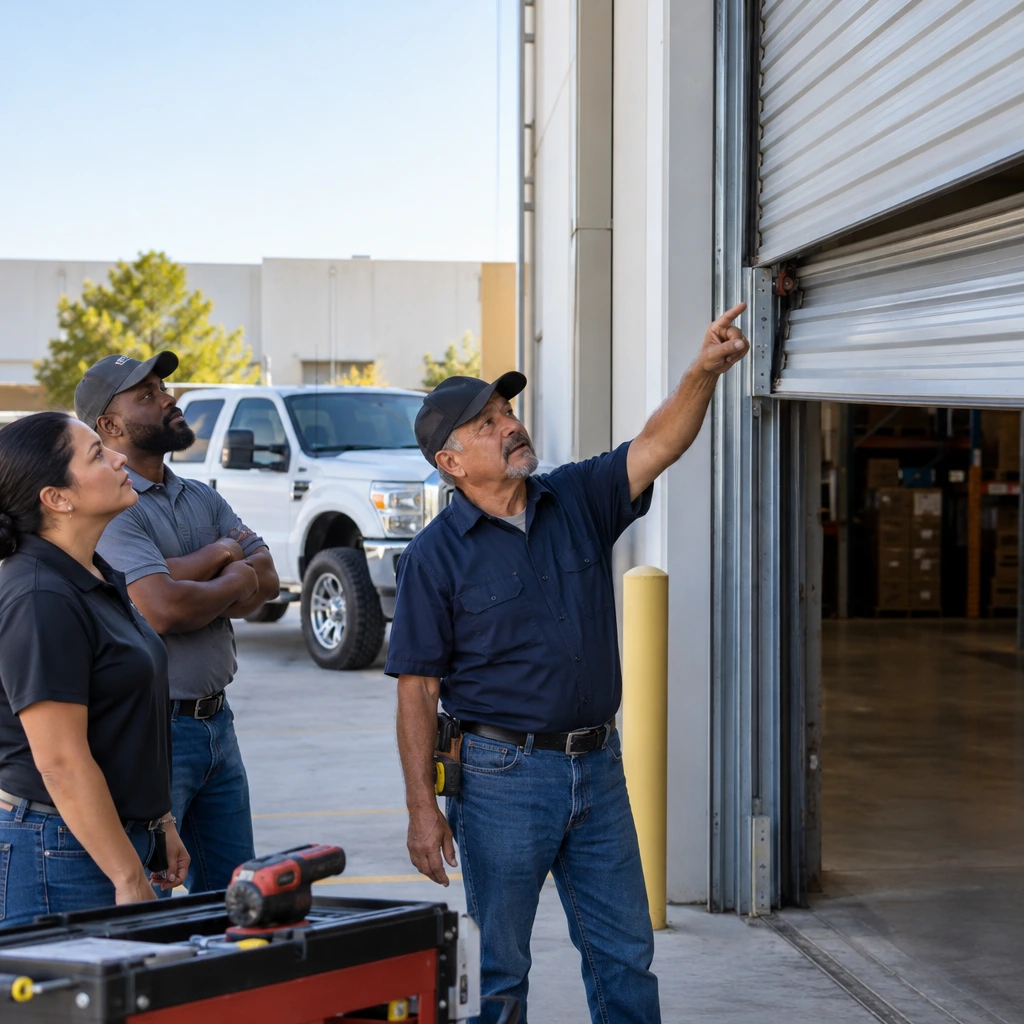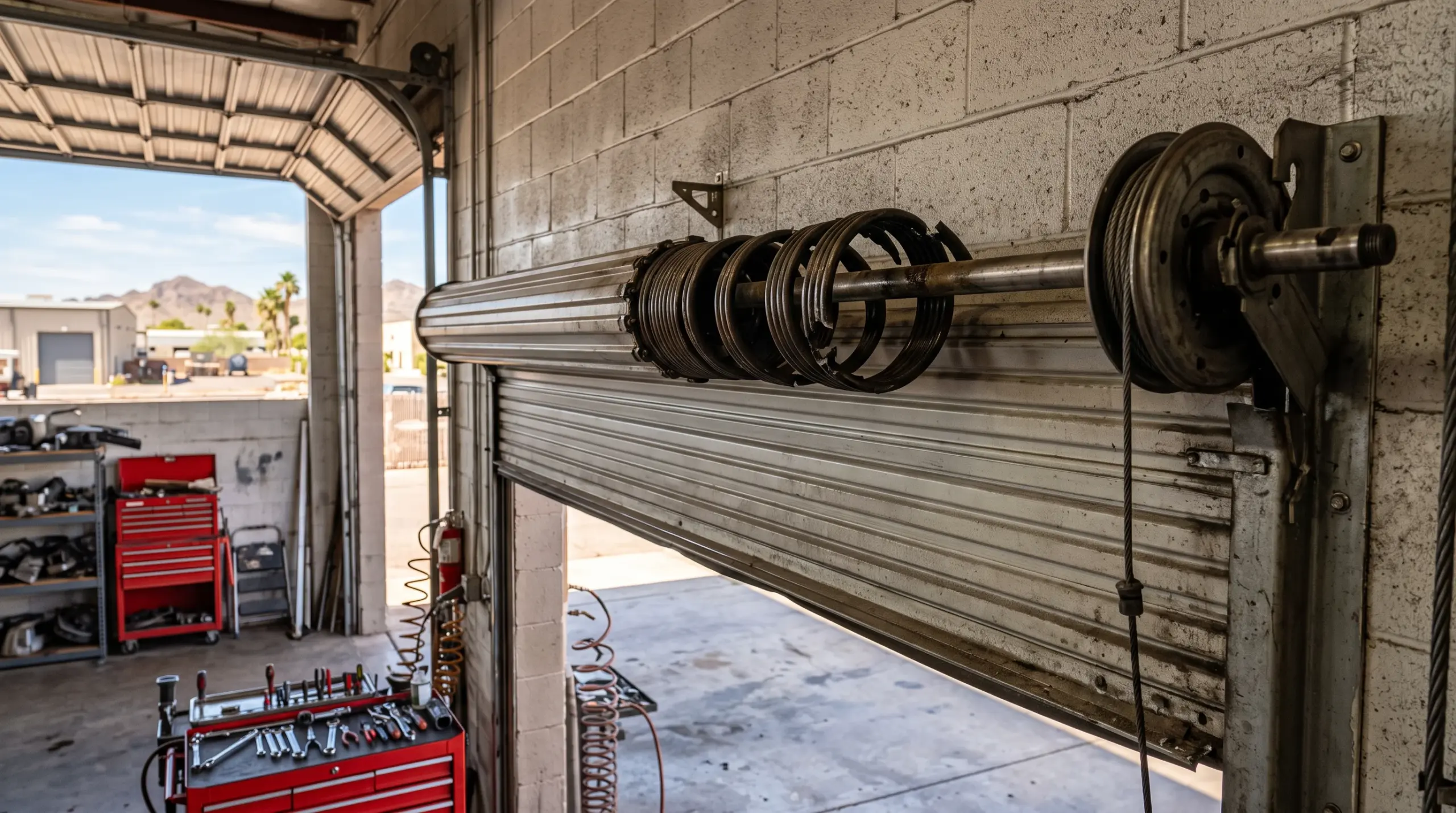
A failing spring can turn a dependable roll-up door into a safety risk, a productivity problem, or an expensive emergency. Whether you manage a warehouse in Phoenix, operate a storefront in Scottsdale, or rely on a residential steel door in the West Valley, recognizing spring trouble early helps protect people, equipment, and daily operations. This roll-up door spring replacement guide explains the warning signs that indicate service is needed, why springs fail, what a professional inspection includes, and how routine maintenance can extend the life of your door system. You will also learn when a repair may be appropriate, when replacement is the safer choice, and why spring work should not be treated as a do-it-yourself project. Arizona Roll Up Door Service has more than 20 years of experience helping commercial and residential customers throughout the Phoenix metro area keep their doors operating safely and reliably.
Roll-Up Door Spring Replacement: When Does Your Door Need Service?
There is no single calendar date that determines when a spring must be replaced. Service is usually based on the spring’s condition, the door’s operating behavior, usage frequency, and the results of a professional inspection. Springs are working components that counterbalance the weight of the door. When they weaken, stretch, corrode, or break, the opener and other hardware may be forced to handle loads they were not designed to manage.
Common signs of spring trouble
Watch for changes that appear suddenly or become progressively worse. A door that was previously smooth may begin to move slowly, hesitate, bind, or stop before reaching the fully open or closed position. You may also hear popping, grinding, squeaking, or unusual metal-on-metal sounds. Noise alone does not always mean a spring has failed, but it deserves attention when combined with difficult operation.
- The door feels unusually heavy when operated manually.
- The door rises unevenly or appears crooked in the opening.
- The door will not stay partially open or drops after being raised.
- A spring looks stretched, separated, rusty, or visibly damaged.
- Cables appear frayed, loose, or out of alignment.
- The opener strains, reverses, or stops during normal operation.
- The door slams shut, drifts downward, or moves faster than usual.
The U.S. Consumer Product Safety Commission’s garage door safety guidance explains that a properly balanced door should remain in place when stopped at a partially open position. If a door is severely unbalanced, binds, or sticks, it should be serviced by a professional. That principle applies broadly to spring-supported door systems: unusual balance or resistance is a reason to stop using the door until it is evaluated.
Why Roll-Up Door Springs Fail
Springs do not fail only because they are old. Their service life is affected by the number of cycles, door weight, installation quality, environmental conditions, maintenance, and the condition of related components. A commercial door that opens dozens of times each day may place considerably more demand on its spring assembly than a residential door used only a few times daily.
Cycle wear and heavy use
Each opening and closing movement places the spring under load. Over time, repeated cycling can reduce its ability to maintain proper tension. High-traffic facilities, loading areas, storage buildings, and businesses with frequent deliveries should take changes in door performance seriously. A spring that still appears intact may nevertheless be too weak to balance the door correctly.
The Door and Access Systems Manufacturers Association explains in its technical data sheet on spring cycle life that spring life is not necessarily the same as the overall door’s cycle life. Handling, installation, usage, and the way the spring is affected after manufacturing can all influence performance. In practical terms, a door can look relatively new while its spring system is already showing fatigue.
Corrosion, heat, and related hardware problems
Moisture and corrosion can weaken metal components. In the Phoenix area, intense heat and dust can also contribute to dry, dirty moving parts and accelerated wear on rollers, bearings, tracks, and hardware. A spring problem may be made worse by a door that is dragging, misaligned, or carrying damaged panels. When the system is not operating freely, the spring has to compensate for additional resistance.
That is why replacing only the visibly damaged part is not always the complete solution. A technician should inspect the spring assembly, cables, drums, bearings, tracks, guides, panels, mounting hardware, and opener or motor. Correcting the underlying cause helps reduce the chance of another failure shortly after service.
When to Replace Door Springs Instead of Repairing Them
Many customers ask when to replace door springs rather than repair or adjust them. The answer depends on whether the spring can safely deliver the required counterbalance and whether the surrounding system remains suitable for continued use. Springs that are broken, significantly stretched, corroded, or permanently deformed generally require replacement rather than a temporary adjustment.
Replacement is usually appropriate when:
- The spring has visibly snapped or separated.
- The spring no longer holds the door at the correct balance.
- The door is too heavy, drops, or rises unevenly.
- The spring has severe rust, pitting, cracks, or deformation.
- The spring has been installed incorrectly or is the wrong size.
- One spring in a matched pair has failed and the other is similarly worn.
- Repeated adjustments provide only short-lived improvement.
For systems with multiple matching springs, replacing only one may leave the door unevenly balanced. DASMA’s garage door safety recommendations advise replacing both springs on a two-spring system when one has broken, helping maintain efficient operation and reducing the risk of a second failure. A commercial roll-up door may use a different spring arrangement, so the technician should follow the door manufacturer’s specifications rather than applying a one-size-fits-all approach.
Spring replacement should also be considered when the door’s original components are no longer readily available, when the spring has exceeded its expected working cycles, or when other hardware has been damaged by imbalance. A professional can confirm the correct spring dimensions, tension, orientation, and compatibility with the door’s weight and operating method.
Why Spring Service Is Not a DIY Repair
Roll-up door springs store significant mechanical energy. If a spring, cable, bracket, shaft, or related component releases unexpectedly, the result can include severe property damage or serious injury. The danger is not limited to the spring itself; a door can shift, fall, roll, or move unexpectedly while someone is working on it.
The Occupational Safety and Health Administration’s hazardous-energy guidance notes that unexpected startup or the release of stored energy during servicing can cause serious injury or death. For commercial properties, this reinforces the need for a controlled repair process that addresses electrical power, opener operation, door movement, stored spring energy, and access around the work area.
What a professional inspection includes
A trained technician typically begins by identifying the door type, measuring the opening, and checking the spring configuration. The inspection may include:
- Securing the work area and preventing unintended door operation.
- Checking the spring, shaft, drums, cables, bearings, and mounting points.
- Examining tracks, guides, rollers, panels, seals, and fasteners.
- Testing manual movement when it can be done safely.
- Confirming whether the door is balanced and aligned.
- Inspecting the motor, opener, controls, and safety devices.
- Installing correctly matched replacement components.
- Testing the door through several complete operating cycles.
Do not attempt to cut, unwind, stretch, remove, or adjust a loaded spring. Do not continue operating a door that is hanging crooked, making severe grinding noises, or threatening to fall. If a business must keep receiving deliveries, arrange service quickly and establish a safe temporary access plan rather than allowing employees to work around a hazardous door.
Preventing Spring Problems With Roll-Up Door Maintenance in Phoenix
Preventive care cannot eliminate normal spring wear, but it can identify developing problems before they become an emergency. A maintenance program should be based on the door’s age, usage, environment, and importance to the business. High-cycle commercial doors may need more frequent inspections than lightly used residential doors.
Routine service can include cleaning tracks and guides, lubricating appropriate moving parts, tightening accessible hardware, checking alignment, inspecting cables and springs, and testing safety controls. The Door and Access Systems Manufacturers Association recommends regular safety checks and an annual visit from a trained door systems technician for garage door systems. Its maintenance guide also warns that springs are under high tension and should be adjusted only by qualified individuals.
For roll-up door maintenance in Phoenix, it is especially helpful to address dust buildup, heat-related material stress, worn seals, and doors exposed to frequent outdoor use. Maintenance can also support energy performance by helping the door close fully and reducing gaps caused by misalignment or damaged weather seals. The U.S. Department of Energy explains that poorly installed or improperly air-sealed exterior doors can leak air and increase heating and cooling loads.
A practical maintenance schedule may include:
- Monthly: Observe the door during operation and report unusual noise, hesitation, or imbalance.
- Quarterly: Check for visible wear, loose hardware, damaged guides, and obstructions.
- Annually: Schedule a professional inspection of springs, cables, balance, safety equipment, and operating hardware.
- After an impact: Request service immediately if a vehicle, forklift, or equipment strikes the door.
Arizona Roll Up Door Service provides inspection, repair, spring and cable replacement, alignment, motor troubleshooting, and maintenance for commercial and residential customers throughout Phoenix, Avondale, Buckeye, Goodyear, Scottsdale, North Phoenix, and surrounding communities.
Conclusion: Schedule Roll-Up Door Spring Service Before Failure
A spring rarely becomes a problem at a convenient time. Sluggish movement, imbalance, unusual noise, visible damage, and opener strain are all reasons to arrange an inspection before the door stops working completely. Prompt commercial door spring repair can help reduce downtime, protect employees and customers, and prevent stress on the motor, tracks, cables, and panels.
If you are searching for a broken garage door spring in Phoenix or need dependable service for a commercial roll-up door, choose an experienced technician who can inspect the complete system—not just replace the most obvious damaged part. Arizona Roll Up Door Service brings more than 20 years of experience, quality workmanship, stocked replacement parts, and responsive service throughout the Phoenix metro area. Contact the team to schedule professional spring replacement, repair, or preventative maintenance.