A roll-up door track misalignment can turn a dependable commercial or residential door into a daily safety and productivity concern. You may notice scraping, uneven movement, unusual noise, or a door that stops before reaching the floor. In Phoenix, where dust, heat, frequent use, and rapid temperature changes can affect equipment, small alignment issues may become major failures if they are ignored. A misaligned track can place excess strain on rollers, springs, cables, panels, and the opener, increasing the chance of expensive downtime.
This guide explains the most common signs and causes of track problems, what a professional inspection involves, and which maintenance steps can help prevent recurring issues. Whether you manage a warehouse in West Phoenix, operate a retail property in Scottsdale, or need help with a residential steel roll-up door, Arizona Roll Up Door Service provides experienced diagnosis, repair, installation, and maintenance throughout the Phoenix metro area.
Roll-Up Door Track Misalignment: Warning Signs to Watch For
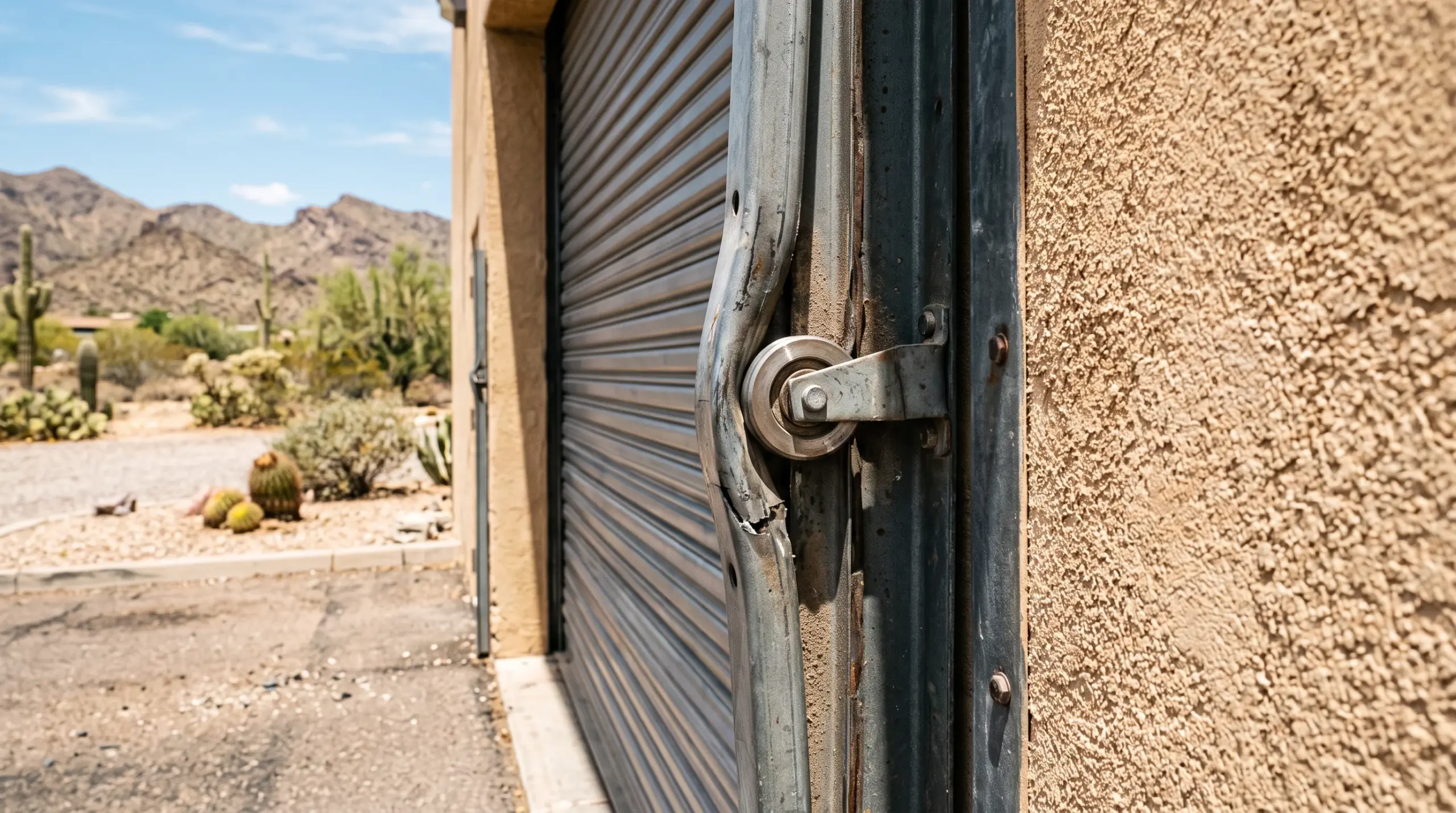
Roll-up doors are designed to travel smoothly through vertical guides and, depending on the door style, a curved or horizontal section. When the track is bent, loose, obstructed, or positioned incorrectly, the door may no longer distribute its weight evenly. Early warning signs are often easy to dismiss, but prompt attention can prevent damage to the entire door assembly.
Common symptoms of a misaligned track
- Jerky or uneven movement: The curtain may rise smoothly on one side while binding or lagging on the other.
- Scraping, grinding, or popping sounds: Noise may indicate that rollers are rubbing against a damaged guide or that hardware has shifted.
- Visible gaps: The door may sit farther from one guide than the other, or the curtain may appear tilted while closing.
- Repeated stopping: An opener may reverse, stall, or shut off because it senses excessive resistance.
- Difficulty opening manually: A properly balanced door should not require excessive force.
- Panel, slat, or curtain damage: Misalignment can cause sections to buckle, rub, or become distorted.
- Light, dust, or weather entering around the sides: Uneven sealing can reduce security and protection from Arizona weather.
These symptoms do not always prove that the track itself is the only problem. A broken spring, worn roller, loose bracket, bent guide, damaged panel, or failing motor can create similar behavior. That is why a professional evaluates the complete door system rather than simply forcing the track back into position.
Why continued operation is risky
Operating a damaged door can make a minor adjustment become a major repair. Each cycle may place additional stress on the springs and cables, while a binding curtain can overload the motor or opener. In a busy Phoenix commercial facility, that can lead to lost loading time, interrupted customer access, and avoidable emergency service costs. If the door is leaning, jammed, visibly bent, or making severe grinding noises, stop using it and arrange an inspection.
What Causes a Misaligned Garage Door Track or Roll-Up Track?
A misaligned garage door track and a commercial roll-up door guide can develop similar problems, although their construction and operating components may differ. Some causes are sudden, while others develop gradually because of wear, vibration, or environmental exposure.
Frequent mechanical causes
- Impact damage: A forklift, delivery vehicle, cart, or other equipment can strike the guide or bottom bar.
- Loose mounting hardware: Repeated cycling can loosen brackets, bolts, and fasteners, allowing the track to shift.
- Bent guides or rails: Even a small deformation can interfere with rollers and increase friction.
- Worn rollers: Damaged or seized rollers may pull the door toward one side and imitate a track problem.
- Improper installation: Incorrect measurements, spacing, or leveling can cause alignment issues from the beginning.
- Foundation or building movement: Settling, framing changes, or structural shifts can alter the position of mounting points.
- Obstructions and debris: Dust, gravel, packaging material, and other debris can restrict the guide path.
- Excessive spring or cable problems: Uneven tension can cause the curtain to travel crookedly or place unusual loads on the tracks.
Phoenix-area doors also face conditions that make routine care especially valuable. Fine dust can collect inside guides and around moving hardware, while intense heat can accelerate lubricant breakdown and affect certain seals and components. High-use doors in warehouses, automotive facilities, restaurants, and retail centers experience thousands of cycles over time. Without scheduled roll-up door maintenance, minor wear can go unnoticed until the door stops working.
Installation quality matters
Professional installation begins with a careful site assessment. Technicians verify the opening, mounting surfaces, guide spacing, clearances, curtain position, spring or motor requirements, and safety equipment. A correctly installed commercial steel roll-up door should move evenly, close securely, and operate without excessive noise or resistance. Quality installation is particularly important when replacing a damaged door or adapting a new system to an existing Phoenix property.
Professional Track Alignment and Commercial Door Repair in Phoenix
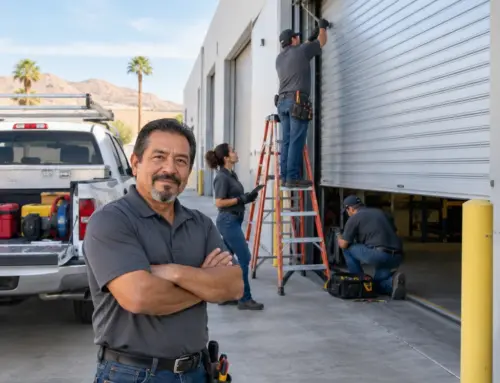
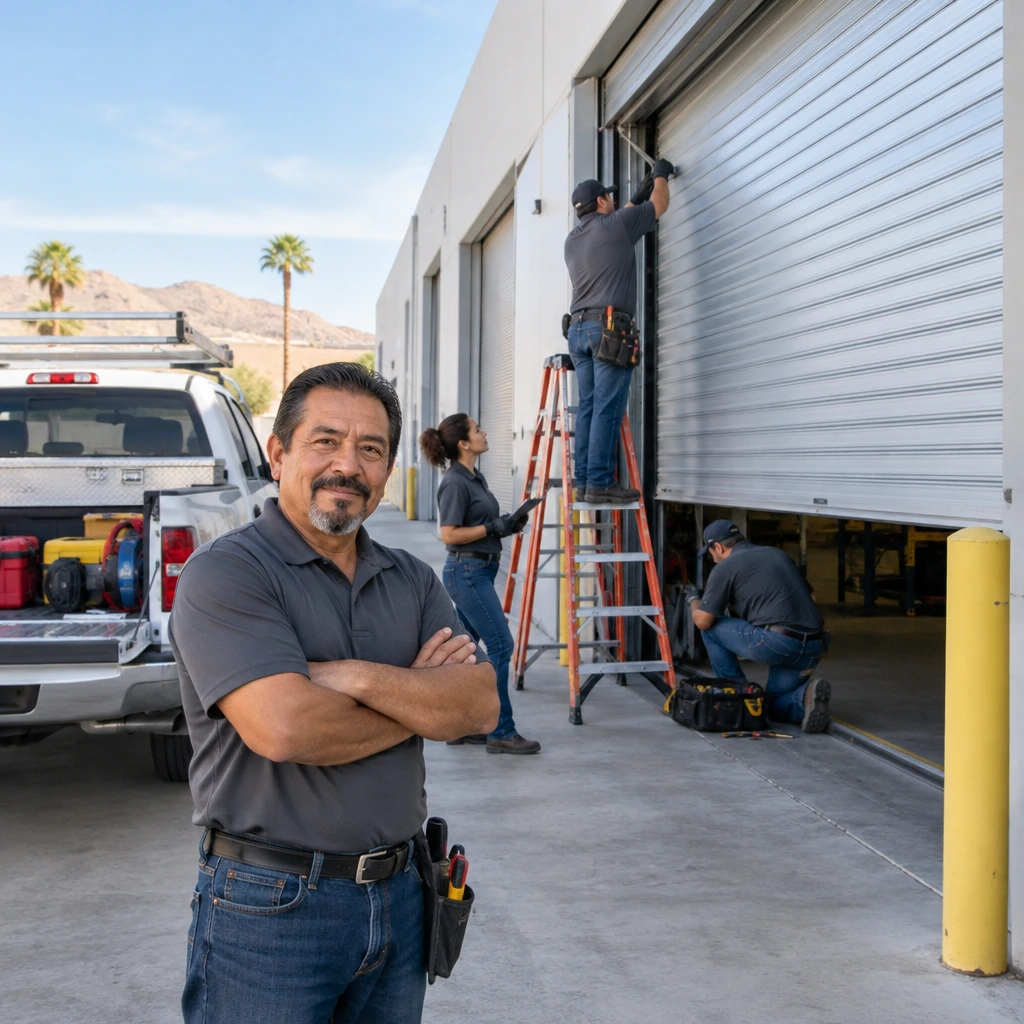
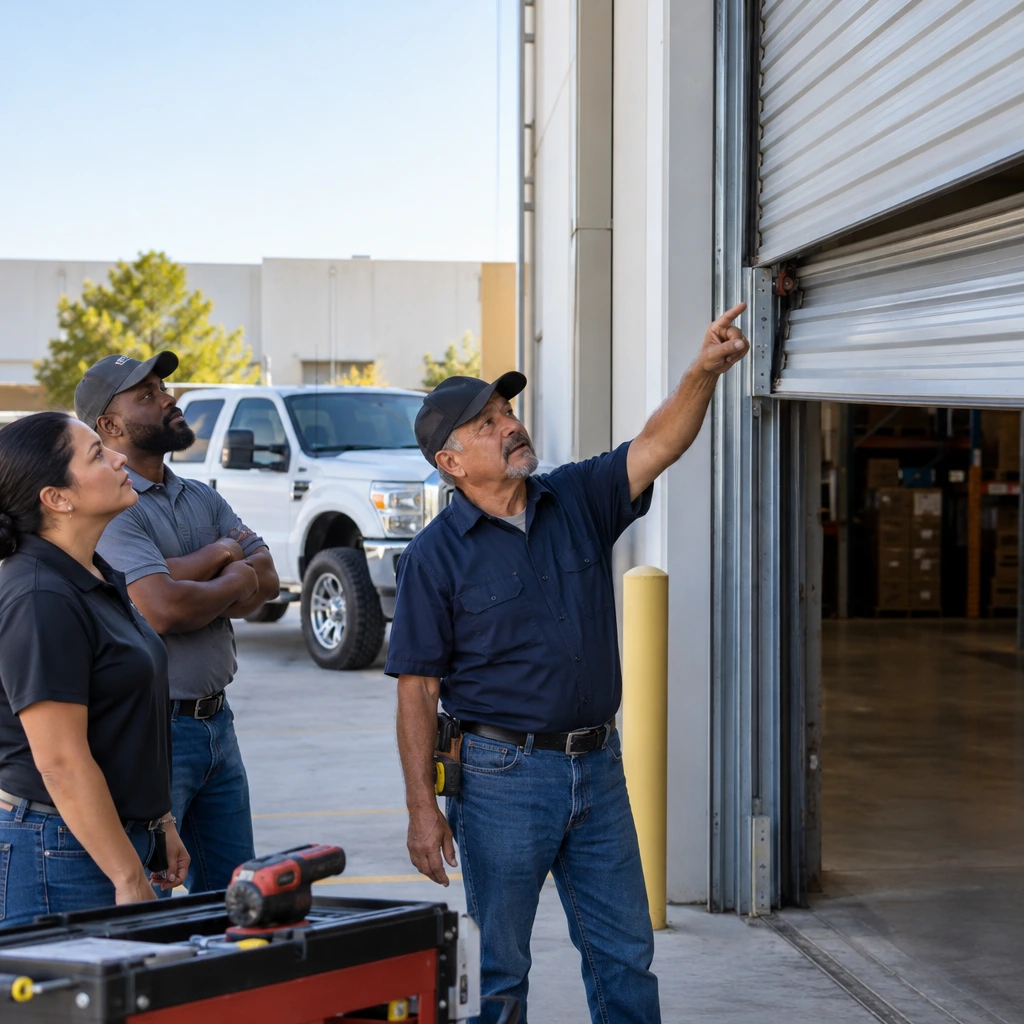
When you contact Arizona Roll Up Door Service for commercial door track repair Phoenix property owners can rely on, the process starts with diagnosis rather than guesswork. A technician examines the guides, rollers, curtain or panels, brackets, fasteners, springs, cables, motor, opener, and safety controls. This broader inspection identifies the source of the misalignment and helps prevent the same issue from returning.
What a professional repair may include
- Secure the work area: The technician keeps employees, customers, vehicles, and equipment away from the door during inspection and repair.
- Check the door position: The curtain or sections are assessed for uneven travel, binding, and signs of impact.
- Inspect and clean the guides: Debris and obstructions are removed, and the guide surfaces are examined for wear or distortion.
- Measure alignment: The technician verifies spacing, level, plumb, mounting points, and the relationship between both sides of the opening.
- Repair or replace damaged parts: Bent guides, worn rollers, loose hardware, damaged panels, springs, cables, or brackets may require correction.
- Realign and secure the system: Components are positioned correctly and fastened according to the door design.
- Test operation and safety devices: The door is cycled several times, and sensors, stops, reversing features, and manual operation are checked.
Some alignment repairs are straightforward, but spring and cable assemblies can hold substantial stored energy. Tracks may also support heavy curtains or panels that can shift unexpectedly. For those reasons, property owners should not loosen spring hardware, remove cables, or force a jammed door without the proper training and tools. Professional service protects people as well as the door.
Repair versus replacement
Not every damaged track requires complete door replacement. A technician may be able to realign a guide, replace a roller, tighten hardware, or repair a localized section. Replacement may be more practical when the track is severely distorted, the curtain is repeatedly damaged, or the system has reached the end of its service life. Arizona Roll Up Door Service can explain the available options, expected service life, and likely costs before work proceeds.
Why Phoenix Businesses Need Preventive Roll-Up Door Maintenance
For businesses throughout Phoenix, Goodyear, Avondale, Buckeye, Scottsdale, North Phoenix, and nearby communities, a roll-up door is often part of the daily workflow. It may secure inventory, control access to a service bay, protect a loading area, or separate conditioned areas from the outdoors. A failure can affect security, temperature control, deliveries, and customer service all at once.
Preventive maintenance helps identify alignment problems before they cause an emergency. During a scheduled visit, a qualified technician can clean the guides, inspect rollers, lubricate appropriate moving parts, check spring and cable tension, tighten hardware, and test safety equipment. The door can also be evaluated for slow operation, unusual vibration, panel damage, motor strain, and weather-seal deterioration.
Phoenix-specific operating concerns
Arizona heat and airborne dust are practical concerns for commercial door owners. A door near a busy lot or construction area may collect abrasive particles faster than one inside a clean warehouse. Heat can also increase wear on lubricants, seals, and electrical components. In addition, doors that cycle frequently during summer deliveries may experience more stress than their owners realize.
For example, a distribution facility near Interstate 10 in the West Valley may open its dock doors dozens of times each day. Dust carried into the guide can increase friction, while a minor impact from material-handling equipment can shift one side of the track. A maintenance visit can catch those conditions before the door begins scraping or the motor starts overheating. Similar attention benefits retail and service properties in Central Phoenix and Scottsdale, where reliable access and security are essential.
Maintenance intervals should reflect usage, exposure, door age, and operating conditions. A lightly used residential door may need less frequent service than a high-cycle commercial door. A professional can recommend a practical schedule rather than a one-size-fits-all plan.
Choosing a Commercial Door Repair Arizona Property Owners Can Trust
Track alignment affects safety, performance, and the useful life of the entire door. Choose a service provider that can address the complete system and has experience with commercial-grade steel doors. Arizona Roll Up Door Service has more than 20 years of industry experience serving businesses and homeowners across the Phoenix metro area.
Useful qualities to look for include:
- Experience with commercial and residential steel roll-up doors
- Clear diagnosis before recommending repairs
- Knowledge of springs, cables, motors, openers, guides, panels, and safety sensors
- Quality replacement parts and careful workmanship
- Fast response for urgent access or security concerns
- Preventive maintenance programs tailored to operating conditions
- Service coverage across Phoenix and surrounding communities
A well-stocked service vehicle may also help resolve common problems during the first visit, reducing downtime for businesses. Whether the issue involves track alignment, sluggish operation, a damaged panel, a broken spring, or a motor malfunction, an experienced technician can determine whether repair, adjustment, or replacement is the most sensible solution.
Conclusion: Schedule Roll-Up Door Track Service in Phoenix
Roll-up door track misalignment should never be treated as merely an annoying noise or minor inconvenience. Scraping, uneven travel, visible gaps, and repeated stopping can indicate a developing problem that affects safety and reliability. Early professional attention can protect the guides, rollers, curtain, opener, and surrounding structure while helping avoid extended downtime.
Arizona Roll Up Door Service provides expert installation, repair, and maintenance for commercial and residential steel roll-up doors throughout Phoenix, Avondale, Buckeye, Goodyear, Scottsdale, North Phoenix, and the surrounding metro area. With more than two decades of experience, quality craftsmanship, fair pricing, and rapid response when possible, the team is prepared to diagnose alignment issues and restore dependable operation. If your door is binding, leaning, scraping, or failing to close correctly, schedule an inspection before the damage grows.