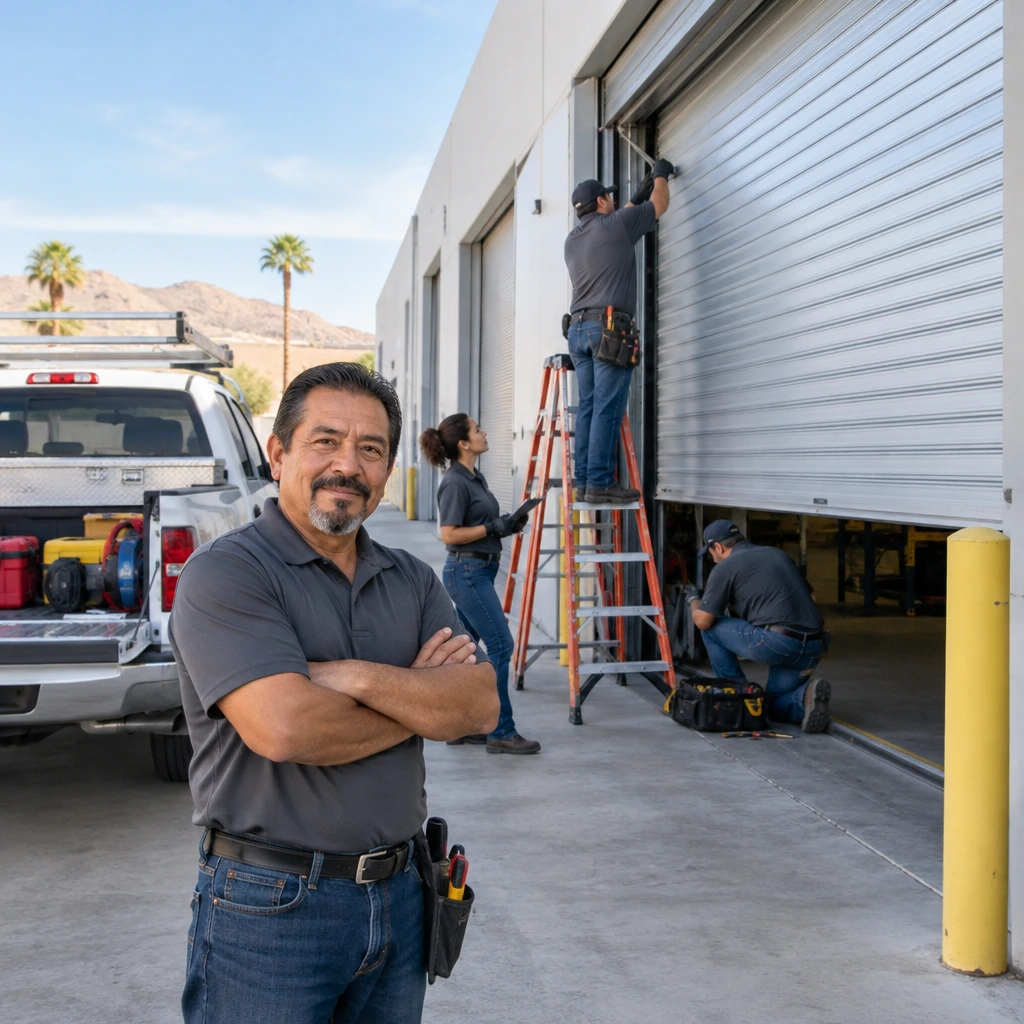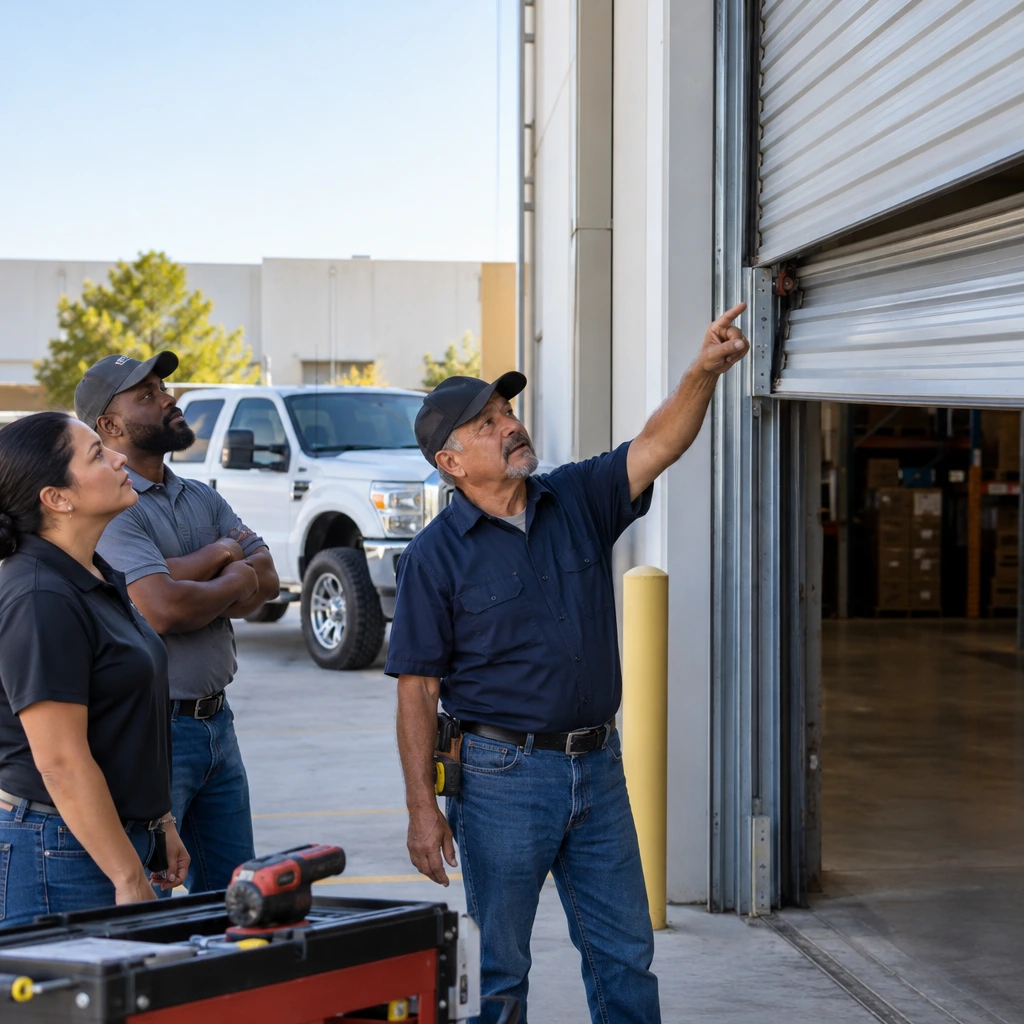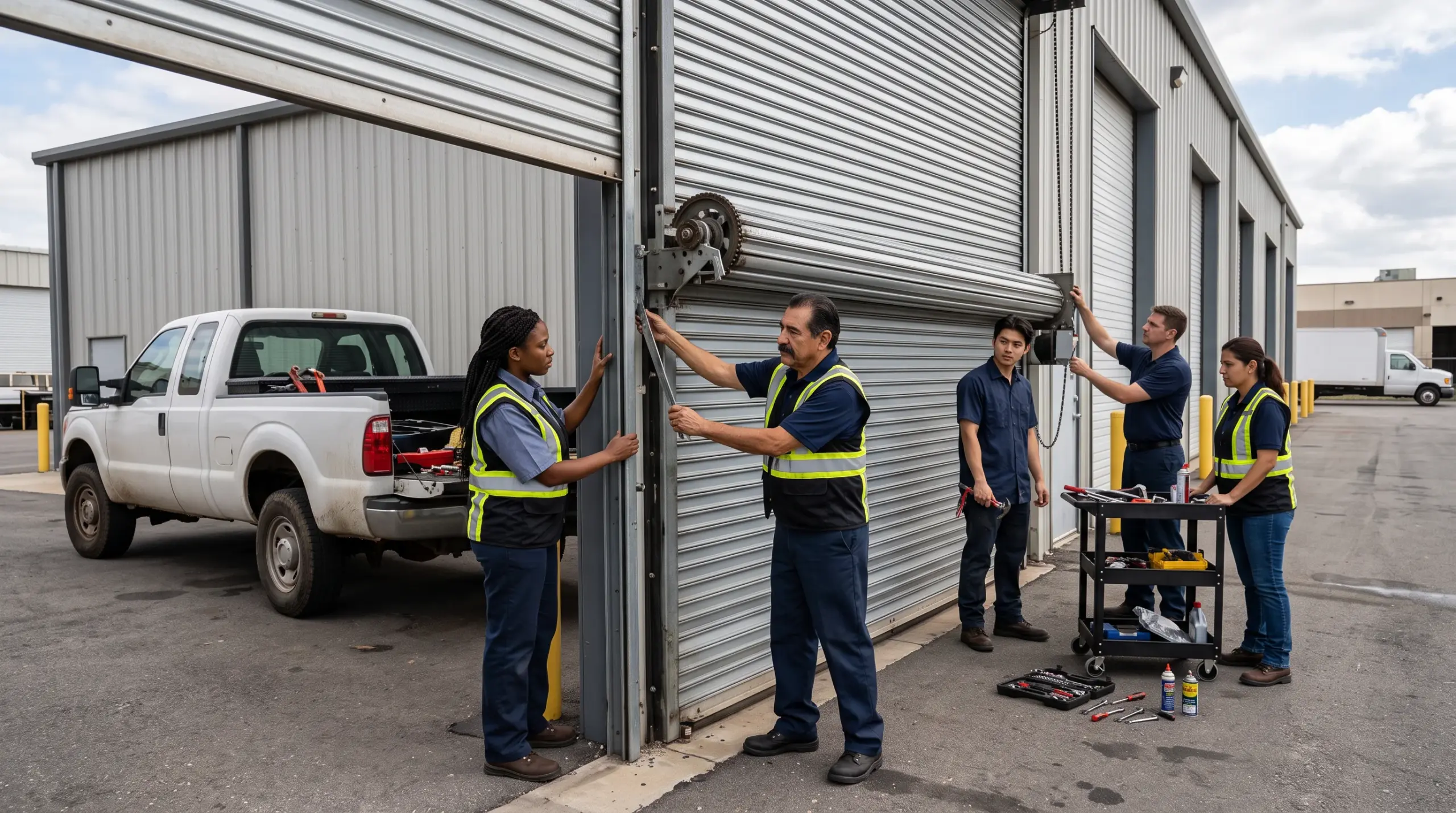
Roll up doors are the backbone of many commercial facilities across the Phoenix metro area, but their performance doesn’t remain consistent without proper attention. Whether you operate a loading dock, warehouse, or retail facility, the efficiency and reliability of your roll up door directly impact your operations, security, and energy costs. When performance begins to decline—slow openings, unusual noises, or sluggish closures—the underlying causes are often preventable with the right optimization strategies.
This guide explores the key factors that influence roll up door performance and provides actionable steps to keep your doors operating at peak efficiency. From maintenance routines to modern upgrades, you’ll learn how to extend the lifespan of your doors while reducing unexpected downtime and repair expenses. For businesses serving Avondale, Buckeye, Goodyear, Scottsdale, and throughout the North Phoenix region, understanding these principles can mean the difference between smooth daily operations and costly emergency repairs.
Understanding Roll Up Door Performance Fundamentals
Roll up door performance encompasses several interconnected factors: speed of operation, smooth cycling, energy efficiency, and safety reliability. Each element plays a role in how well your door serves your facility. A door that opens and closes quickly reduces the time your space is exposed to outside temperatures, directly affecting heating and cooling costs. A door that operates smoothly with minimal noise indicates that all mechanical components are working in harmony.
The thermal performance of your roll up door is particularly important in Arizona’s climate. Insulated doors are engineered with a core material between the slats that provides thermal resistance, minimizing heat transfer from one side of the door to the other. This design creates a “thermal break” that reduces the workload on your HVAC system, leading to lower energy consumption and more consistent indoor temperatures.
Performance also depends on the operational cycle demands of your facility. A residential door might cycle twice daily, while a busy commercial loading dock could cycle twenty to fifty times per day. At fifty cycles a day, a standard 10,000-cycle spring is exhausted in just 200 days, meaning commercial applications require more robust components and more frequent maintenance intervals.
Preventative Maintenance: The Foundation of Optimal Performance
Preventative maintenance is the single most effective strategy for optimizing roll up door performance. Rather than waiting for problems to develop, a structured maintenance schedule catches issues early when they’re inexpensive to fix, preventing cascade failures that can shut down your entire operation.
Seasonal Maintenance Checklist
A comprehensive seasonal approach ensures your doors remain in peak condition year-round. Implement this schedule:
- Spring: Clear tracks of winter debris and accumulated grime that can impede smooth operation
- Summer: Inspect weatherstripping and seals for heat cracks or dry rot that compromise energy efficiency
- Fall: Lubricate all pivot points and moving components before freezing temperatures arrive
- Winter: Listen closely for unusual squeaks, grinding sounds, or sluggish movement indicating emerging problems
Critical Maintenance Tasks
Beyond seasonal checks, certain maintenance tasks demand regular attention. Lubrication is essential, but the approach matters. Use proper garage door lubricant—silicone or lithium-based products designed for the application—on springs, rollers, hinges, and bearings. However, never lubricate the tracks themselves; lubricant on track surfaces causes rollers to skid instead of roll, allowing grit to accumulate and potentially derailing the roller.
For commercial doors running twenty or more cycles daily, cut standard maintenance intervals in half. Spring assemblies under constant commercial-duty tension require lubrication every six months rather than annually. Rollers, hinges, and bearings should be serviced twice yearly on high-traffic doors.
Hardware tightening and track alignment are equally important. Vibration from constant cycling gradually loosens bolts, hinges, and brackets. Regular inspection and tightening prevent these components from working loose, which can lead to misalignment and uneven wear patterns that accelerate failure throughout the system.
Addressing Common Performance Issues
Certain problems are early warning signs that optimization is needed. Recognizing these issues and addressing them promptly prevents expensive repairs and extended downtime.
Slow or Sluggish Operation
When your roll up door opens or closes more slowly than normal, multiple factors could be responsible. Inadequate lubrication is the most common culprit—friction between moving parts increases resistance and slows operation. Spring tension may also be declining; as springs age, they lose their ability to assist the opening mechanism, forcing the motor to work harder and cycle more slowly.
Motor wear or control system issues can also reduce speed. A systematic inspection identifies which component is causing the slowdown, allowing for targeted repairs rather than unnecessary replacements.
Balance and Alignment Problems
An out-of-balance door creates cascading problems throughout the system. The opener strains under uneven load, cables carry tension unevenly, rollers wear at different rates, and every bracket and hinge absorbs forces it wasn’t designed to handle. While the visible cost is often a spring replacement, the invisible cost—damage to the opener, cables, rollers, and brackets—can be far greater. A door running out of balance for two years can lose a decade of total service life across its entire assembly.
Track alignment directly affects balance. Debris, minor damage, or settling of the door frame can misalign tracks just enough to cause uneven roller contact. Regular track cleaning and alignment checks prevent this deterioration.
Spring and Cable Fatigue
Springs and cables are under constant tension, making them vulnerable to fatigue failure. During visual inspections, look for coils that appear slightly tighter than their neighbors or visible gaps where coils have started to separate—both are fatigue signals requiring professional attention. Never attempt to adjust torsion springs yourself; this is a task exclusively for trained professionals due to the extreme tension involved.
Energy Efficiency Optimization Strategies
Beyond standard maintenance, modern roll up doors offer advanced features that dramatically improve energy efficiency. These optimizations directly reduce operational costs while enhancing performance.
Thermal Break Design and Full-Assembly Performance
The difference between a door with good insulation and a door that performs as a complete thermal assembly lies in thermally broken joints. A door without thermal breaks might have strong R-values but poor U-factor ratings. By contrast, a door combining injected polyurethane insulation with thermally broken joints can achieve full-assembly U-factors as low as 0.16, reflecting genuine resistance to heat flow at every point in the assembly.
Insulated rolling doors with thermally broken curtain construction and thermally broken guides can achieve U-factors as low as 0.53. These improvements mean your HVAC system works less hard to maintain consistent temperatures, directly reducing energy consumption.
Perimeter Sealing Systems
Even when fully closed, air infiltration occurs through the door perimeter, joints, hood, guides, and bottom edge. Rather than relying on individual weatherstripping pieces, advanced full-perimeter sealing systems address all these points as an integrated assembly. When combined with thermally broken guide construction, these systems can reduce air infiltration by up to 94% compared to standard products.
Critically, replaceability is essential. Perimeter seals, bottom seals, and brush weatherstripping degrade over time. A seal system that cannot be replaced without removing the entire door will likely be neglected, causing performance to decline as the building ages.
Cycle Speed and Automation
At busy loading docks, doors cycle dozens of times daily. High-performance roll up doors can open at 24 inches per second—up to three times faster than standard doors. This speed dramatically reduces the exposure window during each cycle, minimizing the time your facility loses conditioned air or security protection. Over hundreds of cycles, this compounds into significant energy savings and improved operational efficiency.
Spring and Motor Systems: Modern Alternatives
Traditional torsion spring systems have inherent limitations, particularly in high-cycle commercial applications. Standard springs carry a 10,000-cycle baseline rating with upgrades available to 25,000, 50,000, or 100,000 cycles—a meaningful range for high-traffic doors where base ratings are exhausted within months.
Modern springless direct-drive systems eliminate the primary mechanical failure point entirely. These doors use motor-mounted variable frequency drives instead of springs, with warranties covering one million cycles—100 times the standard baseline. For facilities where door reliability directly impacts operations, this represents a transformative upgrade that virtually eliminates unexpected spring failures.
Safety System Testing and Optimization
Performance optimization includes ensuring safety systems function reliably. Commercial openers use different control schemes than residential models—momentary contact, constant pressure, and various sensor combinations depending on installation. Photo-eye sensors must reverse the door when encountering resistance and prevent closure on a person.
Test your safety systems regularly. The daily test takes just ten seconds: manually obstruct the door path and verify it reverses immediately. If your door doesn’t reverse, contact a professional immediately. A safety system failure poses serious liability risks and must be addressed before the door is used again.
Creating a Sustainable Maintenance Schedule
Optimal performance requires consistency. Schedule maintenance visits on your calendar with purchase orders, performed during operating hours by trained technicians who aren’t rushed. A failed door at 6 a.m. on a delivery day becomes an emergency call at overtime rates, causing operational shutdown and inflated repair bills.
A spring that breaks at 40,000 cycles because it wasn’t inspected at 30,000 requires not just spring replacement but also cable checks, balance verification, and opener assessment. The scheduled version of that job is one visit; the emergency version is a morning of stopped work and significantly higher costs.
Conclusion: Partner With Experts for Peak Performance
Optimizing roll up door performance is an ongoing process that combines preventative maintenance, strategic upgrades, and professional expertise. By understanding the fundamentals of how your doors operate, implementing a seasonal maintenance schedule, and addressing issues promptly, you can extend service life, reduce energy costs, and minimize unexpected downtime.
Arizona Roll Up Door Service brings over 20 years of experience optimizing commercial roll up doors throughout the Phoenix metro area, including Avondale, Buckeye, Goodyear, Scottsdale, and North Phoenix. Our team understands the specific demands Arizona’s climate places on door systems and delivers maintenance, repair, and installation services tailored to your facility’s needs. Whether you need a preventative maintenance program, emergency repairs, or performance optimization consultation, we’re here to keep your operations running smoothly. Contact Arizona Roll Up Door Service today for a free consultation and discover how professional maintenance can transform your door performance.