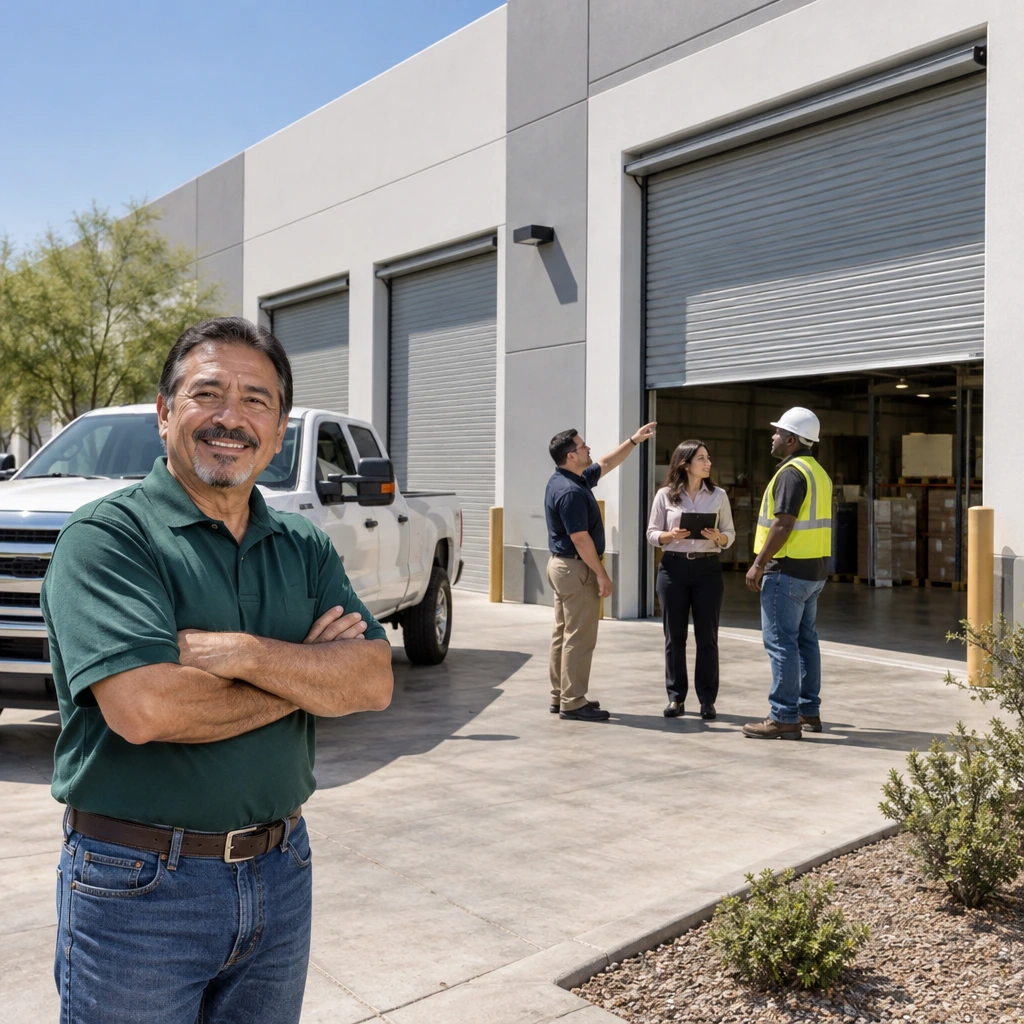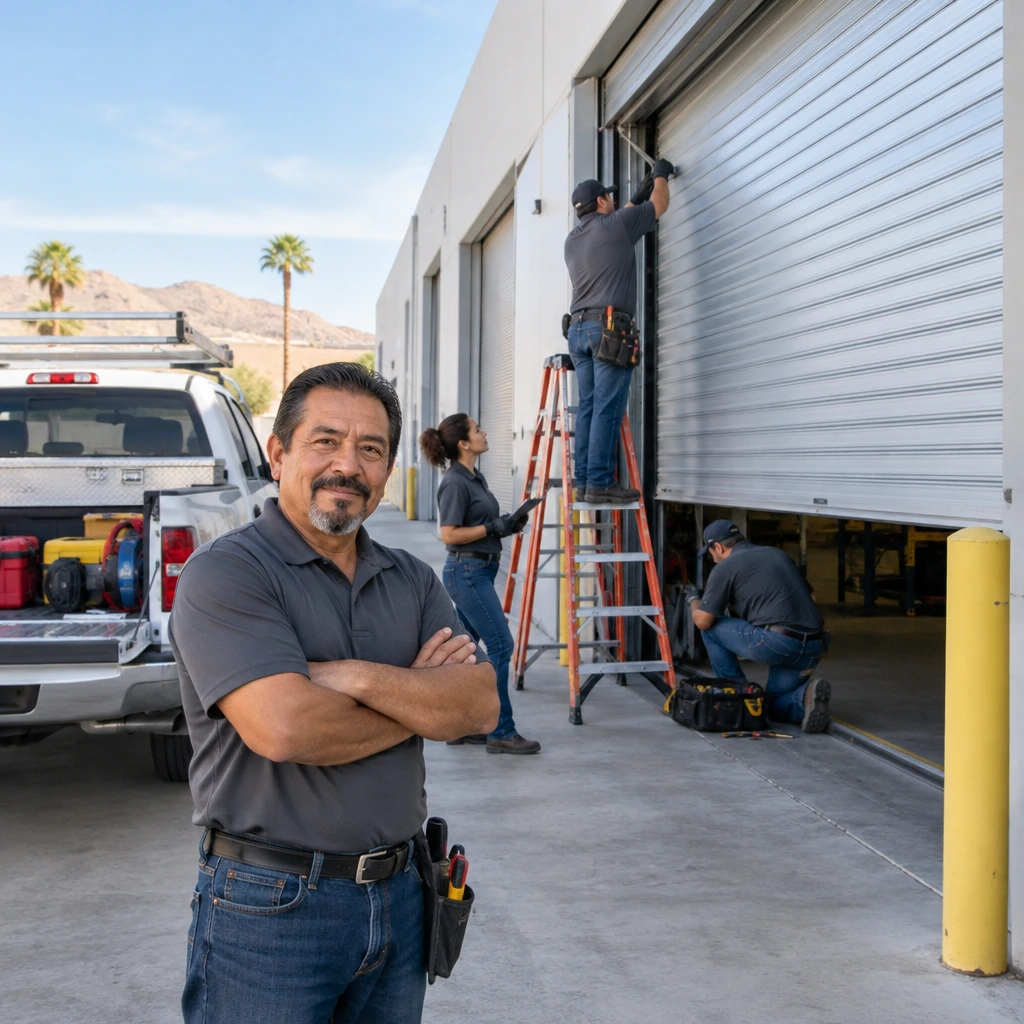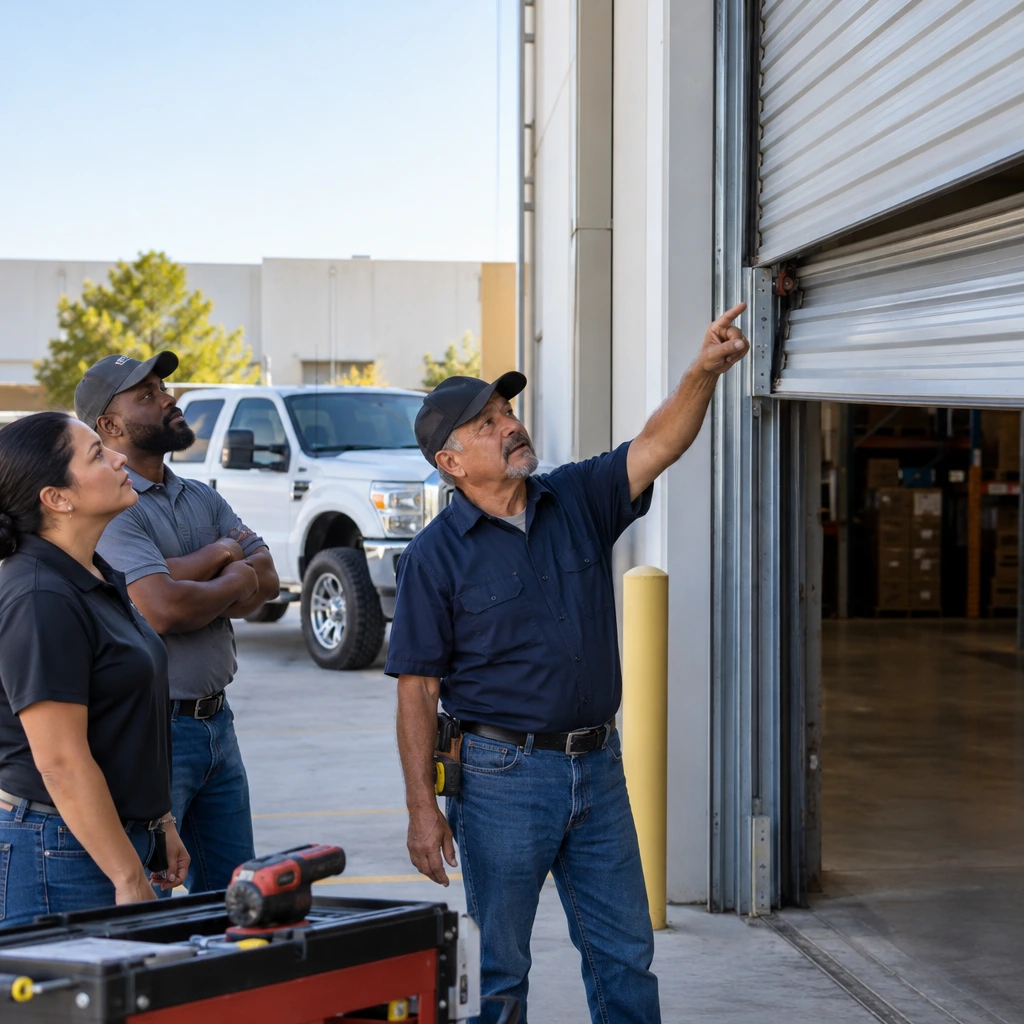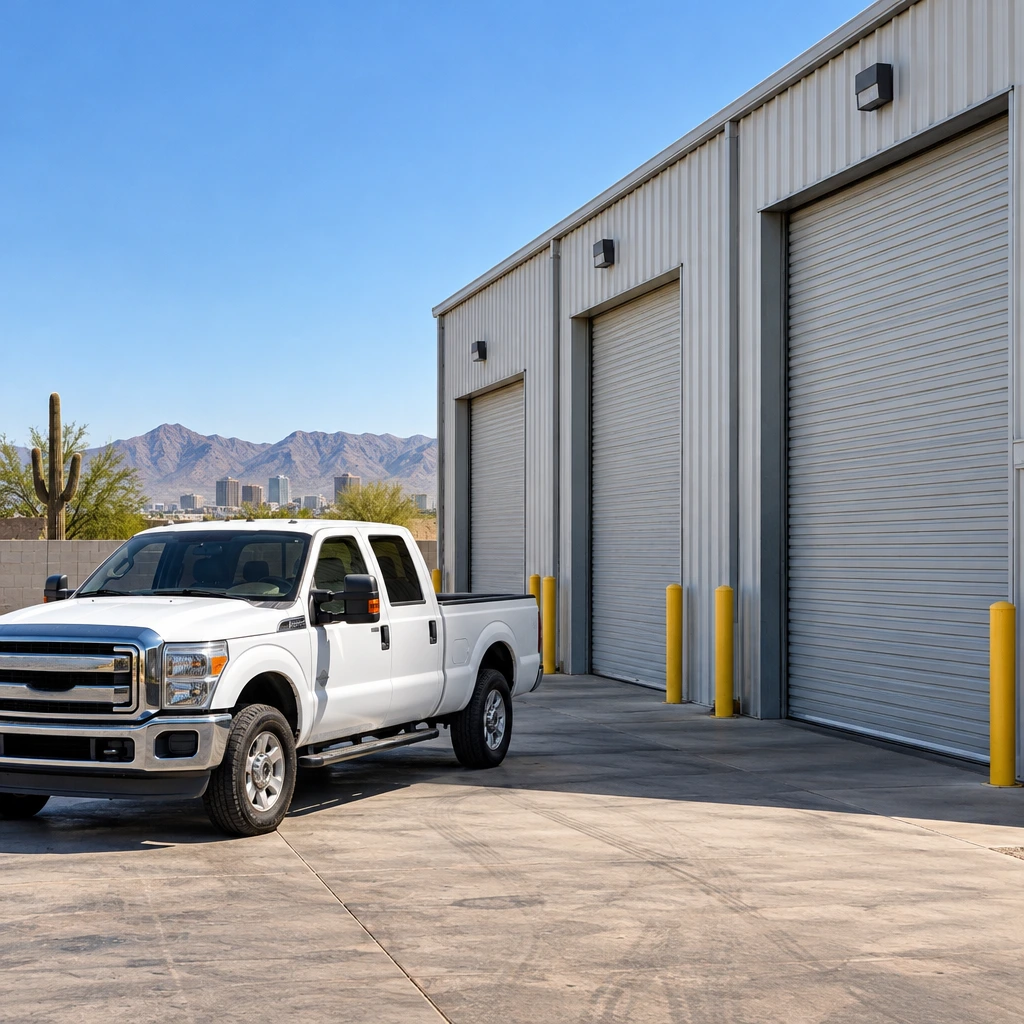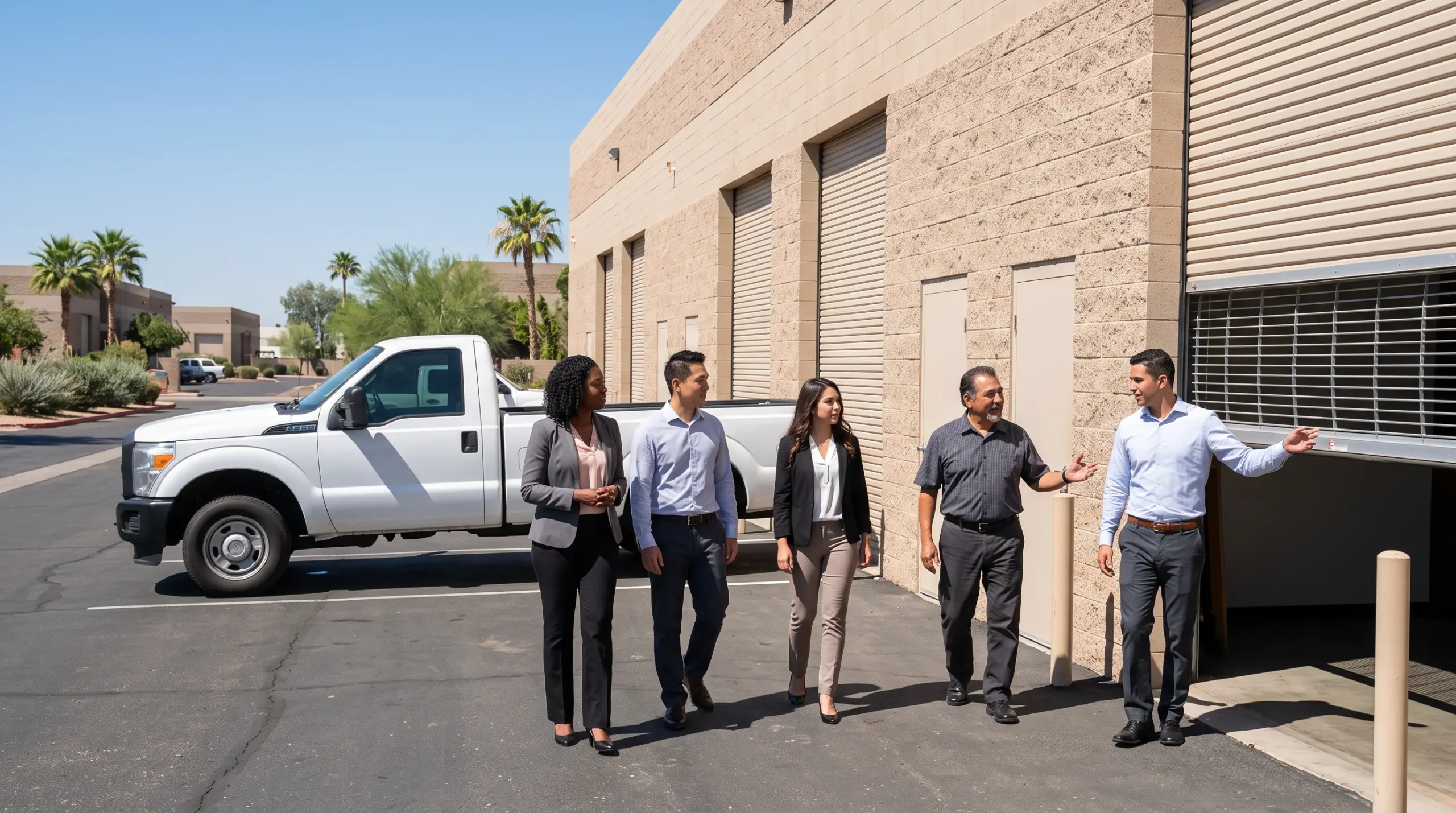
Choosing among the many roll-up door types for Phoenix businesses can affect security, workflow, energy use, and long-term operating costs. A small retail facility may need a compact counter door, while a warehouse in Buckeye or a distribution center near North Phoenix may require a high-cycle system built for frequent daily use. The right choice depends on the opening size, traffic volume, building conditions, safety requirements, and how quickly the door must operate.
Phoenix businesses also face demanding environmental conditions. Phoenix averages approximately 94 days per year with temperatures of at least 100°F, according to climate data compiled by Arizona State University’s Arizona Climate Office. That intense heat makes dependable operation, weather protection, and proper maintenance especially important. In this guide, you will learn about the most common commercial roll-up door types, how to compare them, and which system may be the best fit for your facility.
Understanding Roll-Up Door Types for Phoenix Businesses
Commercial roll-up doors are designed to open vertically, allowing the door curtain or panel assembly to travel upward and store above or near the opening. This design saves space compared with swing-out systems and works well in loading areas, service bays, warehouses, storefronts, and interior partitions.
However, not every roll-up door serves the same purpose. The best commercial roll-up door selection begins with the job the door must perform every day. Consider how often employees operate it, what the opening protects, whether the facility is climate-controlled, and how much security or fire protection is required.
Service and security roll-up doors
Service roll-up doors are a practical choice for warehouses, storage rooms, workshops, equipment areas, and commercial buildings that need a durable exterior or interior barrier. They are available in different curtain profiles, gauges, insulation levels, operating methods, and security configurations.
These systems are often selected because they provide:
- Efficient use of overhead and side clearance
- Protection from weather, dust, and unauthorized access
- Reliable operation in busy commercial environments
- Flexible manual, chain-operated, or motorized control
- Adaptability to custom opening dimensions
For many Phoenix businesses, a properly sized and professionally installed service door provides an effective balance of security, durability, and value. Arizona Roll Up Door Service performs custom measurements and site assessments to help ensure that the door, guides, operator, and safety equipment work together correctly.
Counter roll-up doors
Counter roll-up doors are smaller systems commonly installed at service windows, concession areas, pharmacies, food-service counters, ticket booths, and retail checkout openings. They are ideal when a business needs to close a smaller opening securely without using valuable floor space.
Because counter doors are often used by employees throughout the day, smooth operation and accessible controls matter. A site assessment should account for the counter design, available headroom, customer traffic, electrical access, and the desired finish. A properly fitted system can help protect inventory after hours while maintaining a clean, professional appearance during business operations.
Which Roll-Up Door Do I Need for My Facility?
If you are asking, “which roll-up door do I need?”, start with traffic and function rather than appearance. A door used five times a day has different requirements from one used hundreds of times by forklifts, delivery vehicles, or employees.
Choose based on operating frequency
Standard commercial roll-up doors are appropriate for many moderate-use applications. However, high-cycle facilities may need reinforced components, upgraded springs, more durable guides, and a motor designed for frequent operation. Selecting a system that is undersized for the workload can lead to sluggish movement, premature wear, repeated service calls, and avoidable downtime.
For warehouses, logistics facilities, cold-storage areas, and busy service centers, high-speed roll-up doors commercial applications may justify a faster system. High-speed operation can reduce the amount of time an opening remains exposed, support smoother material flow, and help limit the exchange of conditioned and unconditioned air. The exact speed, safety equipment, and cycle rating should be matched to the opening and the facility’s workflow.
Evaluate the building environment
Arizona’s climate makes environmental exposure an important part of the decision. Phoenix experiences long periods of extreme heat, while monsoon storms can bring wind-driven rain and dust. The National Weather Service maintains Phoenix-specific climate and extreme-temperature information through its local climate data center, which can help illustrate the conditions commercial equipment must withstand.
For exterior openings, ask whether the system needs enhanced weather sealing, corrosion-resistant hardware, insulation, or wind-load considerations. For climate-controlled spaces, the door’s ability to close consistently and limit unwanted air movement may also affect comfort and energy performance.
The U.S. Department of Energy notes that air infiltration is the unintended entry of outside air through doors, cracks, or other parts of a building envelope, and that it can represent more than 30% of the total heating load in commercial buildings. Although Phoenix businesses are primarily concerned with cooling, the same principle shows why minimizing unnecessary air exchange can matter in conditioned spaces. A door that closes quickly and seals properly may support more stable interior conditions.
Specialized Commercial Roll-Up Door Systems
Fire-rated roll-up doors in Arizona
Fire-rated roll-up doors Arizona facilities may require specialized systems where openings occur in fire-rated walls or between areas that need compartmentalization. These doors are designed to close during a fire event, helping limit the spread of flames and smoke through a protected opening.
Fire-rated systems are not interchangeable with ordinary service doors. The required rating, listing, release mechanism, installation method, inspection schedule, and surrounding wall assembly must be evaluated as part of the complete building design. The National Fire Protection Association’s NFPA 80 Standard for Fire Doors and Other Opening Protectives includes provisions covering inspection, testing, maintenance, and rolling fire door applications.
Businesses should coordinate with qualified professionals, the authority having jurisdiction, and their building or fire-safety team before ordering a fire-rated system. Improper modifications, blocked guides, missing fusible links, or neglected drop testing can compromise the intended protection.
Insulated roll-up doors
Insulated roll-up doors can be useful for conditioned warehouses, manufacturing spaces, food-service facilities, and commercial buildings where temperature control is important. Insulation may help reduce heat transfer through the door area, but performance depends on the full assembly, including side guides, bottom seals, header conditions, and how consistently the door is operated.
An insulated system may be especially valuable when a large opening connects an air-conditioned interior with an outdoor loading area. Still, insulation alone does not solve every energy concern. A facility may also benefit from faster operation, better scheduling, air curtains, vestibules, or employee procedures that keep the door closed when it is not actively in use.
High-speed and heavy-duty systems
High-speed systems are intended for facilities where door-cycle time directly affects productivity, security, cleanliness, or temperature control. They may be considered for distribution centers, automotive facilities, manufacturing plants, and busy loading zones.
Heavy-duty systems, by contrast, focus on durability in demanding environments. They may include stronger guides, reinforced curtains, upgraded bottom bars, and industrial operators. Your installer should review vehicle traffic, impact risk, cycle frequency, opening dimensions, and available repair parts before recommending a configuration.
Key Factors in Commercial Roll-Up Door Selection
Comparing roll-up door types becomes easier when you evaluate the entire operating environment instead of focusing only on the initial purchase price. A lower-cost system may become more expensive if it cannot handle the facility’s traffic or requires frequent emergency repairs.
Security, safety, and access control
Security needs vary by business. A retail stockroom may need a locking counter door, while a distribution center may require motorized access control, remote operation, photo eyes, reversing mechanisms, and an integrated security system.
Safety equipment should be tested during installation and maintenance. Operators should receive training on emergency release procedures, obstruction response, and daily visual inspections. OSHA requirements can vary by application, but its cargo-door safety guidance illustrates why mechanically operated doors should be handled carefully during repair and why falling or sliding components must be controlled.
Space, structure, and installation conditions
Before selecting a door, measure the width and height of the opening, headroom, side room, backroom clearance, floor conditions, and nearby equipment. A door may fit the opening but still be unsuitable if there is not enough room for the operator, guides, or service access.
Professional installation also helps identify structural concerns, wiring requirements, drainage issues, damaged supports, and obstructions. Arizona Roll Up Door Service provides custom measurements and site assessments throughout the Phoenix metro area, including Avondale, Buckeye, Goodyear, Scottsdale, and North Phoenix.
Maintenance and total ownership cost
Every commercial roll-up door benefits from scheduled maintenance, especially in dusty, high-use, or climate-controlled environments. Preventative service can include:
- Lubricating moving parts
- Inspecting springs, cables, and fasteners
- Cleaning and aligning tracks and guides
- Testing safety sensors and reversing functions
- Checking motor, opener, and control components
- Adjusting hardware and door balance
Routine maintenance can also reveal problems before they become operational emergencies. Sluggish movement may result from worn components, poor lubrication, track obstruction, spring tension issues, or motor problems. Prompt diagnosis is safer than continuing to force a door that is binding or failing to close correctly.
Why Phoenix Businesses Choose Professional Installation and Service
Correct installation affects more than appearance. It influences balance, alignment, operating noise, safety performance, weather protection, and the expected service life of the system. A professional technician can recommend the appropriate door type, verify clearances, test the operator, and explain proper use to your team.
Arizona Roll Up Door Service has more than 20 years of experience providing commercial and residential roll-up door installation, repair, and maintenance. Commercial doors are the company’s primary focus, with service available throughout Central Phoenix and surrounding metro communities.
The company’s repair services address common problems such as broken springs and cable assemblies, damaged panels, motor and opener malfunctions, track misalignment, obstructions, sluggish operation, and safety sensor issues. A fully stocked inventory of replacement parts may also help support same-visit repairs when possible, reducing disruption to your business.
When comparing providers, look for a team that offers:
- Accurate measurements and clear recommendations
- Experience with commercial applications
- Safety testing after installation or repair
- Preventative maintenance options
- Prompt response for urgent problems
- Fair pricing without sacrificing workmanship
Find the Right Roll-Up Door for Your Phoenix Business
The best roll-up door is the one that matches your opening, traffic level, security requirements, operating environment, and long-term maintenance plan. Standard service doors, counter doors, insulated systems, fire-rated units, high-speed doors, and heavy-duty configurations each solve different problems.
Before you choose, consider how often the door operates, whether the space is conditioned, how much exposure it receives, what safety features are required, and how quickly your business needs the opening to function. A professional site assessment can turn those answers into a practical recommendation.
Arizona Roll Up Door Service has served Phoenix-area businesses for over two decades with expert installation, repair, and maintenance. Contact Arizona Roll Up Door Service today for a free consultation. Call for prompt, professional service in Phoenix, Avondale, Buckeye, Goodyear, Scottsdale, North Phoenix, and surrounding communities, and let us help keep your facility secure and functional.