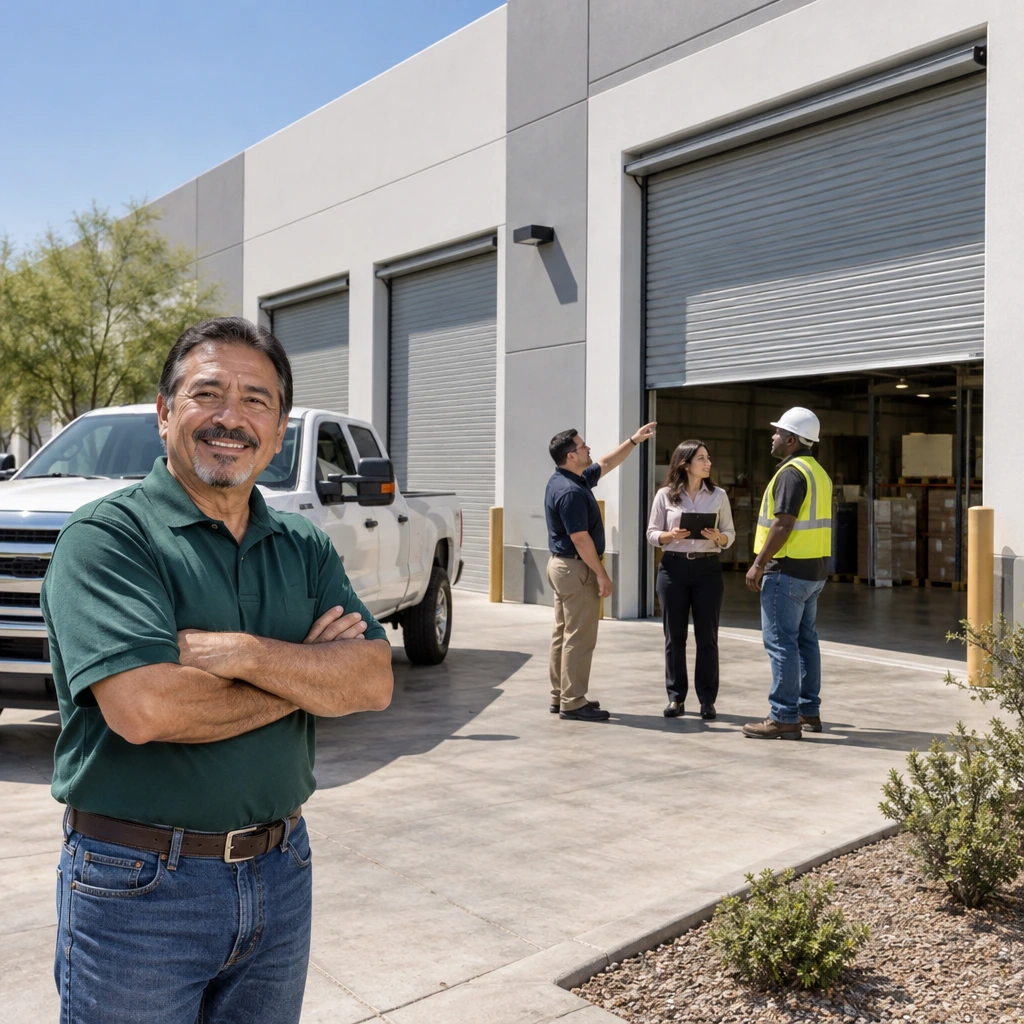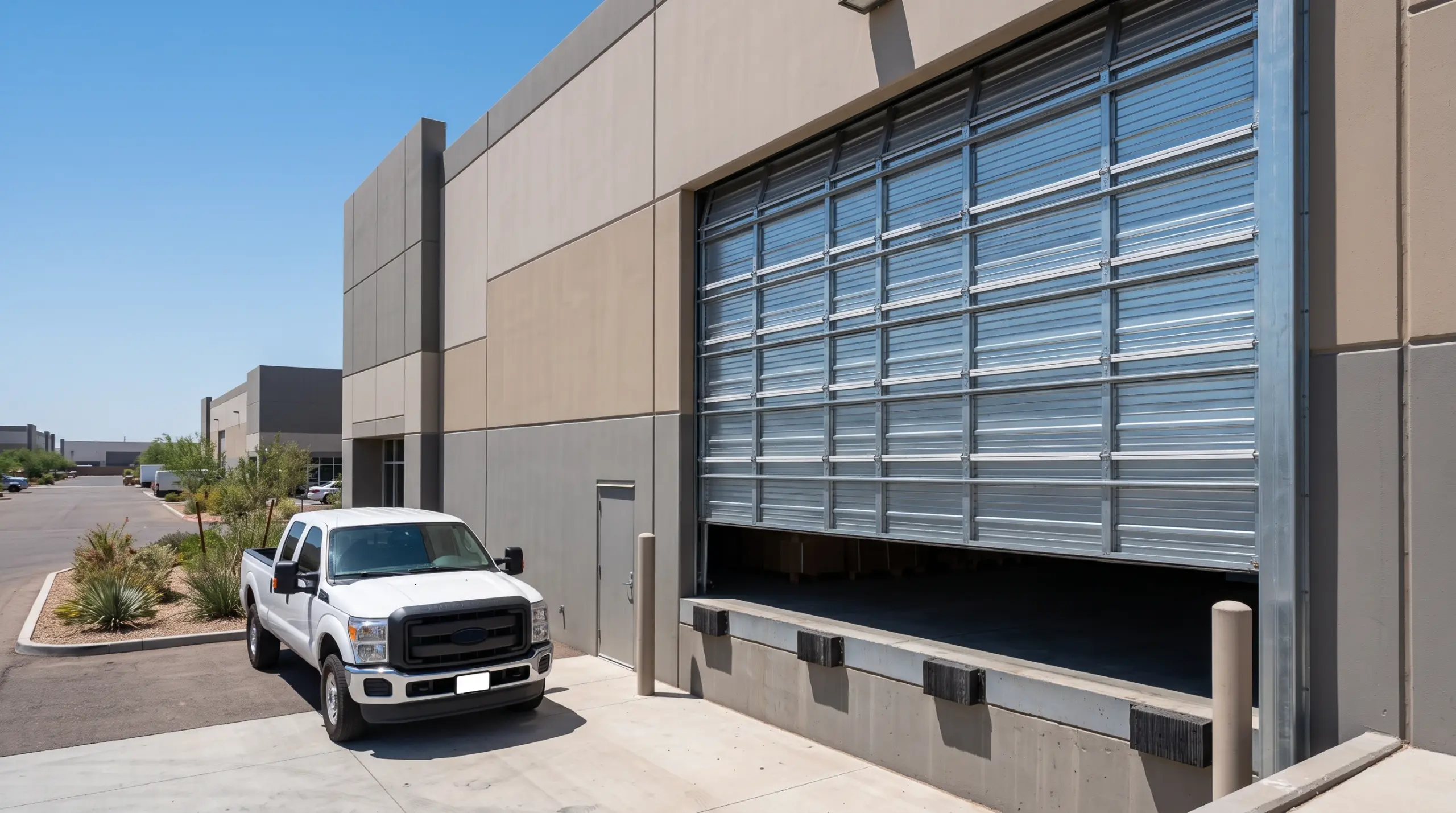
For a Goodyear warehouse, distribution center, service facility, or industrial building, the main entry door may open dozens or even hundreds of times every day. That level of activity makes equipment selection more important than choosing a door based only on opening size or initial price. High-cycle roll-up doors in Goodyear are designed for demanding operating schedules, and a rating of 20,000 or more cycles can help businesses reduce interruptions, emergency repairs, and long-term operating costs.
But what does a cycle rating actually mean? How does it relate to warehouse traffic, Arizona weather, maintenance, and overall reliability? This guide explains why 20,000+ cycle ratings matter, what businesses should evaluate before installation, and how professional service from Arizona Roll Up Door Service can help protect a facility’s daily operations.
Why High-Cycle Roll-Up Doors in Goodyear Matter
A cycle generally means one complete opening and closing of the door. If a loading entrance opens and closes 50 times per day, that is approximately 18,250 cycles per year when operating every day. A busy distribution or manufacturing facility can reach that number much faster.
That is why a 20,000-cycle rating should not be viewed as a marketing number alone. It is a planning tool that helps match the door’s design to the facility’s expected use. According to the Door and Access Systems Manufacturers Association guide to rolling doors, service doors may typically be designed for up to 20,000 cycles, while some configurations can be engineered for 300,000 cycles or more depending on the operator, spring selection, and other design factors.
Cycle ratings help match equipment to traffic
A low-use opening at the rear of a building may not need the same configuration as a primary shipping entrance. However, using a basic, lower-cycle assembly in a high-traffic location can lead to faster spring fatigue, sluggish operation, premature component wear, and unexpected downtime.
Businesses in Goodyear should consider:
- How many times the door opens and closes during an average shift
- Whether multiple shifts or extended operating hours increase daily usage
- How frequently forklifts, delivery vehicles, employees, and service crews use the opening
- Whether the door serves as a primary shipping entrance or a secondary access point
- How quickly the business can recover if the door is out of service
The correct rating is not always the highest available rating. It is the rating that realistically fits the facility’s traffic, operating conditions, and maintenance plan.
What a 20,000-Cycle Rating Really Tells You
A cycle rating describes expected usage under specified design and operating conditions. It does not guarantee that every component will last exactly 20,000 openings, nor does it mean the door can be neglected until that number is reached. Installation quality, alignment, weather exposure, impact damage, lubrication, operator setup, and routine inspections all influence service life.
Springs, operators, and hardware work together
High-cycle performance depends on more than the curtain or panels. The spring assembly, shaft, guides, bottom bar, operator, controls, safety equipment, and mounting structure must work as a coordinated system. An upgraded spring paired with an improperly sized operator may still create reliability problems. Likewise, a durable door can experience premature wear if the guides are misaligned or the opening is not square.
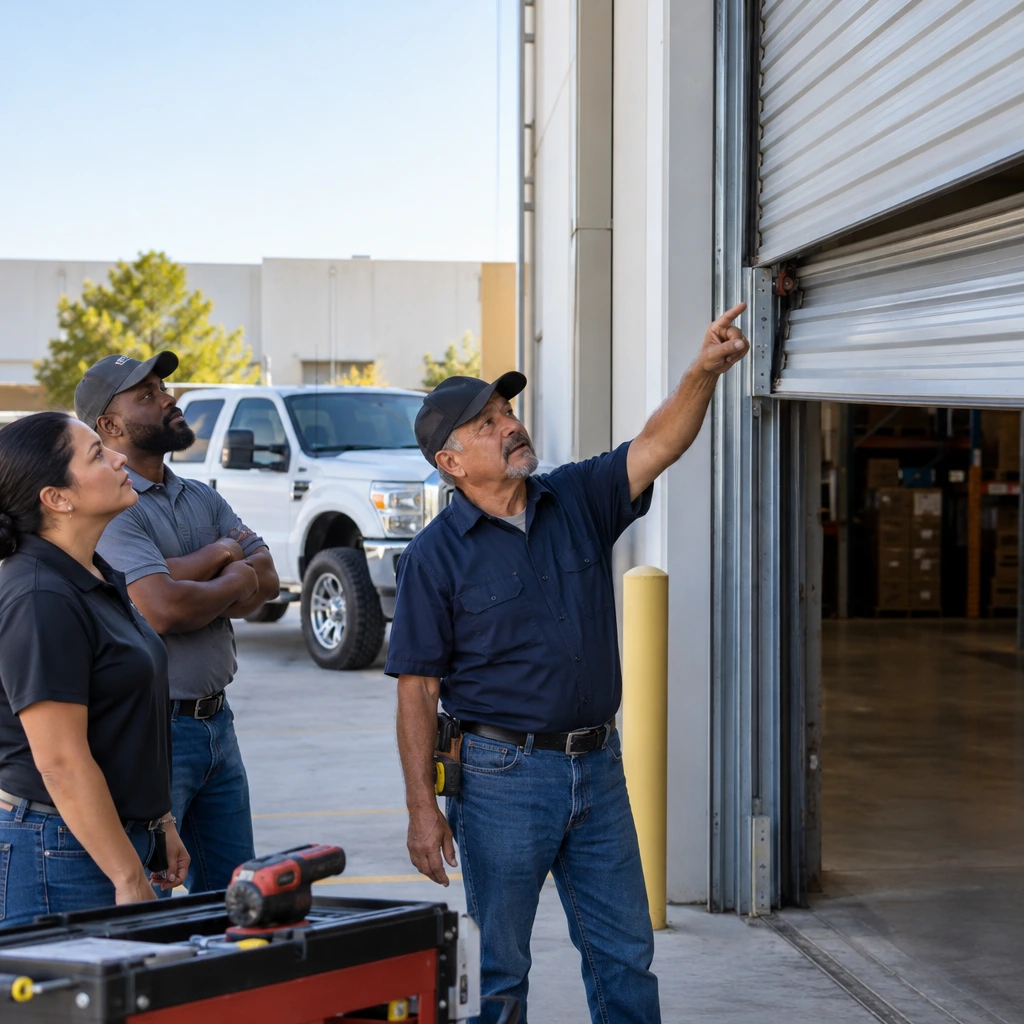
During a professional assessment, the installer should review the opening dimensions, headroom, side room, electrical requirements, traffic pattern, and environmental exposure. For a Goodyear commercial door installation, that site-specific review is especially valuable when the door will serve a warehouse, manufacturing operation, logistics facility, or large service building.
Ratings are useful for budgeting and replacement planning
Cycle ratings can also help facility managers estimate when components may need attention. If a door is operating near its intended capacity, preventive inspections can be scheduled before wear becomes an operational emergency. That approach is more practical than waiting for a spring, cable assembly, motor, or safety device to fail during a busy shipping period.
It is also important to ask what the rating covers. Some specifications describe the expected life of the complete door assembly, while others may focus on a particular spring or operator configuration. A qualified technician can explain how the rating applies to the proposed system rather than treating “20,000 cycles” as a universal guarantee.
Why Goodyear Businesses Are Paying More Attention to Door Capacity
Goodyear continues to attract industrial, manufacturing, logistics, and distribution activity. In May 2025, the Arizona Commerce Authority reported that GTI Energy planned a $33 million initial investment, with another $20 million planned, for a 530,000-square-foot manufacturing facility at Lakin Park in Goodyear. Projects of this scale illustrate why dependable access equipment matters in the West Valley.
More industrial activity often means more vehicle movement, material handling, employee traffic, and delivery activity. Each opening may appear routine, but the total daily operating load can be substantial. A door that moves slowly, stops unexpectedly, or requires repeated manual intervention can affect productivity well beyond the repair invoice.
Warehouse door cycle capacity affects operations
For warehouse managers, the key question is not simply, “Will the door fit?” It is, “Can the door keep pace with our workflow?” A high-cycle configuration may be appropriate for:
- Shipping and receiving entrances
- Distribution and fulfillment facilities
- Manufacturing plants
- Fleet and service buildings
- Loading areas with frequent forklift traffic
- Facilities operating multiple shifts
High-cycle equipment can support more consistent movement through the opening, especially when paired with a properly selected motor and control system. Faster or smoother operation may also reduce the temptation for employees to bypass safety procedures or leave the door partially open.
Arizona conditions make maintenance important
Goodyear’s heat, dust, wind, and seasonal storms can place additional stress on moving components and door openings. Dust accumulation may affect tracks, photo eyes, and other safety equipment. Heat can accelerate deterioration of certain components, while wind and airborne debris can contribute to misalignment or impact damage.
That does not mean a high-cycle door is maintenance-free. Instead, the higher rating should be paired with a practical service schedule. The Occupational Safety and Health Administration’s lockout/tagout guidance also emphasizes that hazardous energy must be controlled when servicing activities fall outside the limited minor-servicing exception. Door repairs should be handled by trained professionals using appropriate safety procedures.
How Heavy-Use Roll-Up Door Maintenance Protects Your Investment
Even a properly specified 20,000-cycle or higher system needs routine attention. Maintenance helps identify small problems before they affect operation, create a safety concern, or damage a more expensive component.
Recommended maintenance tasks
A professional heavy-use roll-up door maintenance program may include:
- Inspecting spring and cable assemblies for wear or tension problems
- Lubricating moving parts according to the manufacturer’s requirements
- Cleaning and checking guides, tracks, and operating surfaces
- Testing the motor, operator, controls, and emergency release functions
- Checking safety sensors, photo eyes, reversing features, and warning devices
- Tightening loose hardware and adjusting brackets or guides
- Inspecting the curtain, panels, bottom bar, seals, and fasteners
- Reviewing unusual noise, vibration, slow movement, or uneven travel
Maintenance frequency should reflect actual use. A secondary opening may need less frequent service than a primary shipping entrance, while a high-traffic door operating across several shifts may benefit from a more structured inspection schedule.
Warning signs that should not be ignored
Contact a professional if the door becomes sluggish, pauses during travel, makes grinding or popping sounds, reverses unexpectedly, hangs unevenly, or fails to close fully. Other warning signs include frayed cables, visible spring damage, bent guides, impact marks, loose hardware, and safety sensors that do not respond consistently.
Continuing to operate a damaged door can increase the repair scope. For example, a small alignment issue may place additional stress on the operator and spring assembly. Early diagnosis can often limit the problem to adjustment, lubrication, or replacement of a worn part rather than a larger system repair.
Choosing the Right 20,000+ Cycle Door for Your Facility
When comparing industrial roll-up door ratings in Arizona, ask for more than the headline cycle number. A professional recommendation should connect the rating to your actual facility conditions.
Questions to ask before installation
- What is the expected daily cycle count? Estimate normal traffic and include peak periods, seasonal demand, and additional shifts.
- What components support the rating? Ask about springs, operators, guides, controls, and safety devices.
- Is the operator sized for the door? An operator should be selected for the door’s weight, speed, frequency of use, and control requirements.
- What maintenance schedule is recommended? Get a clear plan for inspections, lubrication, adjustments, and testing.
- How will the door handle the site conditions? Dust, wind, heat, moisture, vehicle traffic, and possible impact should all be considered.
- Can the opening be serviced quickly? Local availability of replacement parts and responsive technicians can reduce business downtime.
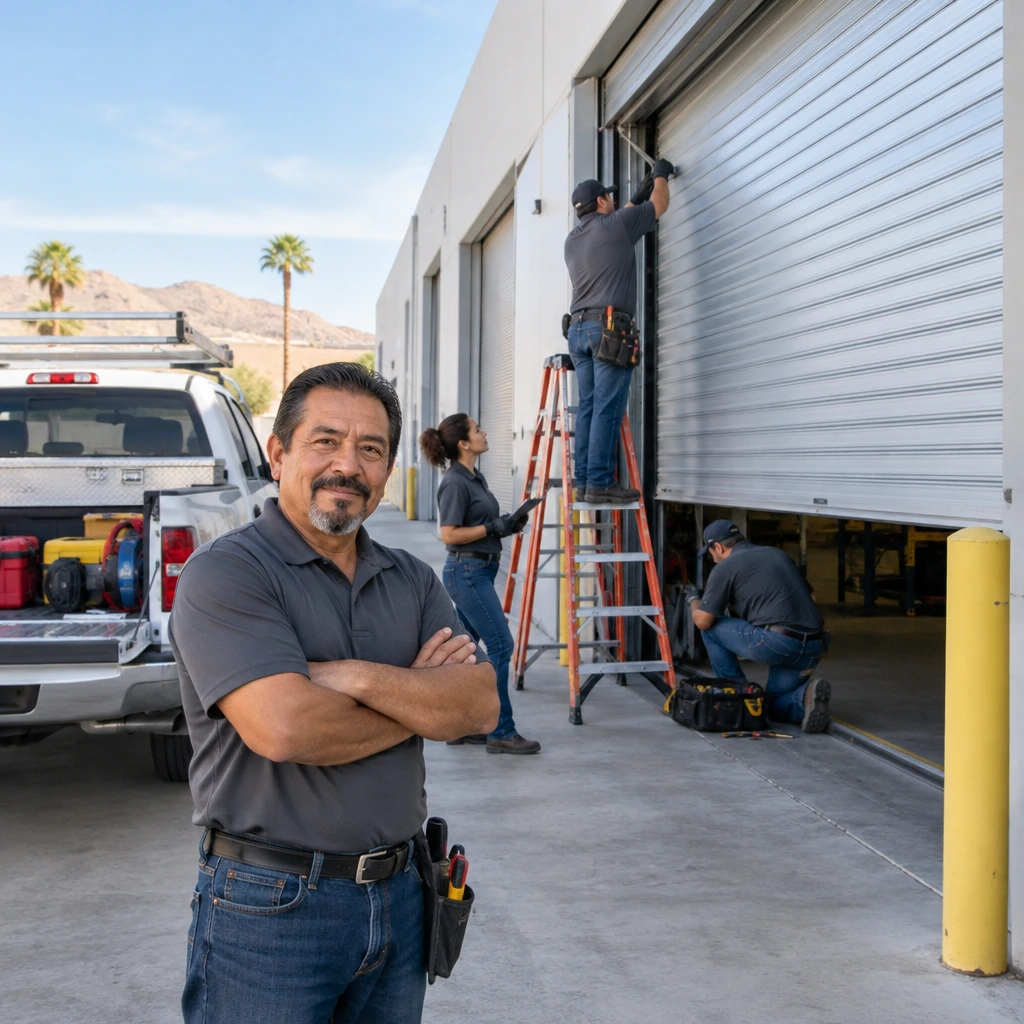
Professional installation also improves long-term performance. Accurate measurements, proper anchoring, correct spring tension, aligned guides, and complete safety testing are essential. Arizona Roll Up Door Service provides custom measurements, site assessments, commercial-grade installation, repair, and maintenance throughout Goodyear and the Phoenix metro area.
The company has more than 20 years of experience serving businesses in Goodyear, Avondale, Buckeye, Scottsdale, North Phoenix, and surrounding communities. Its technicians can also diagnose sluggish operation, replace worn springs and cable assemblies, repair damaged panels, address motor and opener problems, realign tracks, and resolve safety sensor issues.
Conclusion: Plan for Reliability Instead of Waiting for Failure
A 20,000-cycle rating matters because it connects door design to real operating demands. For a busy Goodyear facility, the right high-cycle roll-up door can support dependable access, reduce interruptions, and provide better long-term value than a system chosen only for its lowest upfront price.
Still, the rating is only one part of the decision. Correct sizing, professional installation, appropriate operator selection, safety testing, and regular maintenance all contribute to reliable performance. If your current door is slow, noisy, uneven, or frequently out of service, it may be time for an evaluation.
Contact Arizona Roll Up Door Service today for a free consultation. With more than two decades of experience, a fully stocked parts inventory, and service across the Phoenix metro area, the team can help you choose, install, repair, and maintain a roll-up door that keeps your facility secure and functional.