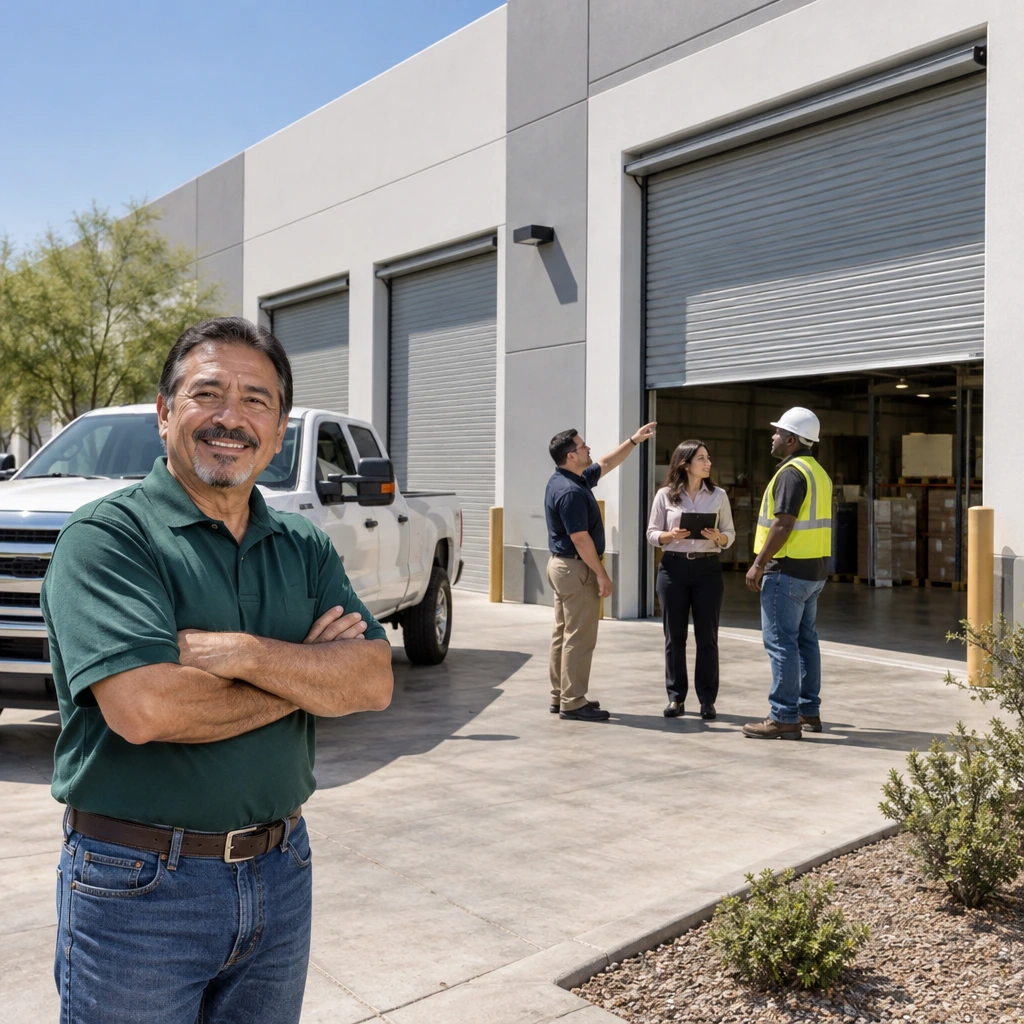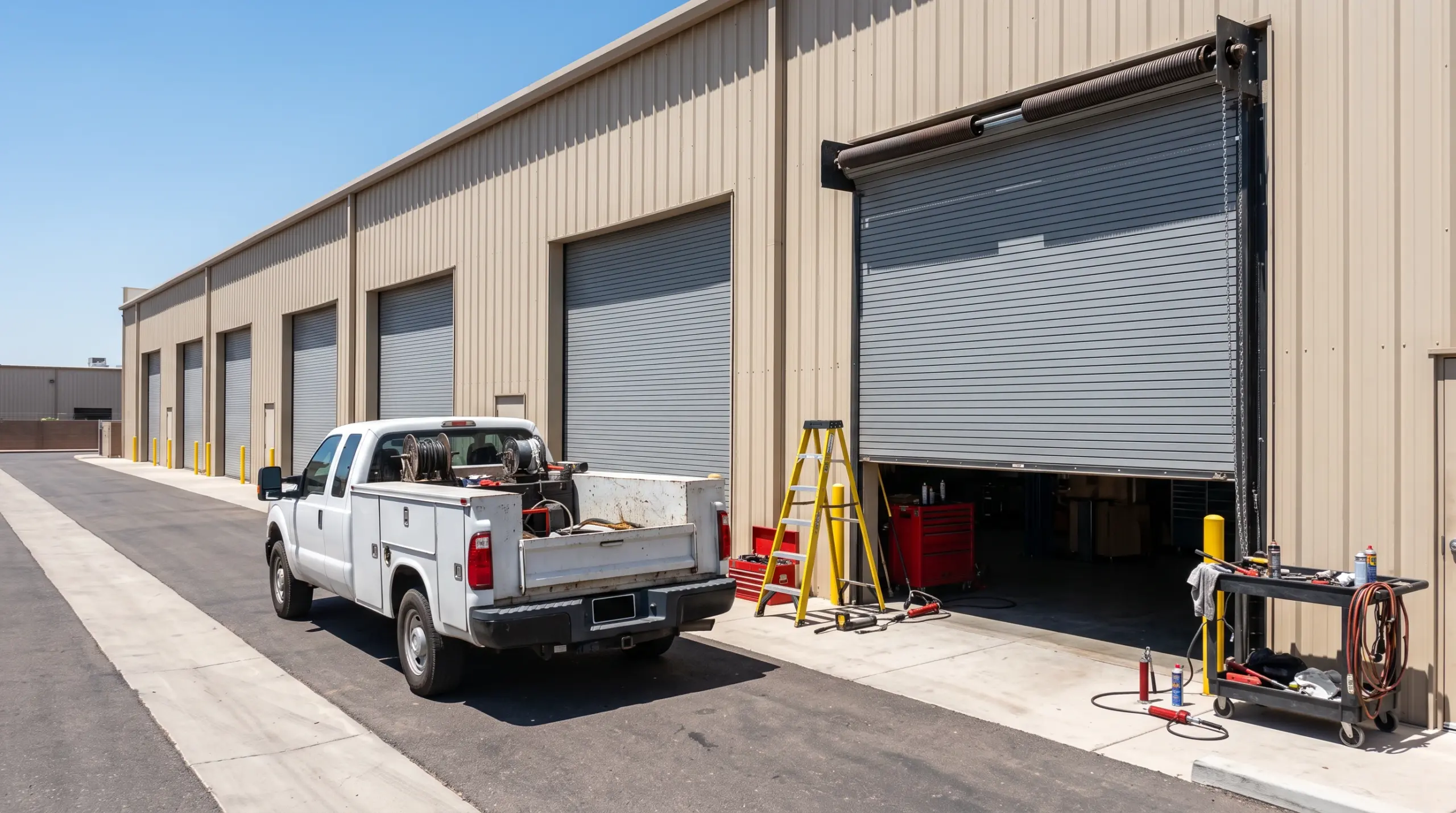
Roll-Up Door Maintenance Cost Analysis: 2026 Pricing for Phoenix Facilities starts with a practical question: how much should a Phoenix business budget to keep its commercial roll-up doors safe, reliable, and operational? For facility managers, the answer depends on door size, cycle frequency, access requirements, operator type, fire-rating considerations, and the condition of springs, cables, tracks, slats, sensors, and hardware. A low-cost annual inspection may be adequate for a lightly used service opening, while a warehouse with several high-cycle doors may need quarterly maintenance and a response agreement. This guide explains typical 2026 planning ranges for commercial roll-up door maintenance in Phoenix, what service visits should include, how Arizona conditions affect costs, and when a maintenance plan makes more financial sense than emergency repairs. It also shows how to build a realistic commercial door maintenance budget for facilities in Phoenix, Scottsdale, Avondale, Buckeye, Goodyear, North Phoenix, and surrounding communities.
Roll-Up Door Maintenance Cost Analysis: 2026 Phoenix Pricing Ranges
Commercial roll-up door maintenance is usually priced per opening, per visit, or through an annual service agreement. Because each facility has different equipment and operating demands, published prices should be treated as budgeting guidelines rather than guaranteed quotes.
Typical 2026 planning ranges
- Basic annual inspection: approximately $150–$300 per door
- Quarterly maintenance: approximately $500–$1,100 per door annually
- Monthly maintenance: approximately $1,200–$2,400 per door annually
- One-time diagnostic or service visit: approximately $125–$250 before parts and extended labor
- Minor adjustment or lubrication service: approximately $150–$350
- Spring, cable, track, or operator repairs: commonly $300–$1,500 or more depending on the component and door size
- Emergency, after-hours, or difficult-access service: often 1.5 to 2 times standard labor pricing
These ranges are most useful during annual planning. A facility with six standard commercial openings, for example, might reserve $3,000–$6,600 for a quarterly program before major replacement parts. A small business with one lightly used opening may spend closer to $150–$300 for an annual inspection, provided the door has no unresolved defects.
Pricing increases when technicians must use lifts, work at unusual heights, diagnose electrical controls, replace heavy counterbalance components, or coordinate service around shipping schedules. Door size also matters. A compact service opening is generally less expensive to maintain than a large warehouse opening that cycles hundreds of times each week.
For fire-rated assemblies, testing and documentation may require additional time and specialized knowledge. The NFPA 80 information on fire door inspection, testing, and maintenance identifies inspection and maintenance as important parts of keeping protected openings functional. Facilities should also confirm requirements with their authority having jurisdiction and the equipment manufacturer.
What Commercial Roll-Up Door Maintenance Should Include
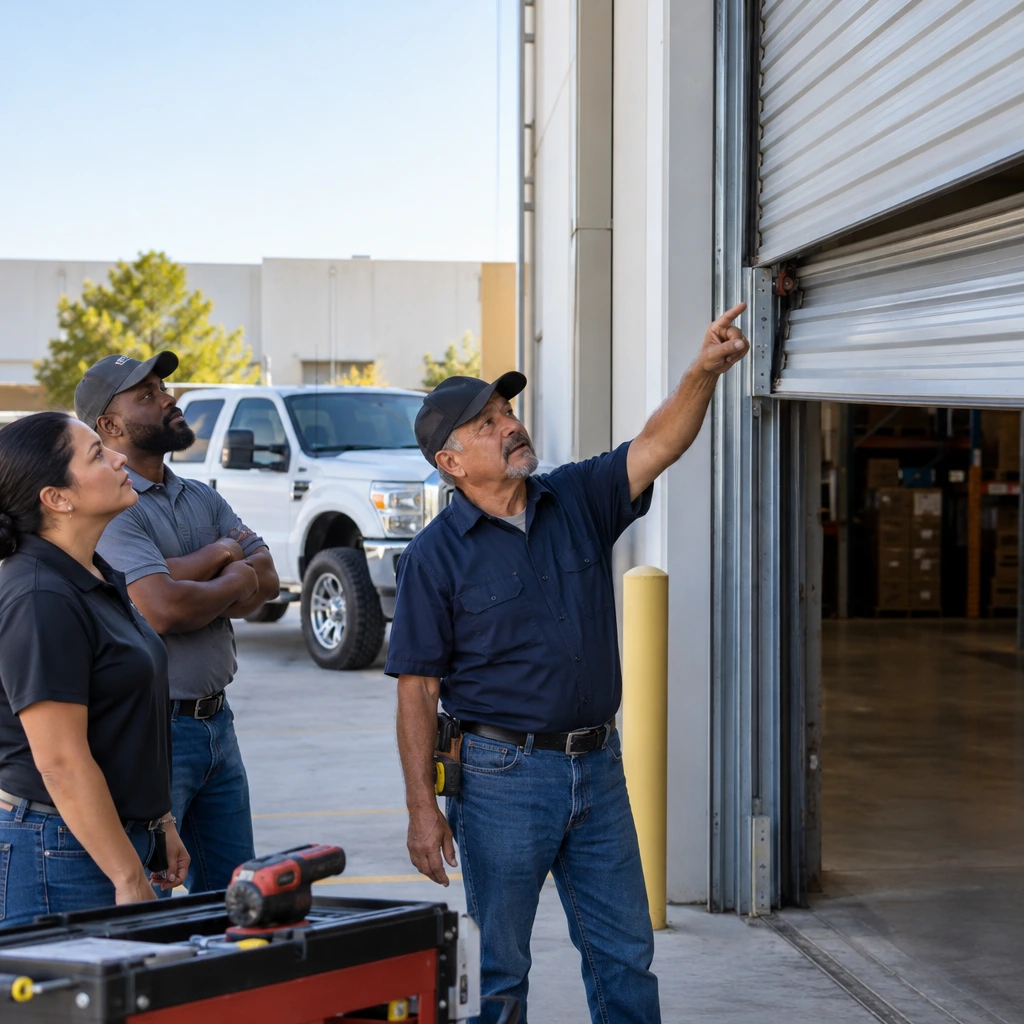
The value of a maintenance visit depends on what the technician actually examines. A quick application of lubricant is not the same as a documented preventive maintenance inspection. A useful service should identify developing problems, confirm safe operation, and give the facility manager a clear record of recommended repairs.
Core inspection tasks
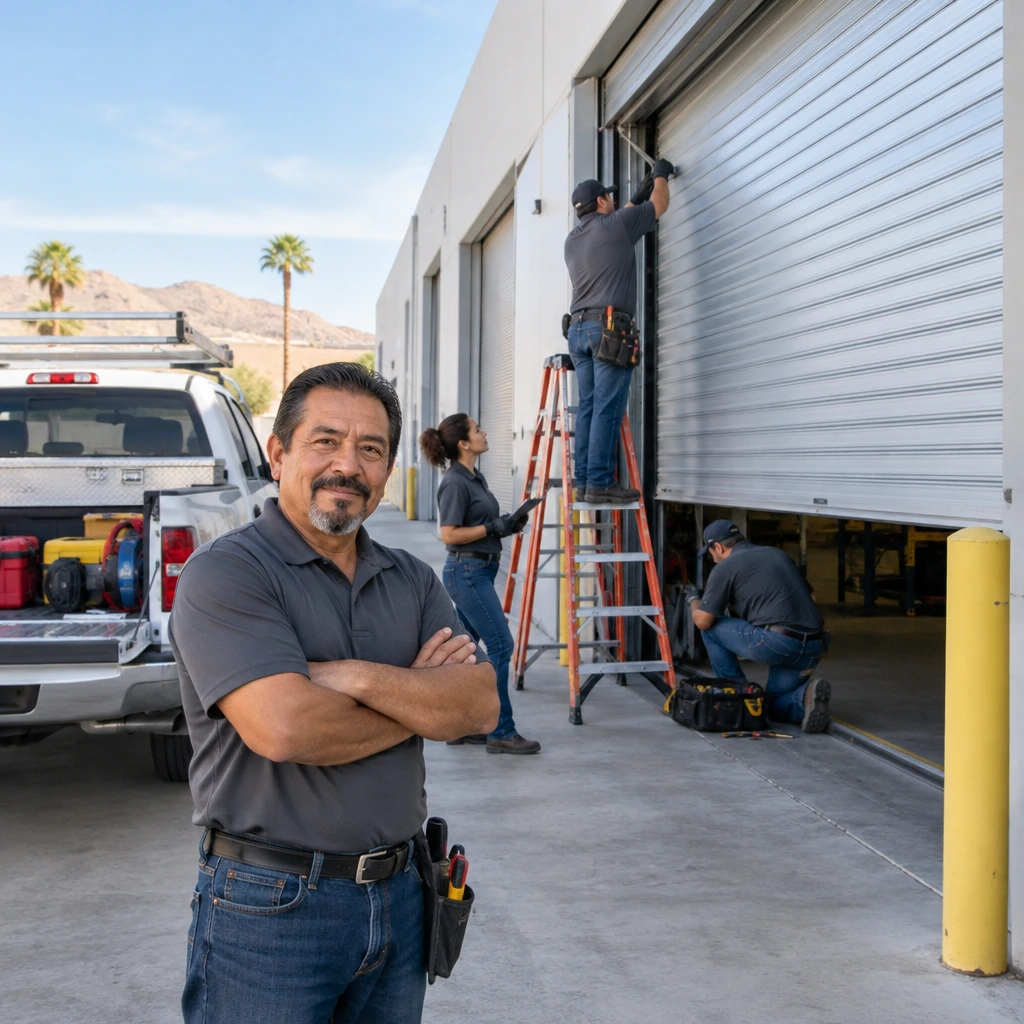
A professional commercial service visit commonly includes:
- Visual inspection of curtains, slats, guides, brackets, end plates, and fasteners
- Track cleaning, alignment checks, and obstruction removal
- Inspection of springs, cables, drums, bearings, and counterbalance components
- Lubrication of manufacturer-approved moving parts
- Operator, motor, chain, limit, and control inspection
- Testing of photo eyes, sensing edges, stop functions, and reversing features
- Hardware tightening and adjustment
- Cycle testing from fully open to fully closed
- Written documentation of deficiencies and recommended repairs
Service frequency should reflect use rather than convenience. A door used only a few times per day may need annual professional maintenance. A distribution center, fleet facility, loading area, or manufacturing site with frequent cycles may benefit from quarterly or monthly service.
Why safety work should be left to trained technicians
Counterbalance assemblies contain stored energy, and improper adjustment can cause serious injury. The Door and Access Systems Manufacturers Association recommends that a trained door systems technician perform periodic inspection and maintenance at least annually, or according to the manufacturer’s recommendations. Its guidance also calls for immediate evaluation after events such as high wind, flooding, or seismic activity. See the DASMA rolling door maintenance guidance for additional inspection principles.
Maintenance also involves electrical and mechanical hazards. OSHA’s control of hazardous energy guidance explains that unexpected startup or release of stored energy during servicing can cause serious injury or death. Facility staff can report symptoms such as unusual noise, binding, or slow travel, but spring, cable, operator, and electrical work should be assigned to qualified professionals.
How Phoenix Conditions Affect Maintenance Costs
Phoenix-area facilities face operating conditions that can increase wear even when a roll-up door appears to be in good condition. Dust can collect in guides, bearings, photo eyes, and operator components. Fine debris may make a door sluggish or cause intermittent safety-sensor faults. Extreme heat can also affect lubricants, electrical components, seals, and the surrounding building materials.
Dust, heat, and high-use environments
Industrial and commercial properties in Avondale, Buckeye, Goodyear, and North Phoenix may experience substantial airborne dust from construction, traffic, landscaping, and undeveloped areas. When debris builds up in tracks or around moving components, the door may require more force to operate. That additional resistance can accelerate wear on the motor, chain, springs, bearings, and operator.
High summer temperatures can expose exterior equipment to prolonged heat. Although maintenance cannot eliminate climate-related wear, regular cleaning, inspection, and adjustment can identify problems before a door becomes completely inoperable. For that reason, preventive door maintenance pricing should be compared with the cost of interrupted deliveries, restricted vehicle access, damaged inventory, or an emergency response.
Wind and weather events
A significant wind event deserves more than a casual visual check. Guides, fasteners, curtains, brackets, and the building attachment points may be affected even if the door still opens. DASMA specifically recommends an immediate evaluation after high wind, flooding, or seismic events. A post-event inspection may cost more than a routine visit, but it can reveal damage before normal operation makes the condition worse.
Facilities near high-traffic yards should also consider impact risk. A forklift or delivery vehicle can bend guides, damage the curtain, or shift the bottom bar. Prompt assessment is important because continued operation with a misaligned door can increase repair costs.
Annual, Quarterly, or Monthly Plans: Which Is Best?
The right maintenance schedule depends on door usage, business continuity requirements, and the cost of downtime. There is no universal plan for every Phoenix facility.
Annual maintenance
An annual plan is generally appropriate for a lightly used opening with a strong operating history. It may include a full inspection, lubrication, safety testing, adjustments, and a written condition report. Annual service is also a useful minimum for facilities that have not previously documented their door condition.
However, annual service may be too infrequent for high-cycle operations. A problem that develops shortly after the inspection could remain unnoticed for months. Facilities with multiple openings should also consider whether one failed door would disrupt shipping, production, tenant access, or emergency egress.
Quarterly maintenance plans in Arizona
Quarterly maintenance plans in Arizona are often a practical middle ground for warehouses, service centers, retail back-of-house areas, and commercial properties with steady daily use. Four visits per year allow technicians to monitor trends instead of seeing the door only after a failure.
A quarterly agreement may include priority scheduling, routine adjustments, safety testing, discounted repair labor, written reports, and a defined response process. When comparing plans, ask whether parts are included. Many agreements cover inspection and labor for minor adjustments but bill springs, cables, operators, panels, and other replacement components separately.
Monthly service
Monthly maintenance is usually reserved for high-cycle or mission-critical facilities. It may be appropriate when a door serves a busy distribution lane, a loading dock, a vehicle maintenance area, or a location where access failure would create immediate operational losses.
Monthly service costs more upfront, but the added visits can help identify gradual changes in travel speed, balance, noise, vibration, and safety performance. A detailed report can also help property managers decide whether continued maintenance is economical or whether replacement should be planned.
Building a Commercial Door Maintenance Budget
A useful budget separates predictable maintenance from unpredictable repairs. Start by listing every commercial roll-up door, its location, approximate age, operating frequency, operator type, fire-rating status, and current condition. Then group openings into low-, medium-, and high-use categories.
Example Phoenix facility budget
Consider a facility with four standard commercial roll-up doors:
- Annual inspection model: $600–$1,200 per year before repairs
- Quarterly model: $2,000–$4,400 per year before major parts
- Monthly model: $4,800–$9,600 per year before major parts
These figures illustrate planning, not a firm proposal. A facility with extensive dust exposure, frequent cycles, limited access windows, or older equipment may fall above these ranges. Conversely, a newer, lightly used opening with easy access may fall below them.
Maintain a separate reserve for corrective repairs. A reasonable commercial door maintenance budget should account for worn rollers, damaged guides, broken springs, frayed cables, operator faults, panel or curtain damage, sensor replacement, and accidental impact. A reserve of several hundred dollars per opening may be sufficient for newer equipment, while older or heavily used systems may justify $1,000 or more per opening annually.
Ask for itemized estimates that distinguish inspection, labor, travel, parts, lift charges, emergency premiums, and taxes. Also confirm whether the provider carries commonly needed replacement components. A fully stocked technician may complete a same-visit repair and reduce business downtime.
Reduce Emergency Costs With a Preventive Service Strategy
Preventive maintenance does not eliminate every failure, but it can make costs more predictable. Technicians may identify a frayed cable before it breaks, a loose guide before it bends, or a slow operator before the motor fails. Early repairs are often easier to schedule during a low-traffic period than emergency work during a shipment window.
Facilities should also train employees to report warning signs immediately. Common symptoms include:
- Sluggish or uneven movement
- Grinding, squealing, or popping sounds
- A door that reverses unexpectedly
- Visible cable fraying or spring damage
- Track separation or repeated derailment
- Safety sensors that work intermittently
- An operator that overheats or struggles to lift the door
Do not allow employees to bypass safety features or attempt spring adjustments. A short-term workaround can create a larger repair, increase risk, and complicate insurance or compliance documentation.
Conclusion: Plan Now for Reliable Phoenix Roll-Up Door Service
For most Phoenix commercial facilities, 2026 maintenance planning should begin with a documented inspection and a realistic assessment of usage. Annual service may suit a lightly used opening, while quarterly maintenance is often a stronger choice for busy facilities exposed to dust, heat, traffic, and frequent cycles. Monthly service can make sense when a door is operationally critical.
Arizona Roll Up Door Service provides commercial roll-up door installation, repair, and maintenance throughout the Phoenix metro area, including Avondale, Buckeye, Goodyear, Scottsdale, and North Phoenix. With more than 20 years of experience, our team can inspect springs, cables, tracks, operators, safety equipment, and hardware, then recommend a service schedule that fits your facility and budget. Contact Arizona Roll Up Door Service today for a free consultation and let us help keep your business secure, functional, and moving.