Roll-up door security upgrades can help Phoenix warehouses control who enters, protect inventory, and keep daily operations moving. A dependable roll up door is an important first layer of protection, but traditional keys and manually operated controls may not provide enough visibility for a busy distribution center, storage facility, or industrial property. Access control systems add a smarter way to manage entry while supporting employee safety and operational efficiency.
In this guide, you will learn how commercial door access control in Phoenix works, which warehouse door security systems are most useful, and how keypad entry roll-up doors and smart commercial door controls in Arizona can improve facility security. You will also discover why professional installation, testing, and ongoing maintenance matter in the extreme heat, dust, and high-use conditions common throughout the Phoenix metro area.
Roll-Up Door Security Upgrades for Modern Phoenix Warehouses
Warehouse security involves more than preventing unauthorized entry after business hours. Facilities must also control employee access, monitor deliveries, limit entry to restricted areas, and respond quickly when a credential is lost or an employee changes roles. A roll up door access control system brings these responsibilities into one organized process.
Instead of relying solely on a physical key, businesses can use a keypad code, proximity card, key fob, mobile credential, or another approved authentication method. Depending on the system, managers may assign individual permissions, create scheduled access windows, and review activity records. This added control can be especially valuable for warehouses with multiple shifts, third-party contractors, loading areas, or valuable inventory.
What an Access Control System Can Manage
A properly designed system may connect the roll up door operator with security hardware and facility procedures, including:
- Keypads for unique employee or department codes
- Card and key fob readers for credential-based entry
- Mobile access for authorized managers and staff
- Automatic locking or restricted access outside operating hours
- Event logs showing when credentials were used
- Intercom or video verification for visitors and delivery drivers
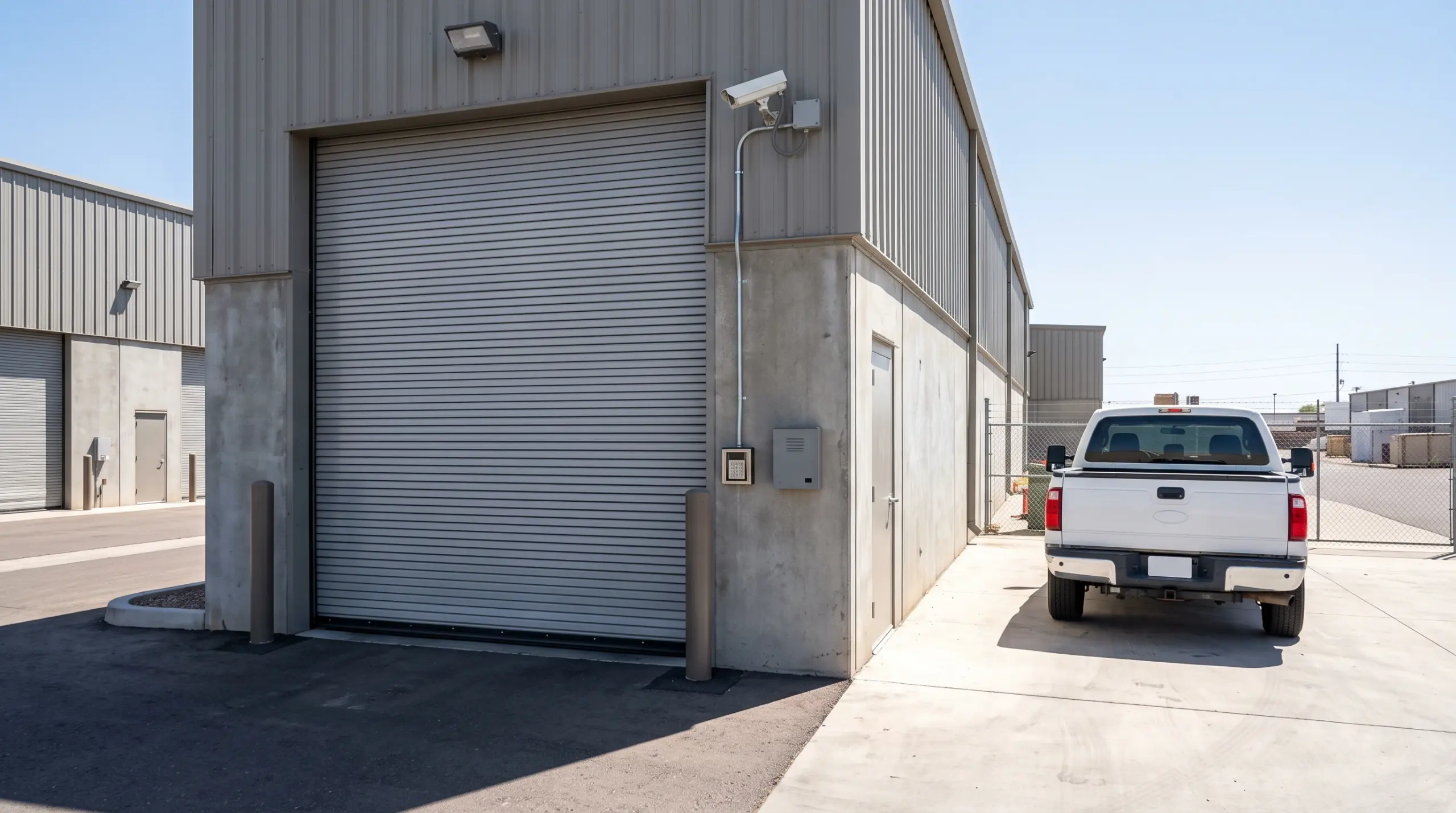
- Integration with alarms, cameras, and other building security tools
These features do not replace a properly maintained roll up door. Instead, they work with the door, opener, safety equipment, and locking components to create a more complete security plan. Arizona Roll Up Door Service can help evaluate the existing setup and identify practical improvements based on traffic volume, door size, operating schedule, and the level of protection required.
Choosing Warehouse Door Security Systems That Fit Your Facility
Every warehouse has different security priorities. A small commercial property may need a keypad and dependable electronic lock, while a large distribution facility may require multiple credentials, remote management, audit trails, and coordination with cameras. Selecting the right system begins with understanding how the door is used throughout the day.
Keypad, Card, and Mobile Entry Options
Keypad entry roll-up doors are often a straightforward solution for warehouses with regular employees and clearly defined access groups. Individual codes can be assigned to workers, supervisors, or vendors. However, codes should be changed promptly when they are shared improperly or no longer needed.
Card and key fob systems provide more individualized control. If a credential is lost, managers can deactivate it without changing access for the entire workforce. These systems are useful when a company wants a clearer record of who entered and when. Mobile credentials can offer additional convenience for authorized personnel, although the facility should maintain strong account security and a backup entry procedure.
Important Selection Considerations
Before choosing commercial door access control in Phoenix, consider the following questions:
- How many people need regular access?
- Do employees work different shifts or require different permissions?
- Will delivery drivers or contractors need temporary access?
- Does the warehouse need activity reports or remote administration?
- What should happen during a power outage or network interruption?
- How will employees exit safely in an emergency?
- Can the system work with the existing operator and safety equipment?
Arizona conditions also deserve attention. Dust, heat, and frequent cycling can affect moving components and electrical equipment. A system that performs well in a low-use office may not be suitable for a high-traffic warehouse. Professional evaluation helps ensure the access hardware, operator, sensors, and control devices work together reliably.
How Access Control Improves Warehouse Safety and Efficiency
Security upgrades should protect the facility without creating unnecessary delays. When access control is designed correctly, authorized employees can enter efficiently while managers gain more oversight. This balance is important for Phoenix warehouses where loading schedules, inventory movement, and shipping deadlines depend on dependable access.
Better Visibility and Accountability
Traditional keys can be copied, misplaced, or passed between workers without a clear record. Electronic credentials provide greater accountability. A manager may be able to review entry activity, identify unusual access attempts, and quickly remove permissions when an employee leaves the company. Scheduled access can also reduce the risk of a door being opened at unexpected times.
For example, a facility might allow warehouse staff to use the roll up door during scheduled shifts, grant supervisors broader permissions, and provide a delivery company with temporary access during an approved time window. This approach limits unnecessary access while keeping operations flexible.
Safer Daily Operation
Security and safety must work together. An access control system should not encourage employees to bypass safety sensors, manually force the door, or leave the opening unsecured for convenience. Proper installation includes testing the operator, photo eyes or other safety devices, emergency release procedures, and the door’s stopping and reversing functions.
Businesses should also train employees to keep the opening clear, report unusual sounds or slow movement, and avoid using damaged controls. Sluggish operation, track misalignment, worn cables, broken springs, and motor problems can create both security and safety concerns. Prompt service helps prevent a minor issue from becoming an operational emergency.
When appropriate, access control may be paired with cameras, lighting, alarms, and visitor procedures. These layers make it more difficult for unauthorized individuals to approach unnoticed and give managers better information when an incident occurs.
Installation, Repairs, and Maintenance for Reliable Door Security
The best access control hardware cannot compensate for a roll up door that does not operate correctly. A door that remains partially open, fails to close, or has a malfunctioning sensor can undermine the entire security plan. For this reason, door condition should be reviewed before new controls are installed and checked regularly afterward.
Professional Installation and Testing
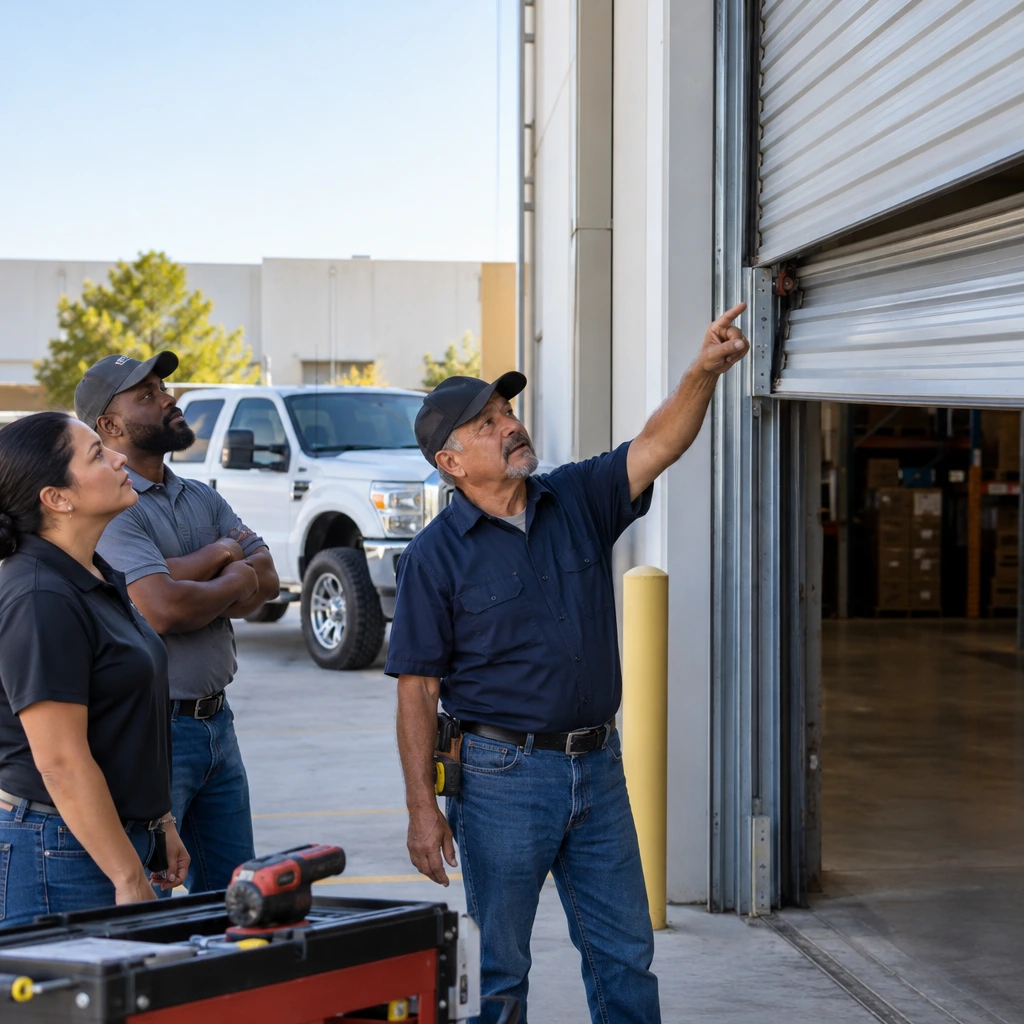
Installation begins with a site assessment. A qualified technician can review the door, operator, electrical requirements, mounting locations, traffic patterns, and emergency procedures. The goal is to create a dependable connection between the credential reader or keypad and the roll up door without interfering with normal operation.
After installation, the system should be tested under realistic conditions. Testing may include authorized and unauthorized credentials, timed access rules, door opening and closing, safety sensor response, emergency release, power interruption procedures, and communication with related security devices. Clear instructions should be provided to facility managers and employees.
Preventative Maintenance Matters
Regular maintenance is one of the most effective ways to preserve security and reduce unexpected downtime. A customized service schedule may include:
- Lubricating appropriate moving parts
- Inspecting spring and cable tension
- Cleaning and aligning tracks
- Tightening hardware and adjusting components
- Testing safety sensors and emergency features
- Checking the motor, opener, keypad, reader, and control wiring
- Reviewing access permissions and removing outdated credentials
Phoenix dust and heat can accelerate wear, particularly at busy facilities that cycle a door hundreds of times. Preventative care helps identify developing problems before they result in a forced entry risk or an expensive emergency repair. If a door becomes slow, noisy, uneven, or difficult to secure, call for professional diagnosis rather than continuing to operate it.
Smart Commercial Door Controls Arizona Businesses Can Rely On
Smart commercial door controls in Arizona can give warehouse managers more flexibility and information without making the entry process unnecessarily complicated. Depending on the selected platform, authorized managers may adjust permissions, receive notifications, review activity, or administer several openings from a central interface. These tools are particularly helpful for businesses with multiple locations or rotating staff.
However, technology should support a sound physical security plan, not serve as a substitute for it. Access credentials must be managed carefully, software accounts should use strong passwords and appropriate verification, and backup procedures should be documented. Businesses should know how employees will enter and exit if the network, power, or control device becomes unavailable.
It is also important to match system complexity to actual needs. A smaller warehouse may benefit more from a dependable keypad, reliable operator, and scheduled maintenance than from features that staff rarely use. A larger operation may justify centralized reporting, video verification, and temporary credentials. A professional consultation can compare these options and help avoid paying for unnecessary equipment.
Arizona Roll Up Door Service has more than 20 years of experience helping commercial and residential customers, with a primary focus on commercial roll up doors. The team provides installation, repair, and maintenance throughout Phoenix, including Avondale, Buckeye, Goodyear, Scottsdale, North Phoenix, Central Phoenix, and surrounding West Valley communities. Fully stocked replacement parts can help support same-visit repairs when possible, minimizing disruption to your business.
Protect Your Phoenix Warehouse with a Practical Security Plan
Roll-up door security upgrades can improve access control, accountability, and everyday efficiency when they are selected and installed correctly. Keypads, cards, fobs, mobile credentials, scheduled permissions, and activity reporting each offer useful advantages. Still, reliable security begins with a properly operating roll up door and continues with regular inspection, testing, and maintenance.
Your business depends on dependable doors. Arizona Roll Up Door Service provides expert installation, repair, and maintenance with quality craftsmanship at competitive prices. Contact Arizona Roll Up Door Service today for a free consultation about commercial door access control in Phoenix, warehouse door security systems, or repairs for an existing opening. Call for prompt, professional service and let the experienced team help keep your facility secure and functional throughout the Phoenix metro area.