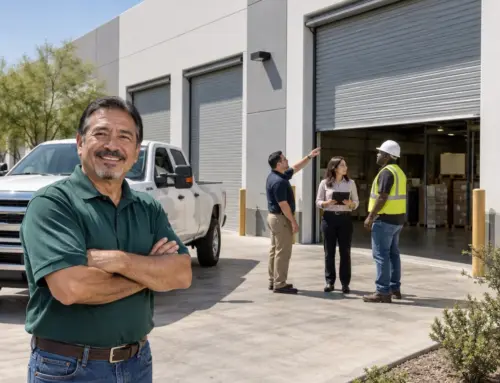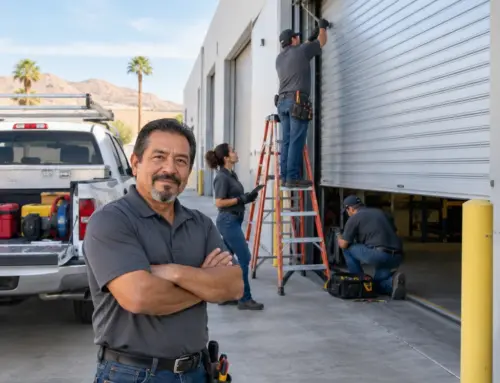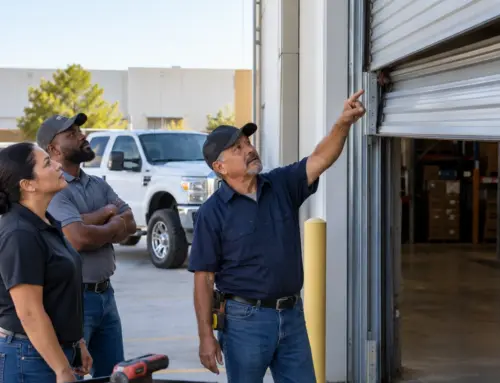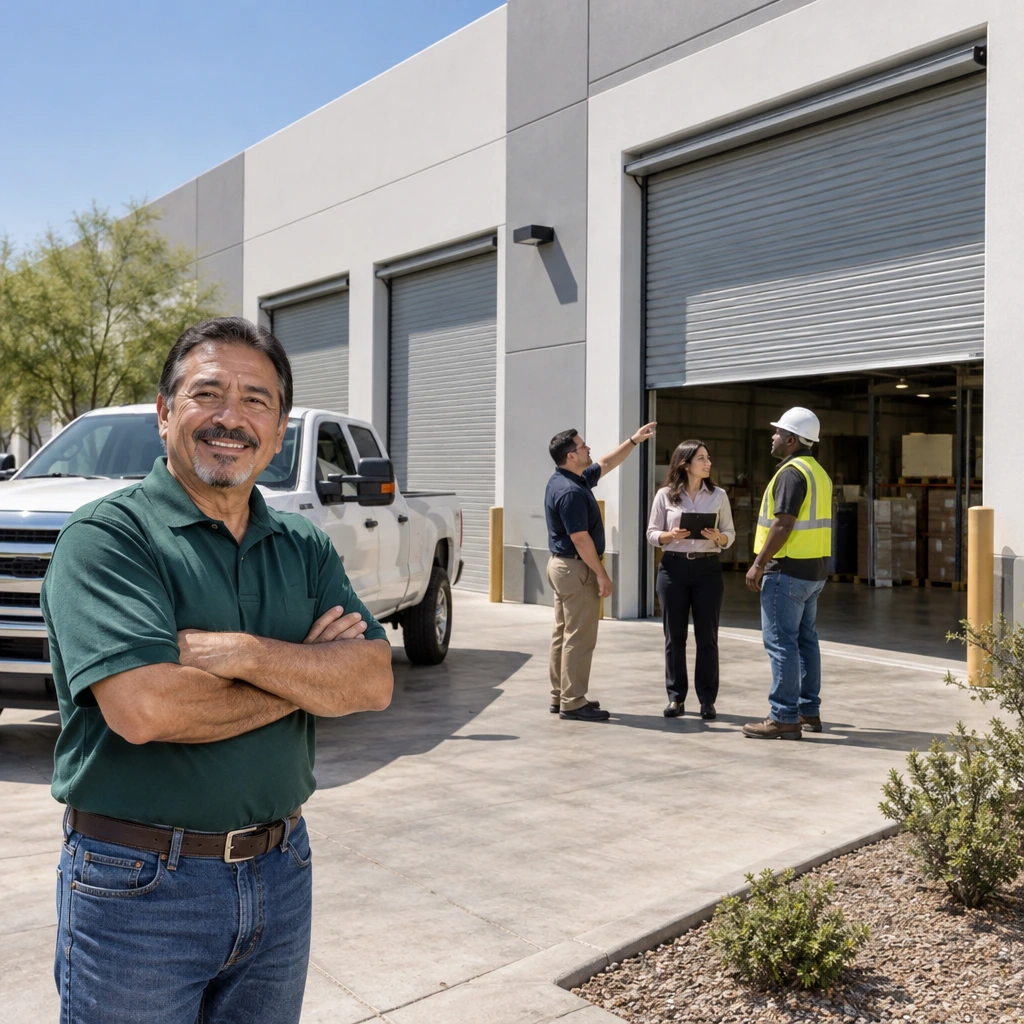
A Roll-Up Door Broken Spring can interrupt deliveries, restrict customer access, and leave a Phoenix business exposed to heat, dust, and security concerns. Because the spring carries much of the door’s weight, continued operation after a failure may cause additional damage or create a serious safety hazard. Understanding the roll-up door spring repair timeline helps property managers make informed decisions when every hour matters.
This guide explains what typically happens during an emergency repair, how quickly a technician may arrive, what affects the repair duration, and which warning signs deserve immediate attention. It also covers commercial door spring replacement cost, temporary safety steps, and ways to reduce future downtime. Arizona Roll Up Door Service provides professional installation, repair, and maintenance throughout Phoenix, Avondale, Buckeye, Goodyear, Scottsdale, North Phoenix, and surrounding communities.
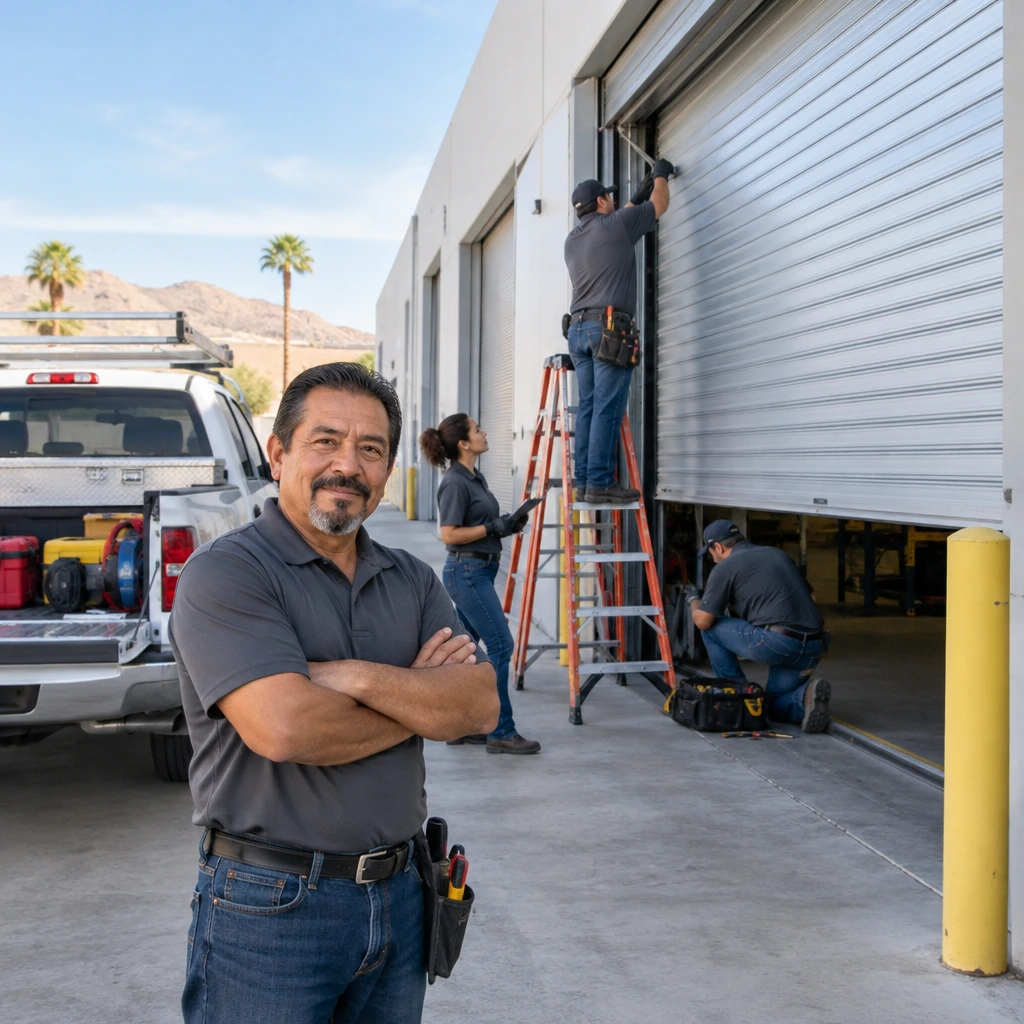
With more than 20 years of experience, our team understands that your business depends on dependable doors. We respond quickly, carry commonly needed replacement parts, and work to complete same-visit repairs whenever possible—without sacrificing careful inspection or safety testing.
Roll-Up Door Broken Spring: What Phoenix Businesses Should Expect First
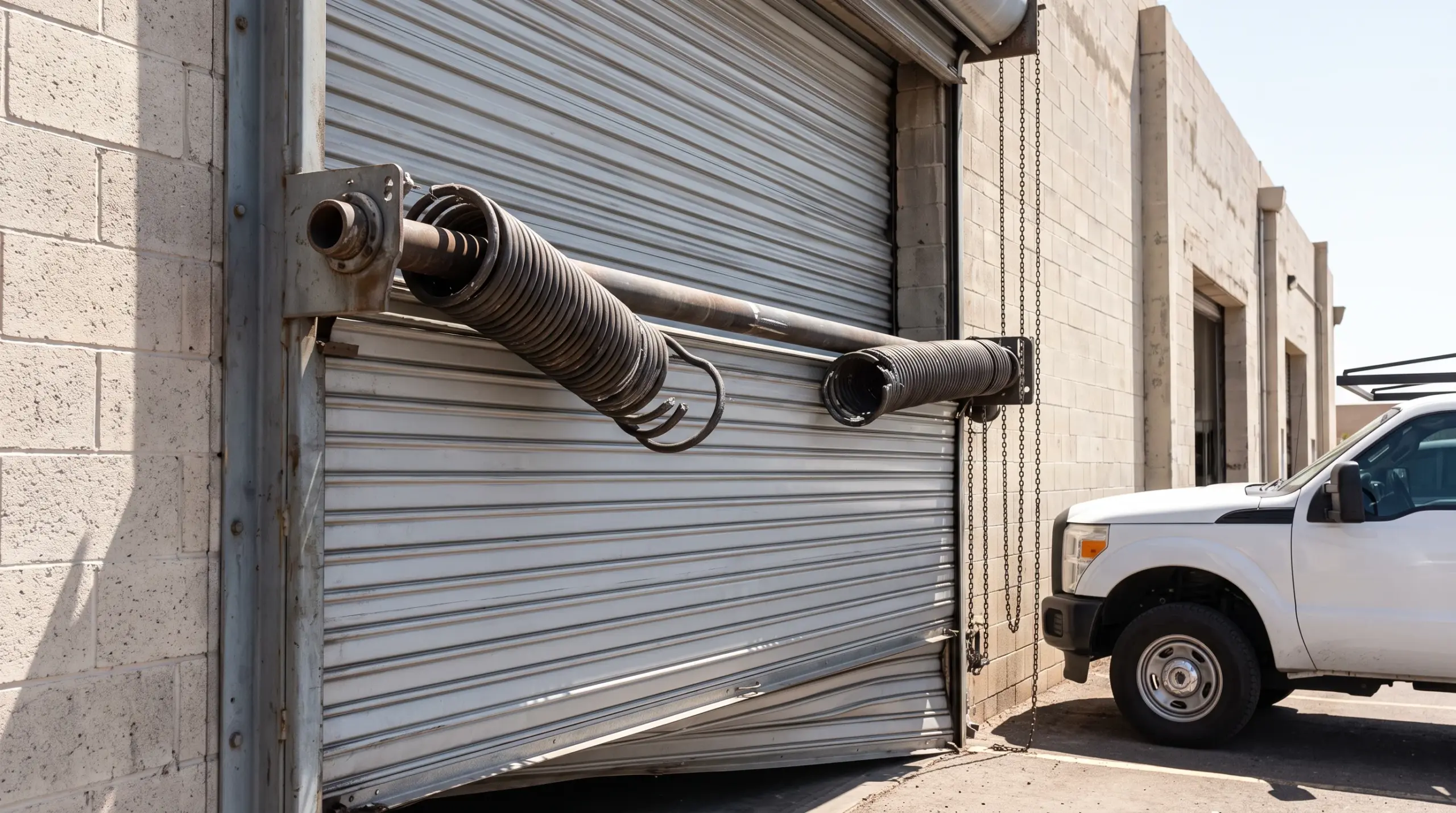
When a spring breaks, the door may stop halfway, sag unevenly, close suddenly, or become extremely difficult to lift. In many cases, a loud snap or popping sound is the first indication of failure. The spring may also look separated, stretched, or visibly damaged. Since commercial roll up doors are heavy, do not force the curtain upward, pull on cables, or attempt to remove the spring yourself.
Immediate steps after spring failure
- Keep employees, customers, vehicles, and equipment away from the opening.
- Do not operate the motor repeatedly or use improvised supports.
- If the door is open, secure the area and protect the opening from unauthorized access.
- Take a photo from a safe distance so the technician can prepare for the visit.
- Call a professional emergency roll-up door service in Arizona as soon as possible.
During the first call, provide the service address, door size if known, current door position, symptoms, and whether the business is fully blocked. This information helps the dispatcher determine urgency and send the right equipment. A door that prevents loading access, closes off a retail entrance, or creates a security exposure should be treated as a priority.
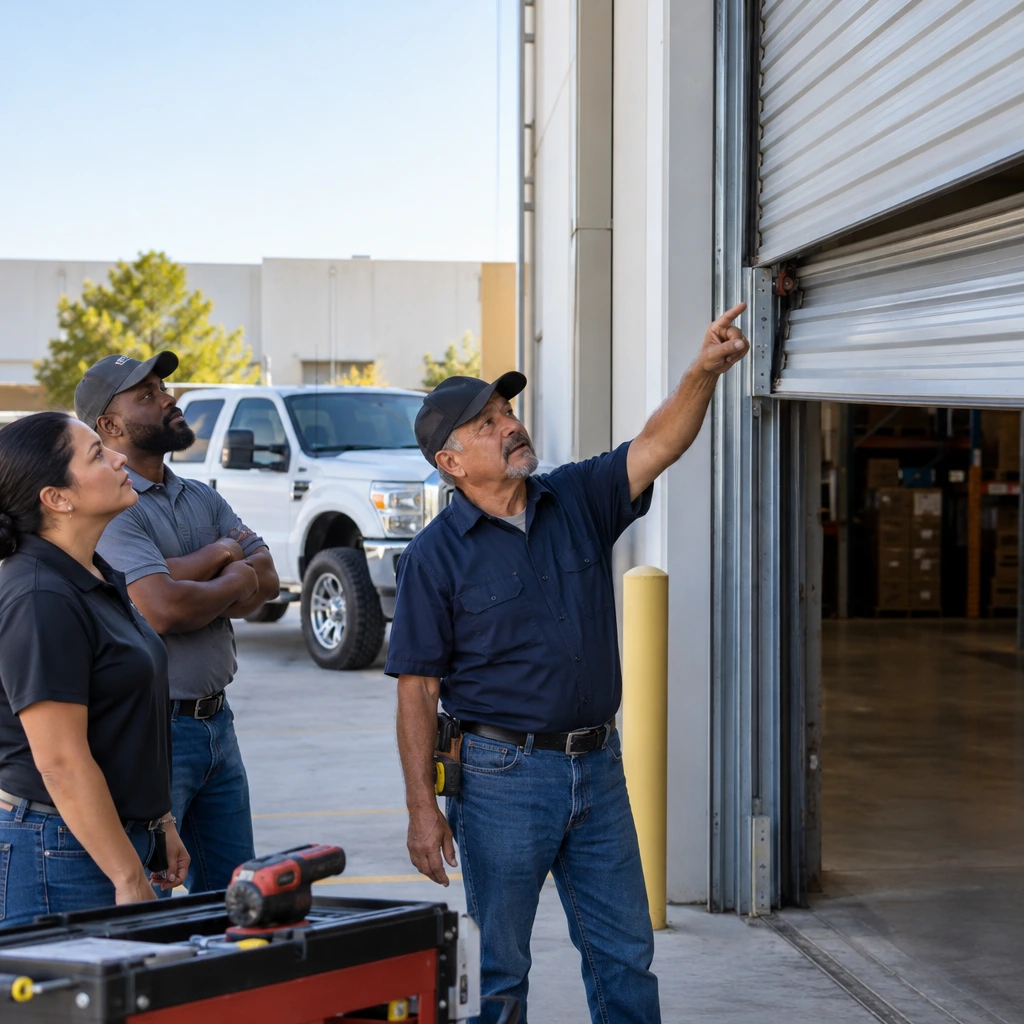
Arizona Roll Up Door Service begins with a safety-focused assessment. The technician checks the spring assembly, cables, brackets, shaft, guides, curtain, motor, and safety components. A broken spring is sometimes only one part of the problem. For example, worn bearings, misalignment, excessive tension, or a damaged cable may have contributed to the failure. Identifying those conditions before installing a replacement helps prevent another interruption.
Emergency Roll-Up Door Service Arizona: A Typical Repair Timeline
The exact schedule depends on location, traffic, part availability, door design, and the condition of surrounding components. However, most commercial service calls follow a predictable sequence. Arizona Roll Up Door Service offers same-day repair capability when possible and serves the entire Phoenix metro region, including West Valley and North Phoenix communities.
1. Dispatch and arrival
After you call, the service team gathers essential details and provides an estimated arrival window. Response times can vary during extreme heat, heavy traffic, after-hours calls, or periods of unusually high demand. A business in central Phoenix may have different travel conditions than one in Buckeye, Goodyear, or Scottsdale. Clear information at booking helps reduce delays.
2. Inspection and diagnosis
Once on-site, the technician secures the work area and examines the entire operating system. This usually takes approximately 20 to 45 minutes, although larger or heavily damaged doors may require more time. The inspection determines whether the spring alone failed or whether cables, tracks, panels, hardware, motor components, or safety equipment also need attention.
3. Replacement and adjustment
If the correct spring and related components are available, a straightforward commercial repair may take about one to three hours after diagnosis. The technician removes the failed component, installs a properly matched replacement, checks tension, and adjusts the door for balanced movement. Some doors use specialized assemblies, multiple springs, or custom dimensions. Those factors can extend the timeline if parts must be sourced or fabricated.
4. Testing and handover
Before the service call is complete, the technician cycles the door several times, checks stopping points, verifies alignment, inspects cables and fasteners, and tests safety features. The goal is not simply to make the door move; it must operate smoothly and safely under normal business conditions. In many cases, the total on-site time is approximately two to four hours. More extensive damage may require a return visit or additional planning.
For businesses asking, “how long to fix a roll-up door spring,” the practical answer is often the same day when the door is accessible and replacement parts are stocked. A professional assessment provides the most reliable estimate.
What Affects Commercial Door Spring Replacement Cost?
Commercial door spring replacement cost varies because every opening has different dimensions, usage demands, and hardware. A small, lightly used service door may require a simpler repair than a large warehouse opening that operates dozens of times each day. A trustworthy estimate should account for the complete repair rather than quote a spring alone and overlook related wear.
Factors that influence the price
- Door size and weight: Larger curtains require springs and components rated for greater loads.
- Spring design: Torsion assemblies, counterbalance systems, and custom configurations may require different procedures.
- Related cable or hardware damage: A failed spring can strain cables, brackets, bearings, and mounting points.
- Access and working conditions: Restricted areas, high openings, and required equipment can increase labor time.
- Service timing: After-hours, weekend, or urgent response needs may affect the service rate.
- Additional door problems: Misaligned tracks, damaged panels, motor issues, or obstructions may need separate repairs.
The least expensive short-term option is not always the best value. Installing an incorrectly rated spring or replacing only one visibly damaged part can lead to premature failure and another interruption. Quality craftsmanship means matching components to the door, correcting the underlying issue, and confirming safe operation before leaving.
Arizona Roll Up Door Service provides competitive pricing without compromising workmanship. Before work begins, the technician explains the recommended repair and identifies any optional maintenance or additional concerns. If replacement is more practical than repair, the team can also discuss installation options designed for reliable, efficient operation and minimal business downtime.
Businesses can often control long-term costs through preventative maintenance. Regular inspections identify stretched cables, worn bearings, loose fasteners, track contamination, and changing spring tension before they become emergency failures. A customized service schedule is especially helpful for high-cycle openings and facilities that cannot afford unexpected closures.
When a Broken Spring Is a Larger Door Problem
A spring failure may be obvious, but it does not always explain every symptom. If the door was slow, noisy, uneven, or difficult to operate before the failure, another issue may have placed extra stress on the spring. A complete evaluation protects the business from repairing one component while leaving the cause unresolved.
Related issues technicians commonly find
Sluggish operation can result from poor lubrication, incorrect spring tension, track friction, worn rollers, or a motor that is losing power. Uneven movement may indicate cable problems, an unbalanced assembly, or track misalignment. Grinding, rubbing, or scraping can point to obstructions, damaged guides, loose hardware, or a curtain that is not traveling correctly.
Technicians also inspect safety equipment. A malfunctioning safety sensor, stop control, or reversing feature can make an otherwise repaired door unsafe to use. Motor and opener concerns may require adjustment, electrical diagnosis, or replacement of a worn component. Damaged panels or sections can sometimes be repaired, while severe impact damage may call for replacement.
Repair or replacement?
Repair is often appropriate when the door structure is sound and the failure is limited to the spring, cable, hardware, or alignment. Replacement may be more cost-effective when the door has extensive impact damage, repeated failures, severe corrosion, outdated safety features, or components that are no longer dependable. A professional recommendation should consider operating frequency, security needs, energy efficiency, and expected service life—not just the immediate symptom.
Until an inspection is complete, keep the opening out of service if the door is unstable or cannot remain securely positioned. Employees should never stand beneath a suspended curtain or attempt to manually counterbalance it. Prompt professional service reduces the chance of secondary damage and helps restore normal operations more safely.
Preventing the Next Roll-Up Door Spring Emergency
Springs have a finite service life, particularly on busy commercial openings. Preventative care cannot eliminate every failure, but it can reveal wear early, improve operation, and reduce the likelihood of an unexpected shutdown. It also helps businesses budget for repairs instead of responding only when the door is already unusable.
Recommended maintenance practices
- Schedule periodic inspections based on door usage and operating conditions.
- Check spring and cable tension for signs of wear, stretching, or imbalance.
- Lubricate appropriate moving parts with products recommended for the door system.
- Clean and inspect tracks, guides, rollers, and mounting hardware.
- Tighten loose fasteners and correct minor alignment issues before they worsen.
- Test safety sensors, emergency controls, and stopping functions.
- Report unusual noise, vibration, slow movement, or repeated stops promptly.
Phoenix heat, dust, and frequent cycling can place additional demands on commercial equipment. Keeping tracks clean and maintaining correct alignment is particularly important in dusty environments. Staff should also know basic warning signs and understand that unusual operation is not something to ignore or overcome by repeatedly pressing the control.
Arizona Roll Up Door Service can create a maintenance schedule around your facility’s hours, traffic patterns, and operating requirements. Preventative service includes lubrication, hardware adjustments, spring and cable inspections, track alignment, safety testing, and performance optimization. Consistent care supports security, protects the opening from weather exposure, and helps extend the useful life of the entire system.
Conclusion: Restore Business Access with Prompt Professional Service
A broken spring can become a major business disruption, but fast action and a complete diagnosis can shorten the interruption. In many cases, a stocked service vehicle and an accessible opening allow a professional to complete the repair the same day. The final timeline depends on the door design, damage, parts, and site conditions, so an on-site evaluation remains the most accurate way to plan.
Arizona Roll Up Door Service has over 20 years of experience helping businesses throughout Phoenix, Avondale, Buckeye, Goodyear, Scottsdale, North Phoenix, and the surrounding metro area. From emergency spring and cable replacement to maintenance and full installation, our team delivers dependable service, quality craftsmanship, and competitive pricing.
Contact Arizona Roll Up Door Service today for a free consultation. Call us for prompt, professional service and let us help keep your facility secure, functional, and ready for business.